Are you planning on watching President Biden’s prime time address tonight? If not, why?
Just a few years ago, asking that first question would prompt predictable responses. Viewership of those defining public moments was reliably high. But has it changed?
I’d offer an observation to the administration about tonight’s address. Media has changed drastically – especially in the last year. And it may be time for the Biden team to take a lesson from my favorite President, #30 Calvin Coolidge.
Before you try to give me grief about adoring Silent Cal, you need to take a moment to learn a really important fact about him. Despite his taciturn reputation, he was an early adopter for the breakthrough technology of his day: radio broadcasting.
While his predecessor, Warren Harding was the first President to ever produce a radio broadcast, it was Coolidge who implemented some of the foundational media practices we still see in use today.
Number 30 was the first to address the nation en masse from the White House – taking his agenda directly to the people in the wake of Harding’s death. When he was inaugurated in 1925, the ceremony reached an estimated 23 million listeners. Thanks to an emerging technology, a man less comfortable with public events was able to deliver his proposals direct to the American people, without pomp. And despite the moniker of “Silent Cal”, President Coolidge addressed the nation around 50 times via this new medium (by contrast, FDR only produced about 30 of his famed fireside chats).
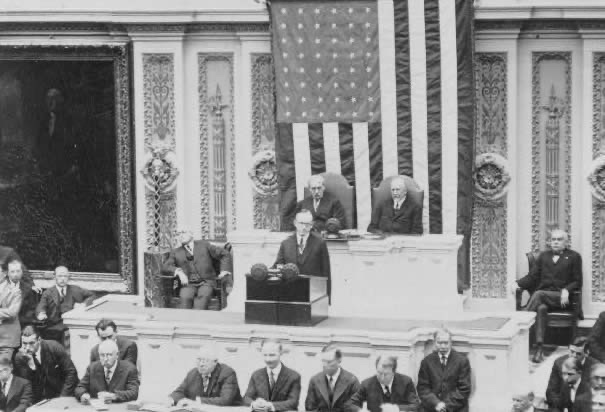
I don’t think we’re so far removed from basic cable packages, yet, that a prime time address is worthless. Tonight’s address will certainly help set a tone for the Biden team in the wake of a legislative triumph (COVID relief) and ahead of the administration’s next major legislative target. Whether that target is a bi-partisan approach to infrastructure spending or advancing a climate change agenda, we are likely to see a significant preview of the next hundred days of the President’s agenda.
My beef is this: why stick to “traditional” or legacy media approaches at this point?
After forcing a massive spending package through on strictly partisan lines, I believe the administration owes itself a proper narrative context for laying out the road ahead. Simply talking at the American people doesn’t match, in my opinion, some of President Biden’s best skills.
That’s why this prime time address should only be one part of the program for tonight. If I was advising the team, I’d cut that address down, and build out a live event to be broadcast across multiple social media platforms.
Joe Biden the man has demonstrated an ability to establish meaningful connections with average Americans in less formal settings. A Facebook/Instagram live event would draw massive appeal – and allow him to let his hair down a bit.
In the midst of the ongoing series of posts where we’ve explored social media, I am confident in saying this: people are craving genuine moments that lack the manufactured feel of TV productions. “Going live” on social media is a palpably different experience than “being live” on TV. Take a risk and try the new media.
And that same advice goes for your own advocacy agenda. We need to begin evaluating ways to bring our advocacy programs into the lives of our advocates. Going live on your team’s social media regularly can pull back the curtain, and create a sense of buy-in for would-be advocates. It certainly worked for Coolidge – leading to his nomination and eventually his outright winning the White House in ‘24.
Bottom line: don’t shy away from new technologies and platforms. Embrace them to help bolster your advocacy agenda.
But enough of my rant: what do you think we will hear about tonight? And would you prefer some other medium? How do you think the administration could best position itself for life after COVID relief? Drop a comment below and let me know!
 Part of the Possible