The Go-To

Last week, I kicked off a series featuring women in advocacy. Anne Thompson brought her insights in the realm of managing a national Political Action Committee, and I hope you enjoyed hearing from one of the real go-getters in this field.

But, this week, I want to share a little bit with you about the Go-To. A poorly kept secret about most political teams is that they have a short list of volunteers, activists and community leaders they can count on in a pinch. In a sprawling congressional district, they may have multiple per county or community. Regardless of depth, every political operation is dependent on this bench.

In my own work, I knew I could count on several folks to answer the phone when I called – most of whom were all but guaranteed to take action. But, even in this crew there were still those who stood out. And at the risk of inadvertently alienating others, I’m going to tell you about one of those remarkable volunteers this week. She is by no means the only go-to I’ve worked with – but she is a dear friend who has taught me a lot about local politics, and I think she deserves some thanks.

I first met April Gibson during the 2012 election cycle, shortly after congressional re-districting happened in Ohio. My boss at the time was running for election in the new boundaries which nearly doubled the size of the previous congressional district. It became immediately apparent in that election cycle that we would need key leaders across the new district lines to help us grow name recognition and identify key campaign targets.

Overnight, April became a go-to for me and our whole team. How did she become so intertwined with our efforts? She gave without asking.

Let’s lay out what that means in practical terms:

– She identified key groups of influential local voters and community influencers we should prioritize engaging.

– She organized opportunities for our team to participate in existing events, maximizing visibility without creating additional work.

– She showed up. Every. Time.

– She offered local insights in a constructive way that built trust.

– She actively looked for alignment between the candidate’s goals and her own, finding ways to work on multiple issues while placing her limited asks strategically.

As a young, green staffer April quickly became a sounding board on any issue under the sun. She became a gut check on my assumptions, and helped reframe my approach to coalition building. In military terminology, she had my six – watching my blindspots to ensure we presented the candidate effectively and avoided committing a faux pas that can hurt a candidate in unfamiliar territory.

In the years since we worked directly together on campaigns, April and I have continued to stay in touch. She continues to work diligently on the causes that drive her. She continues to motivate those around her. She continues to mentor.

The Go-To’s, as you’ll see in your own work, have developed a habitual approach to advocacy work. It’s not a novel hobby they take part in every election cycle. Rather, they commit to relationship building and just causes that motivate them year round. It’s rarely glamorous work, but it moves the needle on a generational scale – and it takes habit building. And more often than not, you don’t have to ask them to be building these habits.

As you continue to grow your volunteer advocate network, get yourself an April. Look for the following:

– Who shows up?

– Who is already taking action that overlaps with your organizational goals?

– Who is in the habit of building connections between groups?

If you can find those three in one person, abundantly, I’ll bet you’re well on your way to establishing your own Go-To.

As for me, I’m forever grateful to the volunteers who worked so hard alongside our team. To all of them, and especially my dear friend April, thank you. Your friendship, and the lessons you taught along the way, made all the difference.

An Open Letter to My Politibros

When I walked into my local gym this morning, the last thing I thought I’d be hearing over the next hour would be a heated discussion over electoral politics.

I go to a no-frills, local gym frequented by those who spend time actually working out, not just taking mirror-selfies. Rarely, oh so rarely, do I hear discussion outside the norm – comparisons of lifting techniques, supplement use or competitive banter. Today, I expected no different. But in the world of modern politics, even this safe haven has been sacrificed to the gods of rhetoric.

As I was proceeding through my routine, two regulars – and exemplary models of the gym bro persona – began to have an open dialogue about the inherent value of an individuals vote. I’ll spare you the full content, but it went something like this:

GB1 – “Bruh, I’m not happy with either Trump or Biden, I think I”m going to vote for _______.”

GB2 – “You serious man? That’s just throwing your vote away.”

GB1 – “I don’t know. Neither of them gets it, and I think _______ has better ideas.”

-AND THEN ENTERS GYM BRO 3-

GB3 – “You can’t do that man. That’s just guaranteeing a win for _______.”

HOLD UP – Time to hear why this is under my skin today. I think we can trace a lot of the frustrations of modern politics back to the mindset embodied by this conversation. And it boils down to this: When we buy into the zero sum mindset of partisan politics, we abdicate our own responsibility to own the value of our vote.

Major political parties are massive machines, and in modern times they are highly driven by data. The minutiae captured by their voter tracking would astound you. And while impressive, it has led to a mindset wherein party operatives make a massive assumption over whether you, an individual voter, are one of their voters or the other party’s. Defaulting to this us vs. them mentality is dangerous enough, but more insidious is the laziness that it instills in us, the voting public.

Your vote does not belong to a political party or a candidate. Your vote belongs to you.

Don’t take me the wrong way. My entire adult life I’ve been engaged in party politics. Parties help amplify your own voice. But in that time, I’ve tried to keep perspective on the value of my vote. When you select a name on a ballot, you are – albeit privately – putting your name beside theirs as a representation of how you believe the government should be managed.

If neither party’s candidate in a given race aligns with your vision of the role of government, they should not be rewarded through zero sum analysis.

We have to move past the mindset in politics that a vote is for our guy or against the other guy. We have to move past the guy period. Your vote is your values; act accordingly.

So, to my gym…er…politibros this morning – I hope you’ll take ownership of your vote. It will be one step closer for all of us doing the same. And maybe, just maybe, we can bring a little more responsibility and civility back into the mix.

Introducing: Octob-her

As a #girldad, I feel challenged with a special duty to show my daughter that she is capable of anything in this world. I hope that, someday, these posts will show her that my field is open wide for her to engage in and lead.

This year, we celebrated the 100th anniversary of the passage of the 19th amendment. A century since women first exercised their right to vote in a presidential election, successive generations have taken on critical roles spanning the entire spectrum of political involvement. Some take on the immense burdens of elective office. Others operate as fundraisers, lobbyists and campaign strategists, guiding national agendas.

With less than a month remaining before the 2020 election, I thought we could spend time this month getting to know some of the women working so diligently to serve their communities and their causes.

Over the next few weeks, my regular Thursday posts will highlight women in advocacy. Some of the content will come directly from them, showcasing the expertise they’ve developed in their own careers. Other posts will be about those we can look toward for inspiration. Across the series, I hope you’ll learn some of the many lessons I’ve picked up from these leaders along the way.

Up first in this series is a post written by a colleague, Anne Thompson. Anne directs the activities of a national Political Action Committee (PAC), developing strategies to implement broad policy initiatives. I’ve had the pleasure of partnering with her over the past year and am thrilled she volunteered to be the first outside contributor to Part of the Possible. Check out what Anne has to teach us below!


PAC Management, by Anne Thompson

Sometimes I joke that in my next life, I may consider becoming an accountant.  It’s not necessarily that I like accounting, but there’s something appealing about the constant objectivity of it.  Black and white answers have a real appeal to me.  The world of Political Action Committee (PAC) management is much greyer and must, therefore, be managed pensively.      

Politics is a subjective world and PACs are no exception.  Who to support; at what level; and when to make the disbursement – there are not necessarily right and wrong answers to these questions.  Do you support only incumbents, or is the PAC willing to consider challengers? 

The most successful PAC managers take these open-ended questions and put guardrails around the process for making such determinations.  Geography and committee assignments are clearly important factors in determining who a PAC should support.  Positions on key legislation, having signed onto letters highlighting policy priorities, and how accessible a Member’s office is are also valuable considerations. 

Whatever method of scoring a PAC chooses, it should remain consistent with a certain threshold for contribution eligibility.  Since we know we cannot please all of the people all of the time, it’s important to be able to credibly back up decisions by the PAC.   

Not only do PACs help promote industry or certain policy priorities, but they also help temper the political debate.  As we’ve witnessed over the last decade and a half, the extremes are moving further and further apart and the moderates in the middle seem to be waning.  Most business industry PACs are bipartisan and are weary of providing support to candidates for office who could become enfolded in political controversy.  PAC support goes a long way to bolster the middle fifty percent of Members of Congress who are willing to work with colleagues across the aisle to achieve tangible results.              

There are many misconceptions about PACs.  PAC money does not buy votes, it is completely transparent, and contribution checks are not cut in smoke-filled rooms.  (Some in Washington would tell you it would be a lot easier if they could!) 

At the end of the day, PACs are a vehicle through which like-minded individuals can pool their collective resources to support candidates for elected office who support ideals their organization seeks to promote.  PACs are a valuable tool to demonstrate true grassroots support.  And as one who is entrusted to manage those resources, I take great responsibility in maximizing each and every dollar to the fullest extent possible.

There are a variety of ways to approach leveraging all of your resources as a PAC.  Like in any other part of the economy, there are deals to be had.  It is, however, a very fine line to know when and where it is appropriate to request special treatment. 

At the end of the day, part of the goal of leveraging those dollars is an attempt to have an out-sized presence, not to come across as one who’s trying to nickel and dime the system.  Relationships and trust can make a big difference here.  If a fundraiser knows the PAC has a reputation for standing by commitments and doing so in a timely fashion, they’re more likely to show flexibility from time to time. 

When advocating for an organization’s policy priorities, it is advisable to use an “all of the above” approach to resources.  PAC’s are a useful tool in that equation.  Each professional is likely to offer their own unique approach when it comes to effectively managing a PAC.  And each PAC has its own individual needs in order to best represent its constituents.  If managed well, a PAC’s resources can help turn base hits into points on the board.            

Bonus Post: Last Day to Register

Today is the day. Huge deadline. And I thought I should reinforce the message one last time. Today is your last day to register as a Browns fan before we refer to you as a bandwagoner.

Sure, it’s also the last day to register to Vote in Ohio for the November election – but that’s not nearly as exciting to talk about today.

After all, today we woke up to a world where the Browns, my beloved Dawgs, are 3-1 for the first time since 2001. Yesterday, they put up 49 points against some team from Texas – beating that team for the first time since, I think, 1994!

I don’t care if they’ve only played each other a handful of times in the intervening years, this win was DELICIOUS.

View this post on Instagram

Dangerous combo 🤫

A post shared by Cleveland Browns (@clevelandbrowns) on

Especially sweet to me was the experience of “feeling this coming.” I woke up Sunday morning with a thought running through my head that Jarvis Landry and Odell Beckham, Jr were coming into the game hungry. And boy did they FEAST.

OBJ, in one game, silenced all the haters from last season. And while yes, he’ll have to keep producing to keep them silenced, seeing the outpouring of love for him yesterday was incredibly satisfying.

Head Coach Kevin Stefanski has shown that he is willing to take risks, but also that he is adept at developing a diverse portfolio. When our top running back, Nick Chubb, left the game with a knee injury, the offense kept right on track with a next man up mentality.

For the first time in a long time, people are noticing that this special group of men has GRIT.

As a lifelong Browns fan I’ve seen previous versions of this team lose this type of game 9 times out of 10. But that’s just it, this new Browns team doesn’t dwell on the failure-centric culture of the past. Just look to QB Baker Mayfield after the game, who when asked if he knew the last time the Browns started the season 3-1, summed up the new and improved milieu of Browns nation by stating calmly and boldly: “No, and I don’t really care.”

Regardless of the rest of the season ahead, this team has shown that they can and will find ways to win. It’s a new mentality and a hell of a ride every week.

So, before you lose your opportunity, come out into the open and cheer for our Browns. If you get in now, we’ll give you credit for the whole season.

A shameless plug for district offices

I spent the better part of a decade working for two different members of Congress. Despite that tenure, I can count on one hand the number of times my work for them took me to Capitol Hill.  And if you’re surprised by that fact, you’re not alone.

Most folks can wrap their heads around two functional areas within a member’s office: the legislative team and the campaign team. In many ways, these are the most visible. But there is a third functional area, that while less visible, stands immensely more accessible – their district office.

District offices are the local, constituent facing team available to the public year-round. I refer to them as constituent facing for two reasons: district outreach, and constituent services.

District outreach probably makes a lot of sense just by its name. Within the district office, one or more staffers may be directly responsible for identifying key challenges and opportunities to engage with individuals or groups across the district. These field representatives often become the first point of contact for local mayors, chambers of commerce, non-profits and more. Because they are attending community events, scheduling tours for the member and fostering advisory groups, these field representatives can serve as your entry point to every other functional area within the member’s team.

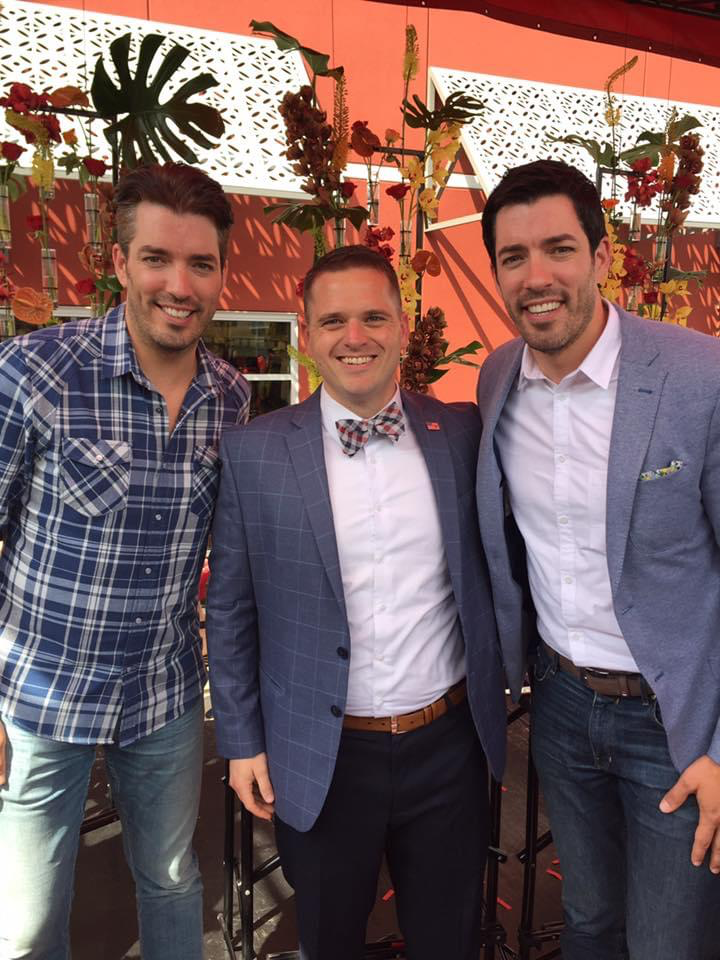
District work may not always be visible, but it can have its perks – like meeting the Property Brothers at a grand opening event.

Yet, district outreach is not all-encompassing for the district team. In all reality, a larger portion of the team is likely to be made up of constituent service representatives who handle casework. But what does that mean?

Under the first amendment, each of us retains the right to petition the government for a redress of grievances. The petition processes for each branch of government vary in complexity, creating significant confusion for those who need a decision maker to act on their behalf. However, the district office of a local member of congress can serve as your gateway and guide through the processes – be they legislative or administrative.

A solid constituent services team will have staff well versed in social security benefit procedures, veterans affairs processes, internal revenue appellate avenues, and the most often utilized: passport processing. And pound for pound, the district team has the potential to hit harder for your agenda than any other functional area in the office.

It’s a matter of output. In a really good year, a member may have ONE bill that they introduce, and see proceed into adoption as law. In that same year, through their oversight authority and the congressional inquiry process, they can provide a direct service to HUNDREDS of individual constituents.

When I started in a district office, I focused on veterans affairs – which made a lot of sense considering my background as a Marine officer. Over the course of a few years, I was able to help a couple of hundred individual veterans receive, literally, millions of dollars in retroactive disability benefits. One of my favorite victories in this realm was helping the widow of a Navy veteran receive death benefits that had been denied to her for more than 30 years!


How could a twenty-something, mid-level staffer accomplish that? On my own, I couldn’t. But because of the authority granted by my employer’s office, I carried outsized influence. That influence, coupled with an assertive, collegial approach our team was able to move mountains for individuals in dire need. There were countless times we were contacted when constituents felt they had nowhere else to turn, in the eleventh hour of their distress, and we were able to score major wins for these folks.

And here’s the best part, all of that work is done on a purely non-partisan basis. While the individual staffers may be politically engaged, during your time in a district office partisan politics gets checked at the door. You meet with everyone, you hear every gripe, you take every phone call. Because unlike the other functional areas of a legislative office you are constituent facing 100% of the time.

District staffers, in large measure, don’t have to worry about the legislative or political process. While helping their boss put his or her best foot forward locally, they are concerned with daily tasks more akin to social work than political work. So, what does that mean for you as an advocate?

You are going to face a lot of losing battles in public advocacy. Policy agendas are monolithic and stagnant at best, and at worst consumed by the daily grind of partisan bickering. But within your organization, you probably have a volunteer, an employee, or even a member of your leadership team with an immediate problem being posed by “the system.”

I’ve seen too many advocates jump right to the conclusion that they should consult their legislator to have them write a bill to address problems. Oftentimes, the solution is much easier to accomplish through the administrative process which your member’s local office can help you navigate.

Next time you’re at an event and there’s a district office staffer present, find out what they do. If they’re a field representative, start by building a dialogue. Find out what advisory groups the member utilizes and see if you can plug yourself into one of those teams. See if you can get connected to a caseworker who has your issue area in their portfolio. Start with a cup of coffee and a conversation so they can get to know you, and you can get to know what they’ll need from you if your team ever needs help.

I can promise you those conversations will bear fruit. Visit your local district office for more than a protest. Go there to find out how you become part of the possible.

BONUS Post: Debate, schmebate – get back to your agenda

If you woke up this morning with a sharp headache, and it’s just getting worse during your work day, you’re not alone. Last night’s Presidential debate, the first of 3 debates this election season, is driving the conversations this morning.

Let’s not pretend that debates in the last several cycles stand in scale with the great exchanges of ideas in our nation’s history. I mean, we certainly haven’t been witnesses to the Lincoln-Douglas Debates.

Neither President Trump nor Vice President Biden is being lauded today for grand ideas or substantive proposals. We’re not talking about the causes of their campaigns, we’re talking about how they delivered quick shots, harmful blows and the dominating meme of a candidate for the nation’s highest office blurting “shut up, man.”

But none of that is really a surprise. In his 2018 book Suicide of the West, author Jonah Goldberg evaluates the rapid move toward tribalism and populism in the past several years. Goldberg does a deep dive into the growing tendencies of individuals and groups to identify each other through an us vs. them paradigm. The ultimate threat of this tribe mentality is the natural endgame that develops from tribes: a strongman chieftain.

Last night’s debate was difficult for any moderate to watch. But for the tribes, the bases of each candidate, it held certain visions of chaotic beauty typically reserved to the days of gladiator combat in roman amphitheaters.

And in that vein, each candidate delivered on their goals for the day. Frankly, what most are dismissing as an embarrassment is exactly what we should have expected in this age of tribalism – and regardless of the distaste we are experiencing, each side played their part masterfully.

Saddled with a lingering image of enervation, Vice President Biden, the ever-approachable, avuncular guy-next-door, absolutely had to prove he could stand toe-to-toe with a certified brawler. President Trump, not needing to concern himself with likability, did not err by constantly interrupting Mr. Biden, rather he drew the match into the deep end of the mud pit. Those two, extremely simplified goals, are all either needed to accomplish last night.

For those of us in the advocacy/political sphere, the presidential election process is usually akin to watching the NFL playoffs. Last night, it was more like watching a bar fight. And this morning, we are experiencing the hangover of cheap beer and icing the black eyes left by errant jabs. But, it’s time to shake off the fog and get back to your agenda.

Advocacy continues despite the 24 hour news cycle. It continues in the face of hyper-partisan analysis. And it continues regardless of the strong man nature of current politics.

I’m hopeful the pendulum will swing back toward decorum in our discourse. But until we make that happen at our own level, how can we expect politicians to hold themselves to the same standard?

Tomorrow I’ll be continuing the blog with my regularly scheduled weekly post – focused on the role of local congressional district offices. I hope it will be a palate cleanser and help you refocus. In the mean time here are two ideas on how we can improve ourselves when engaging in politics publicly. I hope you’ll share your own thoughts and ideas in the comments below.

Two ways to hold ourselves to a higher standard:

Eliminate anonymity from the internet. Let’s make a concerted effort to own what we say on-line. And let’s recruit others to do the same. If you have to hide behind an anonymous twitter egg, you’re probably not helping the political process move past tribalism.

Commit to having one discussion per month with someone who opposes your agenda. This one will be hard – however, by the mere effort of beginning to break bread with one another, we may just find some avenues to work toward the ideals we espouse as a nation.

I’m hopeful that putting last night’s spectacle into proper perspective will allow us to move past the experience. We have two more debates this cycle. The performances can be infuriating these days, but we can also leverage the attention they bring to advance our own agendas. Take some action, tactfully, to bring the conversation back around to your just cause. Engage your neighbors productively, and let’s start by holding ourselves to a higher standard.

BONUS Post: National Daughters Day

I didn’t even realize it was today, but Happy National Daughters Day to my one and only, Lennon Grace. She makes every day just that much brighter.

During COVID, I’ve been grabbing shots of L when I can and keeping a loose picture diary of the experience. We’ve had loads of laughs getting these shots and I hope you enjoy.

And to all the other daughters out there, on behalf of #GirlDads everywhere, Happy National Daughters Day!

Add me on Instagram: @luke_crumley. And be kind, I’m new to IG.

Parenting in a Pandemic, Still

I don’t know about you, but I’m kind of burnt out on politics this week. So, I thought we could chat about something else today. Please, do pardon the digression.

I think by now, most of us have seen about every meme created aiming to capture the insanity of parenting during a pandemic. It seems that every parent, regardless of the stage of their child’s development, is simply feeling overwhelmed. I mean, in a lot of ways it really sucks.

The other night, I had some socially distanced (for the love of Pete when will we be able to stop specifying that?) beers with a couple of fellow young dads – and two of my best friends. These are guys who perform at a high level in truly demanding fields. They are also deeply committed fathers. And the one striking commonality is just how drained we all feel.

There’s this constancy to the burden of COVID. Living in an Ohio county that is still under relatively broad restrictions, we are all working from home. And while, yes, that has given us a significantly different sense of freedom over the past six months, there’s also a relentless drum of activity. And that drumming is taking its toll.

Back in March, when we were all of the mindset that we would be “past this thing” by June, I believe we all over-corrected with a frenetic level of bustle. We tried to set up virtual happy hours, build out family activities for every minute of the day, and maintain a full workload. But what did that get us? 

One of my buddies, sharing how he has recently cut back alcohol consumption to pre-COVID levels and begun running again, described how leaning in to busy-ness so much absolutely destroyed his ability to focus on himself and his health. And regardless of the excess of energy we may have felt at the beginning of all of this, we sold ourselves short by not grabbing hold of the real value of this pandemic – the ability to pause, to rest.

In the world of music, most folks focus on the notes, melodies, rhythms that they hear. But for the longest time, I’ve agreed with some musicians that the most valuable piece of any performance is the rest. The musical notation for a pause in activity. A properly placed rest sets the boundaries of all those notes, melodies and rhythms. In our own lives, those properly placed rests, those boundaries, create space for us to breathe, grow, thrive.

I personally think this new normal will be with us for quite a while longer. The trends are clear that those who can work from home will be working from home for the foreseeable future. Finding balance between workload and family life will be a constant struggle. Don’t be afraid to take a strategic pause. Work with your partner or your support structure to find time to re-invest in yourself. That’s why I started sharing this blog. Putting my thoughts down for you each week helps me put order to the chaotic thoughts happening about all those burdens. As a side benefit, it helps me expend some of that excess energy that comes in waves these days.

And dudes – this message is for you.  It’s freaking ok to not be ok still. I’m not accusing you of being fearful of the virus – that’d be pretty chickenshit of me. What I am saying is that we tend to carry our own struggles quietly. They chip away at us gradually. But their incessant pulse can have a tremendously damaging effect if those struggles aren’t addressed. You want to be the best father you can be right now? Take a break. Get to the gym (with a damn mask bro). Dig into your hobbies (I’m afraid to admit how many Lego sets I’ve purchased). And start sharing your own struggles.  Your fellow dude-dads could use the reminder that they’re not in this alone.

Since I started this blog, I’ve noticed a substantial shift in my mindset. What works for me though, won’t work for you. But you know there is something that will bring that strategic pause back into your COVID routine. I’d ask, if you’re willing, to take a moment and comment on this post with what’s working for you. You never know who it could help.

P.S.

Yep. There’s a postscript to this post. I’m not the most active on social media. Most social platforms tend to stress me out, but I’m trying to expand my horizons and fight back with some positivity.  About a decade late, I’m joining Instagram, with the goal of linking this site to my personal and professional life equally.  Do you have any recommendations on good accounts to follow? If so, comment below, then consider adding me: @luke_crumley

BONUS Post: What about the Court?

My day started with a warning from a friend. “Twitter is an absolute dumpster fire this morning.”

He’s not wrong. Doubtless, by now, you’ve heard the news about the passing of Justice Ruth Bader Ginsburg. And regardless of one’s politics, we should pause to celebrate a titan of the legal profession, and someone who willfully put public service above self for decades.

RBG was a force to be reckoned with. As a lawyer, she argued six gender equality cases before a Supreme Court that, at the time, was entirely male. SHE WON 5. I’m a Browns fan. If the Browns win 5 SUPERBOWLS in my lifetime it will be tough for those wins to compare to RBG’s accomplishment.

But aside from her professional accomplishments, her tenure on the court has also become famous for her deep, lasting friendship with Justice Antonin Scalia who preceded her in death in 2016. The Ginsburg-Scalia relationship represented the very best of our country. These two were diametrically opposed philosophically yet became renowned for their mutual respect and camaraderie.

The one saving grace of the social media dumpster fire last night were the countless posts I saw celebrating these two great Americans. But it was almost impossible to find those posts this morning. Already the battle lines are being drawn, and they are being reinforced by the media machine that loves the drama of partisan trench warfare. It’s sickening.

Here we have the passing of an icon, and we can’t make it 72 hours before folks start speculating on the ramifications for the 2020 election? But then I have to remind myself, it’s always been this way. Even in the benign age of the Supreme Court before Chief Justice Marshall solidified the concept of judicial review and the jurisdiction of the federal court system, these appointments were political dogfights. Marshall himself was appointed in the waning days of the Adams administration and was a strategic move to solidify Federalist influence in the midst of rising Democratic-Republican Party (Thomas Jefferson & James Madison).*

This move by Adams reined in the Jefferson administration and the next three presidents after him. It also created the early collegial practices of the Court. Marshall, a veteran of the Continental Army, understood the value of living and dining together. The early members of the court, when in session, would dwell together, often fostering unanimity in their decisions through socialization. In the modern court, the most similar social relationship we’ve seen amongst justices was that of Scalia and Ginsburg.

Now though, how are we honoring these two pillars of the modern court? Well, we’re at each other’s throats over who gets to appoint Ginsburg’s successor. But should that be our discussion today? I don’t think so.

Yes, I’m absolutely interested in the future of the Supreme Court. But that court is much less consequential than you realize. And if we’re going to honor the sacrifice of those who’ve dedicated themselves to this type of service, I think we need to recommit ourselves to learning what really matters in our federal judiciary.

How many of you know the name of the federal judges in your regional federal court district? Do you know the name, or accomplishments, of ANY appellate court judge? If you’re not in the legal field, I wouldn’t expect you to. We’ve turned SCOTUS into a type of celebrity that outshines the work of hundreds of federal court judges who conduct 97% of the federal judiciary workload. Annually, SCOTUS receives 9,000-10,000 applications for appellate review. How many cases do they deal with? Maybe 160. Most of the standing case law is developed by those judges in the federal system beneath SCOTUS.

And the court isn’t the only blank spot in our national political consciousness. I would argue the most important political office in your personal life is your local township trustee or county commissioner. These are the folks most directly involved in funding roads and providing emergency services – arguably the most consistent government touchpoint in your life. Yet less than 10% of us engage in local elections, and I’d argue hardly any of us can name our neighbors holding those roles.

So, I’m going to propose a small way we can, individually, bring a little civility back to the dumpster fire today. Try to refrain from posting your dismay or joy at the prospect of an open court seat in 2020. Honor Ginsburg’s contributions to our national discourse by participating in that discourse. Take time today, or the next 45 days until the election, to learn about your local races. Get educated so you can fill out the ENTIRE ballot. Contribute to local candidates. Participate in the process. I think RBG, and her dear friend Antonin, would like that.


*(Interested in learning more about the early Court? Check out John Marshall: Definer of a Nation by Jean Edward Smith)

More Perfect

“In order to form a more perfect union…”

We don’t spend a whole lot of time discussing that part of the preamble to the U.S. Constitution, do we? It almost sounds like a flowery bit of rhetorical fluff, doesn’t it?  

When I was growing up, the focus of constitutional lessons usually breezed right past the entire preamble, let alone this one clause. Even into college studies, lectures were much more likely to dive into defining “we the people” or “general welfare.” In fact, it wasn’t until I became a Marine Officer that this particular phrase really stuck out to me.

You see, “in order to” is an incredibly common phrase to those of us who have served in uniform. That small phrase is what we use to communicate an idea known as commander’s intent. In those three words, we are highlighting to our subordinates the why behind our orders.

Communicating that why, or purpose, is absolutely vital in military orders. Military operations exist in chaos. The fog of battle often separates commanders and their troops. Communications systems can fail. Units disperse and may lose contact with each other (sometimes by design, often by circumstance). Leaders can be injured or killed, and in moment’s notice it falls to subordinates to press forward to accomplish the objective of that mission. How does that next rung down the leadership ladder know what to do in this chaos? Commander’s intent.

So, what does that matter to the framers of the constitution?

They’ve charged us with a just cause, to be pursued in the context of an infinite game. They didn’t frame their why as some set of tangible, clearly defined deliverables. Rather, they’ve called us to perpetuate their revolutionary spirit and further this grand experiment in self-governance.

What exactly does a more perfect union look like? How do we strive toward promoting general welfare? It took generations for us to just establish the modern court system, balanced between federal and state courts and overlapping jurisdictions. Is that the establishment of justice?  

Each of us honors their call to action when we participate in the system our founding fathers created. The body of the constitution, and its subsequent amendments, gives us a framework, the how of our system. But, in my opinion, we need to spend a great deal more time as a society diving into the preamble.

There’s no question that our nation is in the midst of turmoil. In a sense, we are operating in our own fog of battle. Our neighbors are struggling. Some are experiencing a new set of challenges while swaths of our citizenry continue to push against an ocean of issues that have been with us since before our nation’s founding.

But here’s the beauty of the preamble – we have a pretty simple commander’s intent: show up and press on.

We know that our generation, like all those before us, is charged to strive toward more. Our intent is simple and magnificent all at once: to keep getting better. We innovate, we toil, we build toward compromise, and we help bend the arc of history toward justice.

You may not have known that today is Constitution Day in these still United States. It’s easy to miss. We make a grand affair of celebrating the declaration of our independence. But I hope today you take a moment to consider the intent of our constitution’s framers. Our forefathers did so much more than send a press release to declare they were going to strike out on their own.

In signing the Declaration of Independence, the revolutionary generation pledged their lives, their fortunes and their sacred honor for an ideal – that a nation could be forged from limitless cultures and be established to continually pursue more. Then, in framing the Constitution more than a decade later, our founders committed themselves, our generation, and all those still to come to that same revolutionary ideal.

Those framers didn’t give us the “how”, they communicated an intent to us that remains timeless in its significance and daunting in its challenge. Let’s take it on.