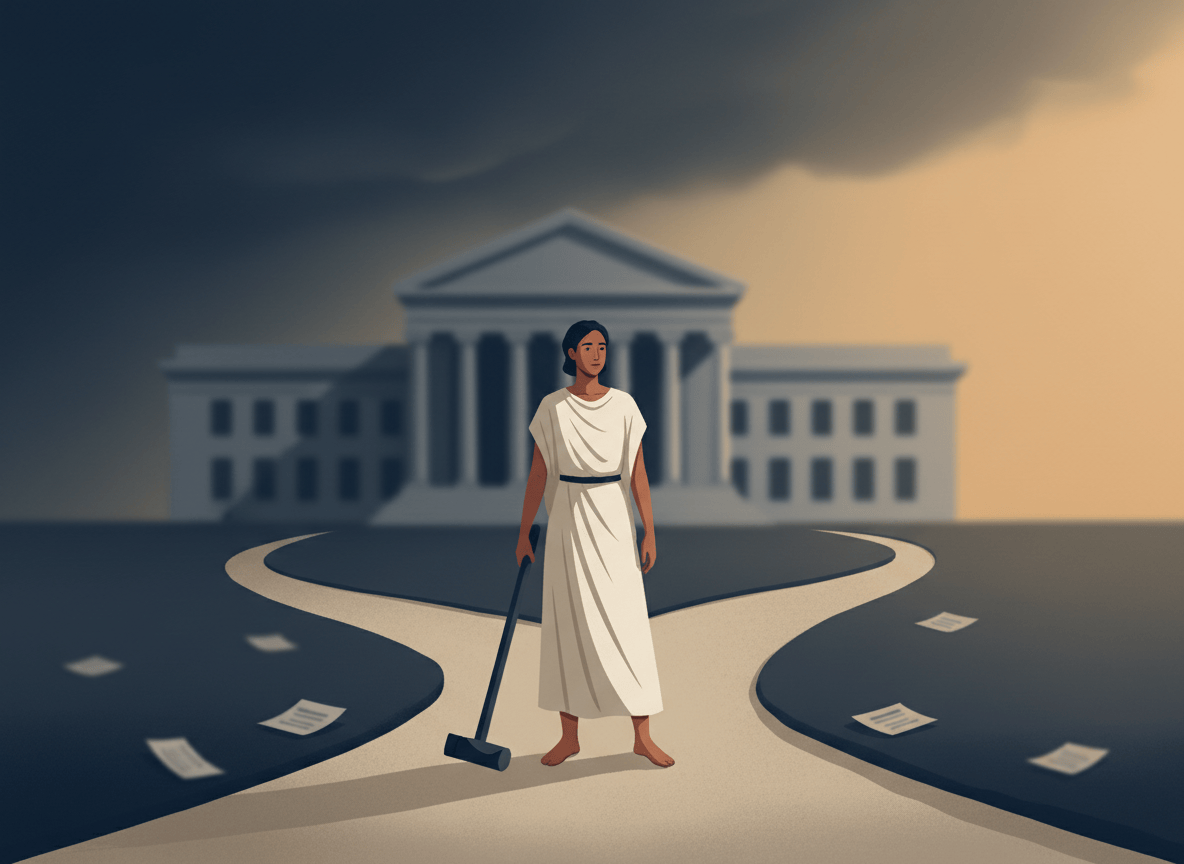
There is just one bit of fallout from the 2026 Midterms that has my attention today. It’s the frequency with which acquaintances are coming up and asking “are you ok after seeing all the results?”
As I’m journaling today, I’m taking stock of just how often that question was used to jumpstart a conversation about this year’s blue wave (bloodletting more like). But for the lack of originality, I shouldn’t really have a problem with it. Surely it’s just people being people and asking after me. But my response is often confounding them.
I’m smiling today. Not because of a particular result. Rather because the added pressures of the season are lifting. Like a fog clearing, I can somehow think again and begin strategizing the next moves.
There’s no doubt that American politics are a major part of my identity. It’s not just the work I do, it’s the work that excites and propels me forward. I’m no casual observer or partisan hack (at least not anymore). Politics – the horse race of it all – means something entirely different to me. And today, I’m going to try to explain why any one election’s results never bog me down.
Most activists think about their particular political action through the lens of a finite game. They track success – and maybe even their identity – in the win/loss column. Election Day in America tempts us into this thinking. The build-up. The frustrations. The coverage. And then it’s all in the rearview mirror. Suddenly on a Wednesday in November, the tide has turned and all of our problems are getting a little lighter. Right?
Far from it.
Elections are no more than something happening around those of us working in the political space. These seasons come and go. But the people with real staying power as advocates don’t tend to see them through the same lens as the casual participant. It’s not about wins, losses and cheering on your team. Election Day isn’t the end of the race, its the starting gun.
The ancient Stoics teach us that events are neither good, nor bad. Rather, the opinion we take of those events is what colors them, shades them in our view.
“There is no evil in things changing, just as there is no good in persisting in a new state.”
Marcus Aurelius, Meditations, 4.42
Last night’s election results are truthfully little more than a radar blip in my work. As were the results the year before, and the year before that. These are events happening around me, not defining me. And though they may have never worded it quite that way, the very best of my colleagues act in the same manner.
The results we’re all digesting this week are just another tool in the kit of a successful advocate. Just like a hammer, they are of no use to us without a mind to guide them and discipline to wield them.
When I train advocates, we rarely – if ever – spend time talking about current events and the politics of the moment. No, I take them down a different path. We look at bigger pillars that can bolster our participation in the system. I walk them through the structural barriers that get in the way of average people showing up. I share the frustrating reality of just how complex and complicated this work can be. And then we break it down to the smallest next task they can do: getting better at meeting with people.
So much of all of this is outside of our control. So much of it is bigger than the time we have to commit to understanding it in the midst of so many other gravitational pulls in our lives. Holding down a job and being present for your kids are full-contact sports in and of themselves. When we ask advocates to take on the strain of politics, too? That’s a lot to carry.
So instead, I focus on their mindset. Working down to the smallest, next right thing they can do is purposeful. Doing so throws away all the ephemera, all the distractions. Instead, it hones them in on how, as real people, they can make a real difference in the causes they care about.
And wouldn’t you know, when we step away from the opinions we all have about it – the waste, the mailers, the dirty campaign tricks, the negative ads – somehow it does in fact become just a little bit easier. When we can consciously shelve our opinions about the events, we can get back to what really matters in American political advocacy: being human.
Today, you may be licking your wounds. You may be over the moon. Either way, you’re learning the wrong lesson from this event. You shouldn’t be dwelling on it. You should be standing up and saying, “OK, what’s next?” Because that is the work of a truly effective advocate – setting aside our own opinions and choosing to work for something bigger than ourselves.

