Advocacy Meetings 102: Your Story Is Your Superpower

Don’t tell any of my lobbyist friends I said this, but more often than not a volunteer advocate holds greater sway with elected officials than a paid lobbyist.

Constituencies are inherently important to politicians. Losing touch with those they represent is usually the short road to losing the next election. This pressure to connect can quickly forge a bond between elected officials and those constituents who choose to show up and participate in the process. The volunteer advocates who do so can often enjoy an outsized level of influence.

Successful advocacy organizations know this and place their volunteer advocates in positions to be present in front of elected officials. They remove the focus from their paid staff and shift it toward those they serve.

But don’t worry, the pressure isn’t as severe as you may think – you don’t have to become the subject matter expert on every aspect of a piece of legislation. In your role as an advocate you have two main duties: establish trust and tell your story.

Trust building takes a long time. It takes participating in the full spectrum of advocacy: educational events, campaign support, volunteering, etc. But telling your story is the superpower you can tap into right away to convey your issue, reinforce the organization’s messaging, and influence decision makers.

In the course of an advocacy meeting, at least one volunteer advocate should be sharing a quick story. By that I mean a narrative that shares a current problem relevant to the elected official’s work, its impact on the volunteer, and what benefits could develop if a change occurred. The more tightly you can convey those points, the more effective your meetings will become. Don’t worry, there’s a formula you can follow:

Act 1: Tell Where You’ve Been

It’s simple – start with the way things were. This is your “once upon a time moment” where you can relay the conditions of your life, business, neighborhood, etc. You start with the status quo and share it in simple language, with an aim to connect it to the listener’s own life experiences. Connect with them as parents, business owners, public school students – whatever makes your status quo relatable to them will make the change in conditions that much more personal for them.

Act 2: Explain What’s Changed

For whatever reason, a change in the status quo has, or will have, occurred. After all, if everything was a-okay you wouldn’t be there would you? Quickly convey the specific problem that has arisen from the change (e.g. you can’t stay in business, a medical condition arose, your children are at risk). Because you shared a relatable condition in act 1, the listener can now picture the problems you’re experiencing in their own way. It’s now relevant to them, and they can surmise how other constituents may be affected. You’ve touched on what matters.

Act 3: Share How They Can Help

But it’s not good enough to leave it at the problem. You have to propose some kind of specific action. If there’s a bill to address the issue, ask them to co-sponsor or vote for it on the floor. If you’re seeking help with the bureaucracy, ask for them to help you inquire into the matter. If you’re requesting a letter of support, provide them sample language they could adopt to stand with your cause. It’s not good enough to just present a problem, you have to provide a solution they can embrace.

You Don’t Have to be Perfect

Never let the perfect become the enemy of the good. You may be a terrible narrative storyteller – I sure am. But if you can make it relatable to them, relevant to their work, and provide a course of action you’ll be more engaged than 9 out of 10 people. Easily.

Most people don’t show up in politics. Most never participate beyond voting in elections. You, as a constituent and volunteer advocate, benefit from tremendous credibility by simply joining the conversation. You aren’t required to have all the answers. But you do have to tell your story. It makes all the difference.
The Real Reason We Can’t Pay Attention to Politics

In a bit of good news, it seems more Americans are at least claiming they’re paying closer attention to political news. A recent study by Gallup showed 38% of respondents say they are following political news “very closely”. That’s up from most years without a presidential election.

The not so great news though is this: the remaining 62% fall somewhere along a political attentiveness spectrum of “somewhat closely” to “not at all”. When you dig deeper into the numbers you see less than 1-in-4 of those under the age of 34 are paying “very close” attention to political news. Their elders are a little better with just shy of half saying they follow politics very closely.

I promise this isn’t a hit piece on younger Americans. Rather, it’s a challenge to the rest of us to not simply chalk up their lack of attention (or our own for that matter) to vapid obsessions with TikTok and Instagram fame. There’s a bigger reason. And, like all the finer things in life, it’s got an acronym.

VUCA

Volatile. Uncertain. Complex. Ambiguous.

First coined during the Cold War, propagated by the Army War College, and now returning to the more fashionable circles of leadership and management training thanks to COVID, I think it holds some promise for informing advocacy organizations on how we can better engage our volunteers. Hear me out.

VUCA represents the four conditions that ultimately degrade our ability to pay attention and problem solve. Those conditions, when in play, trigger our threat and stress responses, negatively impacting our mindset. That degradation brings on what we Marines would call the “fog of war.”

Our brains are incredible – but they take in way too much for us to process at all times. So the brain filters things out – and our attention is drawn to the most pressing triggers around us. In VUCA situations your brain becomes overwhelmed with all the stimuli and you zero in on what’s closest to you – unfortunately you can only do that for so long before your attention span diminishes beyond a point of positive return. When that happens, your brain tells you to move on, and to pay attention to something else.

American politics is the perfect arena for long term VUCA exposure

Think about politics as you read these abbreviated descriptions.

Volatility: the rate of change in a given situation. The challenge faced can be unexpected, unstable, and of unknown duration.

Uncertainty: a lack of clarity surrounding the here and now. Change in the situation is possible, but not guaranteed.

Complexity: the situation encompasses multiple variables that are often interconnected. The volume of information about the problem can exceed your ability to process.

Ambiguity: the situation doesn’t follow a clear cause and effect pattern. The situation can have you dealing with issues outside of your core competencies.

As you think about your own participation in politics, do these conditions sound familiar? Even the pursuit of passing a single piece of legislation can touch on each of these conditions. Couple that with the sheer volume of issues being publicly debated and you have a recipe for disaster when it comes to our attention spans.

For individuals and advocacy organizations alike, the VUCA conditions lead us to a point where we tune out. We opt to “let someone else worry about it.” And that shouldn’t be surprising. It’s also not the end of the world.

Our system is built to facilitate that detachment so we can pursue our own private ventures. We leverage a republican (small r) form of government that allows us to entrust navigating those particular VUCA stressors to public servants. It doesn’t always work perfectly, but it certainly has its benefits.

Help Your Advocates Step Away

If you’re an individual feeling like you just can’t keep up with it all, here’s your takeaway: you’re not alone. Our politics are clearly volatile, uncertain, complex and ambiguous. If you find yourself rationing your exposure, take a moment to thank your brain for helping you filter some of the madness out. It’s ok to break away, to reset. In fact, it’s pretty necessary.

For those grassroots managers struggling to keep advocates engaged, I’d argue we actually need to find ways to help them detach from time to time. We have to help them break away from the grind by digesting as much as we can for them, and limiting their exposure to the VUCA conditions. We need to be pouring into their individual cups more often than we may be already. Focus on building community, and play time, into your advocacy strategies.

If you don’t, you’ll likely face a grim prospect: they’ll tune out for good on their own.


If you like this subject, I’d like to point you to a real expert on the topic. I’ve been dwelling on the topic since listening to an episode of the Lewis Howes School of Greatness podcast where he interviewed Amishi Jha. That episode can be found here.

If you’re more in the mood for a quick read on the subject, you can check out a short piece by Jha here.

If You Want To Be An Optimist, Begin By Giving Thanks

I was catching up with a friend recently and he said I seemed more optimistic, more confident in the future. The comment stuck with me over the past few weeks. And as I’ve sat with it, evaluating what could be different, I’m left with one simple answer: I’m more grateful these days.

Over the last two years, and especially since starting this blog, I’ve felt more acutely inclined toward gratitude. Whether spurred on by the feedback I’ve gotten from so many of you, or by the dopamine hit I get every time I put these thoughts into the world, the result is the same. I’m grateful to live in a time when we can exchange ideas, build conversations and find new ways to work with each other.

It’s fitting that this thought has been with me at this particular time of year.

This week, we Americans will take our great national pause to celebrate one of our earliest traditions. We’ll gather with family and friends and share a moment of gratitude. I’ve always loved this holiday. Of course the food, right? But more than that it holds all the warm feelings that welcome the holiday season without the added pressure of gift giving. Sorry, that’s just not my love language.

Because I’m decidedly nerdy though, I usually take a bit of time each year to read some of the great thanksgiving proclamations issued by presidents over the years. Roll your eyes if you must, but there are some great ones out there: Washington’s first in 1789, Lincoln’s that preceded the Gettysburg Address in 1863, and in my own lifetime the words of George W. Bush in the wake of the 9/11 attacks.

Through so many of these proclamations across the years there is a theme: regardless of the circumstance of the time, we as a people endure and continue answering the call to aspire to something more. I contend that our national optimism and that aspirational spirit are both rooted in our ability to give thanks.

Take this lesser known excerpt from my personal favorite, number 30…

We will do well then to render thanks for the good that has come to us, and show by our actions that we have become stronger, wiser, and truer by the chastenings which have been imposed upon us. We will thus prepare ourselves for the part we must take in a world which forever needs the full measure of service. We have been a most favored people. We ought to be a most generous people. We have been a most blessed people. We ought to be a most thankful. people.

President Calvin Coolidge

Not so Silent Cal hits the nail on the head in this proclamation – issued just months after he assumed the presidency upon the death of President Harding. As the nation emerged from mourning, and before Coolidge first addressed Congress as President, he laid out the formula he saw as necessary for navigating the unknown future ahead: first, give thanks for all that we have (the blessings and the lessons); second, believe in a brighter future worthy of our effort; and then choose to serve purposes greater than ourselves.

The timing of this call to action is important to understand. Just two months prior, an earthquake struck Japan. It was devastating. The death toll topped 140,000 and two of the country’s largest cities were effectively erased from the map, washed away by ensuing tsunamis. That earthquake happened in Coolidge’s second month on the job. He called on the nation to assist, and they answered.

The government did what it could through the state department. But the truly overwhelming assistance from America flowed from the pockets of average people through the Red Cross. Individuals who believed enough in the possibilities of their own futures parted with precious coin to serve others around the world who they would never meet.

I don’t call into question the generosity of other peoples. And I don’t claim America as uniquely generous – though data may support that. I do assert that our tradition of giving thanks each year prepares us to be an optimistic people – and optimistic people shoulder immense burdens.

Our willingness to serve others, at home and abroad, is predicated on a belief that our brightest days remain ahead of us. That positivity requires a secure foundation. Our founders, and our leaders along the way have known this not-so-secret formula. They understood that a generous, optimistic people must maintain a mindset of gratitude.

That lesson is so very important for each of us in our personal lives. If we wish to think abundantly, and to develop the reserves of optimism so key to our successes, we have to ground ourselves in gratitude. So, if you’re looking to make that change this year – to become a more optimistic person – begin by giving thanks.

Then have some pie.

Advocacy Meetings 101: Managing the Clock

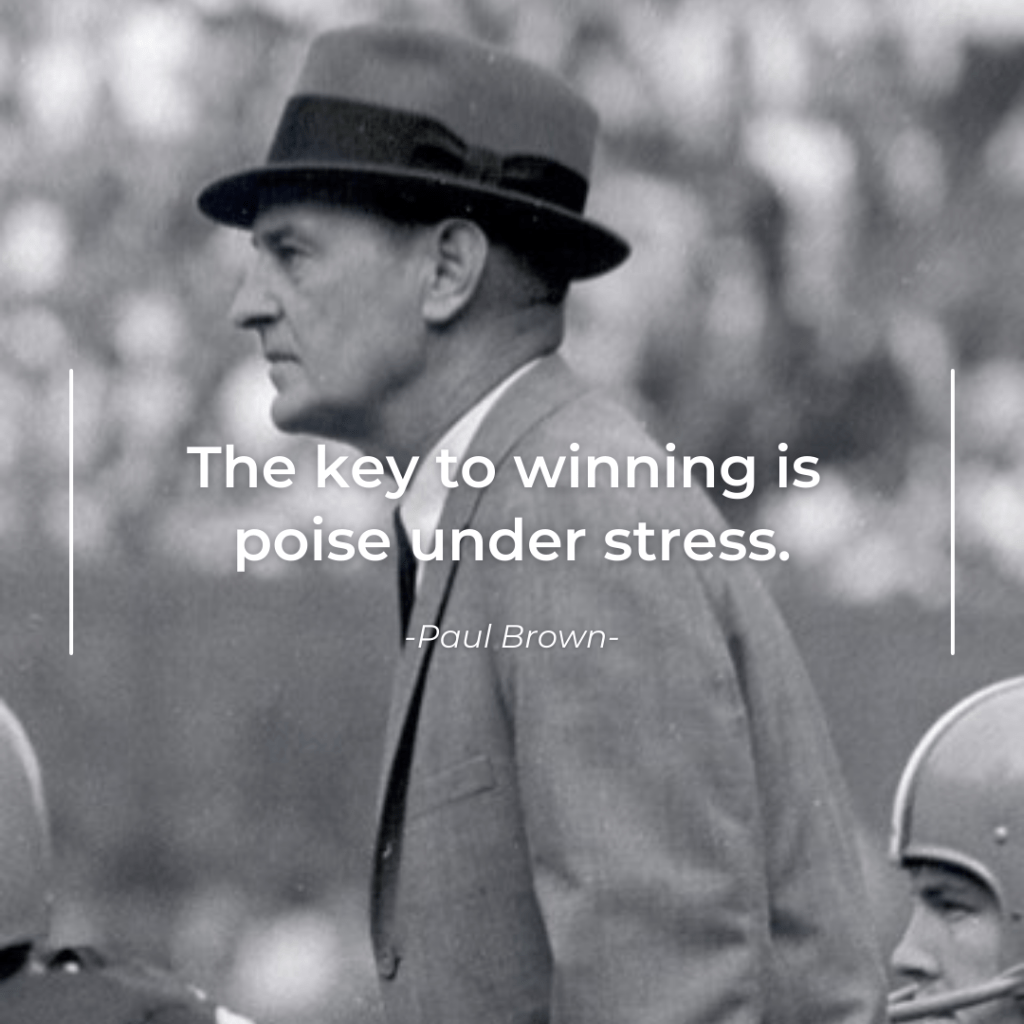
Life a Browns fan instills an incredible amount of patience.

This past weekend was rough. In all aspects of the game, it seemed like they just hadn’t shown up for the game. Despite a spark on the opening drive, I found myself spending the remaining 3 hours wishing the clock would just move faster to get past the lackluster performance.

But, like this past Sunday, there are a lot of times in life when we don’t control the clock. In the world of political advocacy it’s especially easy to fall victim to this problem.

Photo Credit: Pro Football Hall of Fame

Most politicians, by the nature of their work, develop the gift of gab. They invest years, even decades in developing deep ties to those they represent. Along the way they tend to make genuine links to the volunteer advocates who come to see them. This tendency is amplified when those officials have a similar upbringing, educational or work experience as those advocates. Those commonalities create a sense of comfort.

But that comfort can diminish your effectiveness and facilitate a mission failure.

That might seem counterintuitive, I know. After all, I constantly harp on the importance of that relationship building. But at the point of friction, when you’ve got precious moments to convey your intent and share your stories, a loquacious legislator can prevent you from getting past the pleasantries.

I’ve seen it too many times to count. And if I’m being honest, I’ve used the trick myself. It helps a meeting to go smoothly if everyone feels buddy-buddy along the way. And if you talk just enough, an advocate can walk away feeling great about the exchange even though they never made their ask. In short, they run out the clock – and for your advocacy team that’s a mission failure.

Most advocacy groups do a great job providing information to their advocates on the issues and bills they want them to discuss. Some of them go the extra mile and help their advocates develop meaningful personal stories to reinforce the organization’s position. Very few help volunteer advocates build a plan for how they will manage the clock, and agenda, of the meeting.

There are surprisingly few resources out there for this kind of meeting management. Most in the advocacy realm want to keep their processes close to the vest, thinking it will give them a competitive edge. But within your own advocacy experiences, start asking questions about meeting management.

Who will watch the game clock for the team? Who will manage getting the participants involved in conversation? When will we share a story? And who will make the ask?

A quick conversation to answer these questions can revolutionize your advocacy meetings. It empowers would-be advocates in a meaningful way and will help you make a positive difference in their experience.

Most importantly you’ll avoid the stress we Browns fans know all too well.

Russia Just Demonstrated Why We Need the Space Force

Seeking shelter on the International Space Station looks a little different.

On board the ISS yesterday, as well as the Chinese Tiangong space station, astronauts, cosmonauts and taikonauts alike scrambled to implement emergency protocols. They weren’t facing a solar storm, or a fire. They were facing a deadly swarm of debris on a path that could have meant their imminent demise.

So, with the assistance of mission control, they battened down the hatches. For a brief time, they even took shelter in their space capsules, ready to use them as emergency lifeboats for a return to Earth.

If you’ve seen the 2013 film Gravity, then you’ve seen this nightmare scenario conceptualized. In the film, the Russians attempt to shoot down a defunct spy satellite. The resulting explosion sends an ever expanding debris cloud hurtling along the satellite’s orbital path (because physics) and ultimately ripping through more and more space craft – including the ISS and Chinese space station. It’s a great film. And a horrible reality we almost faced yesterday.

You guessed it, the Russians shot a missile at a defunct satellite. It expanded to a cloud of debris. And that cloud of debris came dangerously close to killing the crews of both space stations.

Credit: NASA

Imagine being startled awake at 2AM to be told hunks of metal are on a path to slam into your bedroom at 17,500 miles per hour. Not great. Oh and by the way, if it happens, you’ll suffer an incredibly unique death. Take this excerpt from a Business Insider piece earlier this year:

The vacuum of space will pull the air from your body. So if there’s air left in your lungs, they will rupture. Oxygen in the rest of your body will also expand. You’ll balloon up to twice your normal size, but you won’t explode. Your skin is elastic enough to hold you together. Any exposed liquid on your body will begin to vaporize. So the surfaces of your tongue and eyes will boil. Without air in your lungs, blood will stop sending oxygen to your brain. You’ll pass out after about 15 seconds. 90 seconds after exposure, you’ll die from asphyxiation. It’s also very cold in space. You’ll eventually freeze solid.

How long humans could survive in space without a spacesuit, Business Insider,
May 13, 2021

Personally, this is not my ideal choice for an eternal exit strategy. But it wasn’t just our astronauts endangered yesterday. This cloud of debris will continue falling around the earth for as long as it takes an orbital decay to allow all the little pieces to burn up in the atmosphere on re-entry. And that could take years. Which means other satellites, and future missions, are that much more dangerous. And if you’re wondering why this matters, it touches all of us – communications satellites that power our modern economy just became that much more difficult to service.

As I’m writing this, it’s still unclear whether the Russian space agency was provided advance notice that this anti-satellite mission was happening. So far, the international community is decrying the event in unison, calling the Russian action reckless and unthinkable. Unfortunately, we already had a movie on the books demonstrating it was entirely thinkable.

It’s also precisely why we needed a new branch of the armed forces focused entirely on the asymmetric threats of space based warfare. An action like this holds the potential to wreck the global economy on a larger scale, and lower cost, than nuclear warfare.

We’ve seen the ongoing disruptions caused by pandemic related shipping delays. Now imagine a scenario where maritime vessels can neither communicate nor navigate – instantaneously. Imagine every stock trading app crashing simultaneously. Imagine not being able to swipe your bank card for your morning Starbucks.

It’s the little things in life that we come to depend upon. The simple things, made readily available through technology that we take for granted. Those little things, evaporating in a single moment, would spell disaster on a scale we’ve not fully imagined before. And what if the cost of all that was a single, measly surface to orbit rocket?

Launching the Space Force may have been the single smartest decision of the Trump presidency. Ridicule over the branch’s name aside, this new theater of conflict is fraught with peril. Yesterday’s brush with disaster is exhibit A. Regardless of political affiliation, we all have a vested interest in the success of that particular branch’s success. Even if we’re not the ones seeking shelter on the ISS.

2 Uncomfortable Policy Proposals to Actually Support Veterans

People across the country are pausing today to say ‘thank you’ to veterans of our armed forces. From social media posts to full-blown community parades, the celebrations will take many forms. Especially in the years since 9/11, we’ve gotten better at expressing our gratitude to those who’ve served. I count my blessings every year to have been one of the fewer than 1% who’ve worn that uniform – and Veterans Day is…well…nice.

It’s also a time that can often frustrate many of us in the veteran community. Those of us who’ve spent time working to help our brothers and sisters navigate the transition to civilian life are reminded each year just how hollow “thank you for your service” can sound to some.

I’ll admit – I’ve had a blessed transition from active service and through to a new phase in my career. I couldn’t ask for more. But for quite a few of us, that transition hasn’t been so smooth. From my 8.5 years serving veterans through congressional casework, I have some uncomfortable proposals that could get us a little bit closer to bridging the outcome gap.

Take a quick gander at these and let me know what you think. Consider leaving a comment on this post, or sharing it in your network. I’d love to hear what you think! Let’s dive in…

1. Transition the VA Away from Brick & Mortar Medical Services

First, I think it’s time to acknowledge the diminishing returns of a network of physical veteran hospitals. It’s both a numbers issue and an access issue.

Very few in our nation wear the uniform now – less than 1% will serve on active duty. That small community is also spread across a massive country. At peak times of national crisis (i.e. the Second World War) a much higher proportion of our population served. And for a time, that swollen veteran population could be best served directly in large communities across the country where they largely remained stationary in the decades after service. That’s not the case any longer.

The structure of our modern military requires constantly shifting personnel around, depending on two-year rotations and leaving few opportunities for service personnel to set down roots. This transient quality sticks with many of us – and that’s kind of a good thing in the modern economy. Yet, if a disabled veteran is in need of continuing care through the VA network, their options to pursue new opportunities in other communities can be severely hampered. Their care should follow them wherever they need to go.

The VA and Congress, to their credit, have tried to nibble away at this problem. Expanding the use of outpatient clinics and creating some new opportunities to receive care from the private sector if you live beyond a certain distance from a VA hospital.

I think it’s time we consider moving beyond brick and mortar all together. As the dominant generation of the veteran community shifts toward millennials, policy-makers have an opportunity to challenge historical assumptions and leverage the extensive private medical industry in our country. Younger veterans do not hold the VA medical system in the same regard as those who came before. Further, in a more mobile economy, they shouldn’t be shackled to highly regionalized models of care.

Congress should consider an insurance model option and launch a pilot project to determine its feasibility. It’s both doable and scalable to treat the depth and breadth of medical issues common to military service.

2. Help Them Invest and Grow Wealth

Finally, let’s help them voluntarily start a nest egg.

Since the OIF/OEF conflicts, the government has ramped up its efforts to help transitioning veterans apply for disability benefits. That’s great. But many of us don’t need, or want, a monthly disability check – we just want to know we’ll get quality care when the wear and tear catches up with us.

So, here’s my cockamamie idea: allow us to designate a percentage of our disability payments to be contributed into investment accounts under the federal Thrift Savings Plan. For those not in the know, that’s a 401(k) style investment platform that active service members and federal employees can enter and receive certain levels of matching contributions from their employers.

I believe Congress should allow veterans who receive any level of disability compensation to designate a portion to be contributed to TSP directly from their monthly disability payments. With or without a match, it’s a worthy investment portfolio that can help create long-term wealth – needed wealth at a time later in life when a veteran may need that nest egg.

And sure, we could individually do something similar now and just automatically deposit those dollars into a Roth or other investment platform. But let’s face it, not everyone is keen on fully private markets. Veterans entering into the civilian world have countless distractions that can prevent them from investing early – let’s help them do it in a way that requires minimal action on their part. TSP represents a vehicle trusted by many. If it’s good enough for congressional staff, it’s certainly good enough for our truest patriots.


If you talk to any veteran today, ask them about their experiences transitioning out of uniformed service. Ask them what could have helped them along the way. I think you might just be surprised by the answers.

You’re likely to find they’re not trying to milk the system, they just need that system to be right-sized for their situation. Instead of letting them sour on the dusty, immovable systems they’ve come to know, we can capitalize on a rapidly approaching moment. The generations are changing guard. Younger and more mobile populations present an opportunity. New ways of doing business may just improve services and decrease costs at the same time.

These may also NOT be the right answers. What I do know is this: after watching so many try, and fail, to navigate the second largest bureaucracy in our government, just about anything is worth a try. So why not try now?

Happy Birthday, Marines

There’s something about the Marine Corps – some ineffable quality that sets it apart from the other branches. And yes, I know I’m biased. But on the eve of our 246th birthday celebration, I’ll beg your pardon for the extra swagger in our step.

Right now, Marines around the globe are celebrating their heritage. Those in uniform are gathering for ceremonies – elaborate gatherings at home stations, crammed cake cuttings on naval vessels, and some more subtle gatherings in deployed settings the world over. Regardless of scale, every Marine you know – active, reserve, retired or veteran – will mark November 10th in some special way.

We’ll recount friendships, watch birthday messages from the Commandant, spread around some pieces of cake, or simply pause and raise a glass in honor of some who didn’t make it home with us. In veterans halls around the country, you’ll see tough but weary men raise their heads a little higher, stand a little firmer and remember what makes them so special: they earned the title Marine.

You see, we’re a special breed. Our branch is not known for frills or thrills. It’s not where you go if you want a comfortable way of life. Our Corps pushes your limits and forces you to evolve by confronting your limits. We change the way you think, respond, and adapt. And we’ve been doing it for a while.

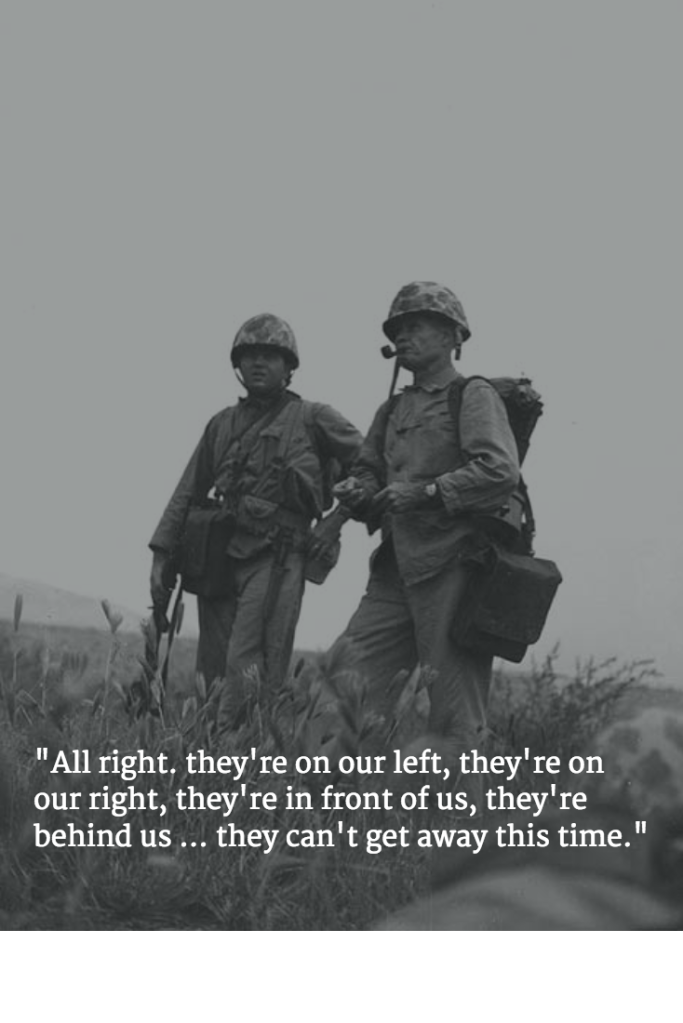
Lewis B. “Chesty” Puller, USMC

This quote by Chesty reflects the effect of that long history of creating Marines. When facing an enemy force that outnumbers you 29:1, it takes a special kind of culture to see that challenge as an opportunity. For Chesty’s Marines, inducted into that culture, the odds didn’t matter. They were there, they had buddies to bring home, and they were Marines. At the end of the battle, those Marines had decimated the enemy and broken through the lines to bring their buddies home.

We make a big deal out of our Birthday precisely because of Marines like them. We celebrate a long history of men and women devoting themselves to a cause, and a Corps, much bigger than themselves. That historical feedback loop fills our cup while also challenging us to build on their triumphs. It’s an annual call to keep pushing our boundaries.

Traditions like our Birthday celebration keep our particular community strong. In the profession of arms, such anniversaries bolster our spirits. They provide a touchpoint to draw us back into the fold and reinvigorate our brethren. The pause and the pomp are both important for those reasons.

And don’t get me wrong, the next day we will offer a full throated recognition of our sister services. On Veterans Day we’ll applaud the airmen, salute our soldiers, and maybe even skip calling sailors “squids” for a day. But first, we Marines will have our cake.

To my fellow Leathernecks, Happy Birthday. Thank you for answering the call, and continuing to serve your community – wherever life has taken you. Semper Fidelis.

Beware the Victory Lap

I love the first couple of days after an Election Day in America – regardless of outcome. It’s a time when we get real, tangible data about what voting Americans think of the status quo. At the end of heated races, we get to see how messages resonated and gain a glimpse into what our neighbors want to achieve through their newly elected officials.

But I don’t love the victory laps.

Maybe it rubs the idealist in me the wrong way. Maybe I’m overly eager for folks to move on from campaign rhetoric and into the work of governing. But the celebrations from either end of the political spectrum can be a bit much. And I say that knowing full well that I also have moments when I fall victim to the very same mentality.

But as you prepare your advocacy team to move into the dynamics of a newly fielded roster of elected officials, it’s important to check that tendency as quickly as we can. I wrote about this last year in another post as we waited to learn the results from the contentious 2020 election. Here’s a key excerpt:

“Chances are, our volunteers come from varied political paradigms. You owe it to your agenda to put a check on your own view of this election. Regardless of who wins, it’s already in the rearview mirror.

Starting right now…show grace to your team. Show grace to candidates in contested races – half of whom won’t win. Show grace, warmth, and value to those you’ll need in the next session of congress, your state legislature, or city council meeting. Find ways to re-engage them as part of your team.

We owe it to our own causes to realize that elections are finite, but advocacy is an infinite game – and one we have to keep playing regardless of one cycle. Win or lose, graciously.”

Luke Crumley

Partisan rancor heats us to the core. But the necessity of good governance requires us to dissipate that heat quickly. We have to cool off, right away. Unless, of course, we’re willing to sacrifice critical time to begin evaluating the results, developing an action plan, and transitioning back into the relationship building game.

Unfortunately, neither major party structure is good about turning the burner down right after a win. Instead, they transition almost immediately in to a war footing for the next cycle. So we see public celebrations of victories, and displays that flaunt an opponent’s failure. Even when a victor takes the high road and applauds that opponent for a well-run race, the lackeys jump in to pile on the insults. And now we see even more of it through the power of social media.

It’s fine to celebrate a win, but in the coming days, you’ll own the problems you ran to correct. You’ll be on the hook for delivering results. And sometimes the folks you’ll need most are the one’s you’re taunting now.

In the end, it’s almost all fair game. Everyone does it. But I’m saying we should challenge ourselves individually to be even just a little bit better. We need to beware our victory laps because we may just trip ourselves up and injure the cause before we can get to the starting block of the next race.

And with no fear of sounding like the broken record I am, I’ll say it again: win or lose, do so graciously. It’s time to govern.

The Power of Showing Up

It’s Election Day in America.

If you’re like me and have cut the cable, you may not be acutely aware of that fact. You may have escaped the torrent of campaign commercials for local races and special elections (like the special congressional election in my home district). Accounting for the hustle and bustle of our general return to pre-COVID normalcy, you may have even overlooked this year’s bloom of yard signs.

But here we are, like clockwork, marking the culmination of another off-year election. And like most off-year elections, not many folks are expected to stampede to the polls this morning.

The numbers vary from locality to locality, but odd-numbered years share a trend toward reduced participation in the political process. For better or worse, if there aren’t major races (i.e. the Presidency) on the line, we just don’t pay as much attention and poof, just like that, we miss the window to stand up and be counted.

But if you really want your vote to count, today is the day you should strive to make it to the polls.

Local issue campaigns, city councils, school boards – basically the stuff that actually impacts your life – is on the line in these off-year elections. Taxes collected, and utilized, closest to home will be determined by these races. The quality of your local roads, how your trash gets collected, and how your kids will learn. That’s a pretty big deal – and in my opinion, bigger than who lands in the White House. This is the stuff of real life.

I’ve believed this for a long time, and I think recent events are a good reminder. While our national leaders are stuck in gridlock, our local elected officials are still delivering the vital services we entrust to their stewardship. They don’t have the excuses you see in Washington. Why? Because they’re answering to their neighbors. When we’re working for the people closest to home, we don’t want to let them down.

It may be too late to inspire you to scramble to your local voting precinct today. But I hope you’ll think on it in the midterms and off-year cycles to come. Because in those years, there is a real power in just showing up. Here are three reasons why:

1. When others fail to do so, the weight of your ballot increases.

2. When you exercise the voting muscle in off-year elections, you’ll become more aware of what’s happening in your community.

3. They still give you a sticker that you can flaunt on social media.

Ok, that last one is a bit of a joke but let’s not pretend you don’t feel a touch of pride when you get that little adhesive badge of honor every year. It’s a small reminder that you’re part of something bigger than yourself. Just like the feeling you get when you volunteer for community service work, there’s a sense of pride in assuming the responsibility of citizenship.

There’s real power in showing up. Your action holds more influence over the result; your involvement boosts your community awareness; and you get to feel good for doing it. Tap into that power every chance you get – like today.

Your Words Have Meaning

We’re getting it wrong from the very beginning. We’ve eroded the definition of advocacy. Until we recognize that fact, we can’t begin to improve. What do I mean?

I was listening to a presentation on advocacy for a non-profit organization last week. In the hopes of illuminating the field to aspiring volunteers, the well-intentioned trainer began – as many do – with a definition. Here’s what they said:

“Advocacy is applying pressure to influence people who can get us what we want.”

If you’ve been reading my posts, you’re probably seeing the steam shooting out of my ears. This kind of street definition, unfortunately, is how many people perceive advocacy. But skilled advocates know it falls apart in three key ways.

Applying Pressure

This is a doozy of a place to start. The word choice alone pushes would-be advocates into an offensive posture. When we think of applying pressure, we internalize a mindset inclined toward conflict. And it cripples our decision-making.

Just yesterday I met with an elected official and exchanged stories of bad encounters with protesters. Folks seeking to “make him feel the heat” had badgered his family in public stores, interrupted his church service, and stalked him on a vacation. We cannot bemoan the quality of public service we receive if this is how we choose to engage with volunteer public servants.

Let’s start re-writing the definition by shifting focus back on the role of advocates. Let’s start here: Advocacy is supporting a public cause…

To Influence People

What does this even mean? It’s far too vague. Advocacy is in the public realm, but our targets aren’t the entire public. And even if they were, what do we mean by influence? By being too loose with our words here, we’re making an already frustrating and demanding field something worse: an incomprehensible one.

There are many ways to influence people – some are even legal like educating and asking for specific actions. But coupled with the offensive posture described above, I fear the trainer of this organization is a few steps away from encouraging volunteers to follow senators into bathrooms and record them.

Let’s keep building our definition with an eye toward accuracy: Advocacy is supporting a public cause…by informing key decision-makers…

Who can get us what we want

This is the piece that most effectively irked me. By describing the goals of advocacy in this selfish light, we’re misleading our teams in two key ways.

First, the give and take of public discourse means we rarely “get what we want.” Public debate in our political process allows us to balance competing interests – and balance inherently means someone else probably gets some of what they want too. Secondly, it establishes a litmus test approach to qualifying success in advocacy. In this mindset, if we don’t get all of what we want, we’ve failed in our mission. That’s not quite an inspiring way to lead volunteers.

I’d also argue this description lends itself to an acute level of selfishness. That type of thinking is counterproductive in a field that requires constant tending. We have to shift the focus from us, to something greater than us. Successful advocates make gains because they understand they are in service to a cause – one bigger than just “getting what we want.”

Here’s how we can shift that mindset: Advocacy is supporting a public cause…by informing key decision-makers…and calling on them to implement policy to further that cause.

The bottom line: words have meaning, and so does the way we use them.

How we frame this work for our prospective advocates will help determine our success in the field. We can help them engage an infinite mindset, or push them to see politics through the lens of winners and losers. The definitions we choose, and how we convey them both carry tremendous weight.

Advocacy is supporting a public cause by informing key decision-makers, and calling on them to implement policy to further that cause. The sooner we recognize this the better, because when we change our advocacy mindset from winning debates to winning people, we’ll win more of both.