Not Ashamed: Why I’m Proud to be a Lobbyist

It never fails. When I’m out and about with other lobbyists, I see it happen – just as soon as the very first stranger asks “so, what do you do?” In that moment, almost everybody dodges the question.

Unlike so many other industries, we seem to feel compelled to hide our work. We use fun euphemisms. We call ourselves “government affairs professionals” or “political consultants.” We talk about what we do in the vaguest of terms, shying away from our more common label. Why is that?

I don’t think it’s much of a stretch to understand the motivation. In modern politics, short of elected officials themselves, no one is more universally demeaned than lobbyists. No matter the issues for which we advocate, we are seen as the guns for hire, the influence peddlers and the inhabitants of smoke filled rooms.

But I think if you spent a day shadowing me through the work I do, you’d walk away with a remarkably different mental picture the next time you’d think about “lobbyists.”

Homework

First and foremost, you’d see that most days aren’t spent in front of legislators or other elected officials. Yes, we have times when we navigate quite a few of those meetings over a given time. But we aren’t just walking in the door. That’s only the 10% of the iceberg that you see above water.

This is a field that requires a massive amount of homework. We study our issue. We study how our opposition sees the issue. We study those we’re representing to better understand and convey their challenges. We study the process. We study the elected officials involved, their role in the process, and how they’ve dealt with the issue previously. And then we do it all over again to try and figure out how to make our position that much stronger.

All of that studying is a fantastic opportunity. In the last few years I’ve learned an immense amount of information about an industry I just plainly didn’t understand – and in such a broad way that every day presents new opportunities to look at new problems. For the intellectually curious, this is dream work.

Helping Others Help Themselves

But as you followed along through all of that homework, you’d probably notice another theme: it’s not about us.

Those of us in the government affairs profession (see, I even did it there) are almost invariably helping others. We’re helping them understand the people, the process, and the politics standing in their way. We’re helping them craft compelling stories that can humanize problems of immense complexity. We’re helping them craft cumulative and iterative approaches to relationship building.

But to what end? Is it just about winning a political fight?
Our political process is complex. It’s why so many get frustrated that “nothing ever gets done.” Let’s set aside the falsehood of that sentiment, and just focus on the feeling behind it.

The vast majority of Americans will never engage proactively in the political debate. We’ve got other things to do. My favorite President, Calvin Coolidge, captured this reality beautifully in a 1925 speech to the Society of American Newspaper Editors:

“After all, the chief business of the American people is business. They are profoundly concerned with producing, buying, selling, investing and prospering in the world. I am strongly of the opinion that the great majority of people will always find these the moving impulses of our life.”

President Calvin Coolidge, January 17, 1925

The beauty of our representative republic is that this form of government affords us the freedom to let go of the day to day concerns of politics. By design, our system allows us to disengage…to a degree.

But the second order effect of that disengagement shows itself in just how intimidating the average person can feel when faced with a need to advocate on an issue important to them. Plainly put, the conflict and complexity of our political processes is enough to keep most from taking an active role.

When push comes to shove, though, how do they arm themselves to jump into the fray? When the need arises to redress grievances, what does that mean and what should they do?

That’s where my industry comes in. We are there to serve as the guides you may need some day when an issue you care deeply about is stalled in the process. We are there to help you dissect the problem and come up with strategies to get your work on that issue back on track. We’re there to serve those causes, and the real people behind the issues.

But lobbyists don’t have special powers of persuasion. We can’t simply buy votes – that’s illegal. And we face the same evolving political environment as everyone else. So what’s the advantage?

We Show Up More Often

I’ve been saying this a lot lately: advocacy must be viewed as both a cumulative and iterative process. It is unreasonable, even nonsensical, to think the first time you meet or speak with a decision maker that you’re going to compel them to take action on an issue. It’s even more so when you use the wrong tactics like public intimidation. Winning in advocacy requires us to show up, again and again, constantly refining the ways we present our solutions.

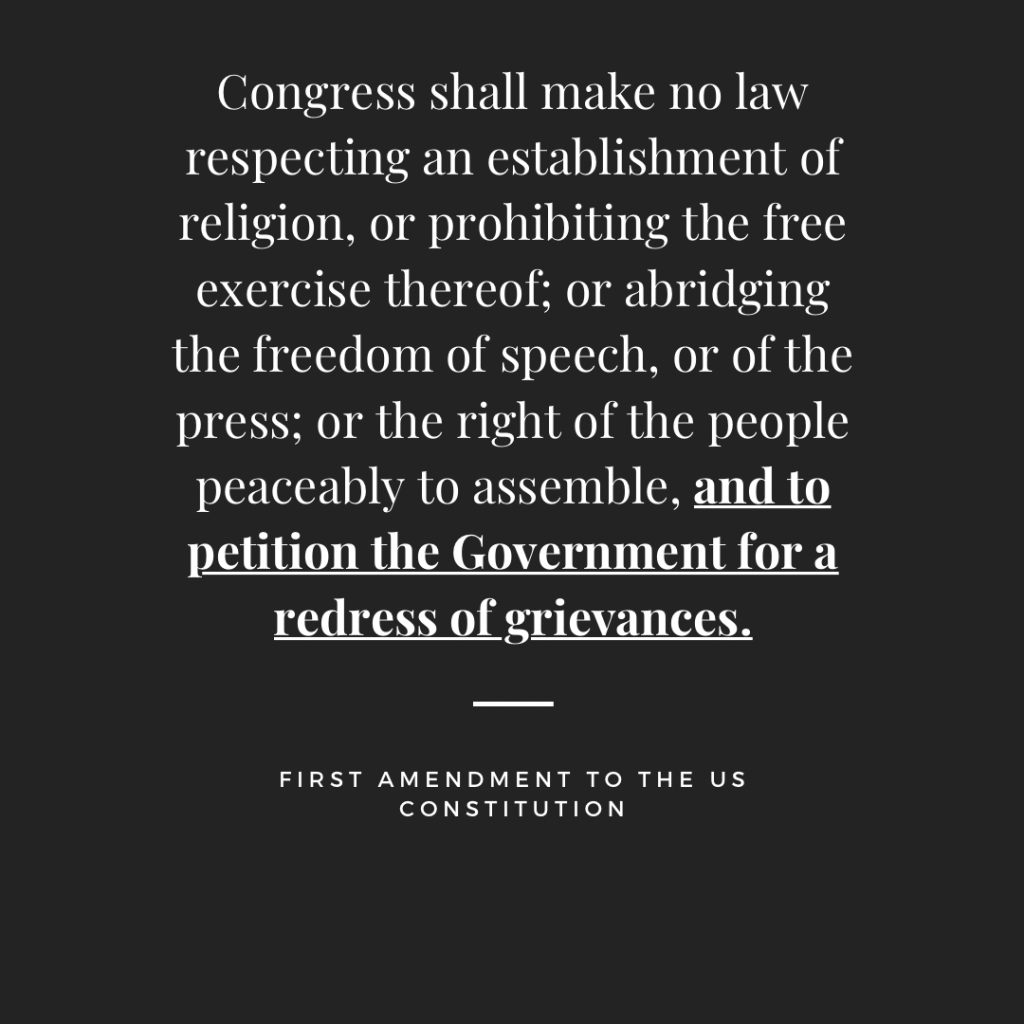
What actually works in advocacy isn’t as sexy as marching in protests. It’s the long, often frustrating path of building relationships that wind from issue to issue when advocates choose their battles, and celebrate their champions. That long game is where a lobbyist can add value to you. We’re there to help you exercise your first amendment right to “redress grievances.” And we’re there to help you do it in a sustainable way that will keep you empowered over the long haul.

To me, that’s nothing to be ashamed of – rather it’s something in which we should take a larger measure of pride.

Every day I get to pull the curtain back on government and politics and help others see the world just a little bit differently…maybe even a bit more positively. Along the way I get to learn some incredible things, in service to issues that may just help lots of people. That’s pretty cool – even if the masses don’t agree that it’s also commendable.

Worried about food shortages? Watch these factors…

For months now, news around the world has been dominated by talk of food shortages. Logistics issues propelled by COVID have compounded with inflationary pressures in a way that’s caused real concern for real people. Predictably, the political pile-on has ensued and it seems to all be spinning out of control.

If – like me – you’re concerned about the future of food security, I think you should take interest in a few key issue areas: loan rates; agricultural inputs; renewable fuels; and infrastructure resources like America’s inland waterways.

But first, watch this video, of an Ohio farmer – Josh Yoder- talking about some of the challenges he is facing right now.

For the past 3 years, I’ve had the distinct pleasure to work alongside folks like Josh Yoder. In fact, I’ve worked with him personally and have been to his farm. He and his family have an incredible, multi-generation story full of innovation, stewardship, and sound business practices. It’s a similar story to what you can find all over the Buckeye state where about 95% of the operational farms are family owned small businesses.

When you hear Josh, and other growers, talk about what they’re doing, you can see the passion that runs through the agricultural community. You can also tell they are business savvy, and care deeply about bringing a quality good to the market. Even during a difficult confluence of events like we’re seeing right now.

That’s why I think you should give a damn about the four issues I listed above. Here’s a short set of reasons why.

Access to Capital

My family sold the farm in the 80s, before I came along. So I never knew firsthand some of the struggles modern growers face. I didn’t understand just how capital intensive the industry was. When you deal with the purchase, maintenance and operational cost of tractors and harvesters, fuel, seed, fertilizers, crop protection tools, wages, insurance, office equipment – and all the other expenses so familiar to small businesses in other industries – access to capital becomes a critical friction point.

For many years now, low federal reserve interest rates have kept that capital flowing, allowing growers to invest in their operations and gain a measure of security through times of relatively low commodity prices. As the Federal Reserve raises rates, all types of capital will be impacted, including agricultural lending. Producers use this working capital to get them through the growing season, all in the hopes of getting a good crop in the ground. America’s crop producers need secure, affordable operational lending to see them through.

Measures like those recently passed in Ohio are helping to a degree. Here, we’ve expanded a program called AgLink that will help ease the pressure of rising interest rates on those operating loans – making it just a little easier for those family owned small businesses to stay in operation. Ohio’s Treasurer, Robert Sprague (R) deserves a lot of credit on this.

Farm Inputs

Even as those programs could help, it’s important for the 99% of us who don’t live or work on farms to understand that’s not a one size fits all solution. In part because growers are facing an acquisition issue brought on by anti-competitive practices and frivolous regulatory actions that have restricted supply of critical crop management tools like fertilizers and pest management tools. Even if they can afford these products, finding them is becoming more and more difficult.

If you’ve never learned about N P & K as a consumer, you’re not alone. Those letters stand for Nitrogen, Phosphorus and Potassium, and those are the macro nutrients crops like corn, soybeans and wheat need to grow. It’s plant food. And decades of advances have helped growers leverage these ingredients to grow more grain on less land. In fact, since 1980, the land required to grow a bushel of corn has fallen by 41%!

But these inputs are in short supply right now because a handful of companies have been able to leverage trade law to prevent competition in the American market. When competition is stymied, prices rise. American growers now face input costs that have risen 300% or more in the past year. And that increase started long before Russia invaded Ukraine.

The issue was so startling to US Representative Tim Ryan (D – Ohio), that he began raising concern over the issue months before it became a major news story. He and dozens of colleagues – Republican and Democrat alike – have since weighed in on the issue and tried to pressure the administration to take action.

Infrastructure and Getting to Market

Thankfully, that bipartisanship has shown up in other areas too. Like the Water Resources Development Act (WRDA).

WRDA is a fixture in Washington, DC. It’s a regularly considered package of legislative priorities that garners very little attention in the media. But it deals with some critical bits of infrastructure funding, like real dollars to modernize America’s locks and dams. Those water transportation assets allow efficient, bulk transportation of all kinds of goods – including agricultural commodities like grain.

Over the last few years, large bipartisan majorities have funded WRDA in big meaningful ways. And they’re looking toward this year’s bill now. This year, WRDA takes on a much bigger role as those bipartisan lawmakers face the reality that ‘Made in America’ is more than a marketing ploy now. It’s become a national security issue.

Diverse Markets Make Secure Markets

But if you think about growers like Josh, you might want to ask them what they really want when it comes to staying afloat as businesses. I think you’d be surprised.

There’s no denying that business tools like crop insurance are helpful – even critical. But for the growers I’ve come to know, they often tell me they’re most concerned about one thing: markets. Diverse markets give them options. They stabilize prices. They help foster long term profitability. Diverse markets breed security at the farm gate, and that improves food security for the rest of us.

What does that look like?

Most Americans simply don’t know the modern story of products like ethanol and soy-based biodiesel. Both of these biofuels are blended into our fuel supply. In the case of ethanol, it serves as a source of octane that simultaneously reduces tailpipe emissions and lowers the cost of higher octanes (it also replaced harmful carcinogenic products like MTBE that used to provide octane). While oil prices have soared, ethanol has remained relatively stable, helping save consumers who opt for products like Unleaded 88 (aka E-15) available in more than 2000 fueling stations nationwide.

And while that consumer savings is great (I saved 30 cents per gallon this morning choosing E-15), the real social benefit is that it fosters diversification for American grain markets. That diversity gives farmers an opportunity to remain profitable and economically sustainable. If you’re serious about food security, you should take note of these other markets and the critical role they play in keeping American farmers working.

That’s why a bi-partisan coalition of legislators is working to advance bills like the Next Generation Fuels Act that will pave the way for more renewable fuels in the market in the future. These lawmakers understand that modernizing the fuel supply and optimizing those engines for advanced biofuels can accomplish a wide range of goals: reducing cost at the pump, de-carbonizing the liquid fuel market, maintaining consumer choice for the vehicles they want to drive, and protecting farm profitability. That’s a pretty sound set of goals.

It’s Never Just One Thing

I don’t normally write about these issues on my blog. These are a sampling of what I work on each and every day in my current role. But right now, Americans need to understand the complexity of the challenges WE face. It’s not just these farmers feeling the pressure. We all are and will.

But we have to dispel the notion that there’s any one lever we can pull to fix the problem. There is immense complexity in every other industry as well. And that complexity is demanding our attention. We can’t sit idly by, we have to give a damn.

I haven’t even scratched the surface in this piece. Whole books could be written just on the role that crop protection tools (like pesticides) and biotechnology like GMOs play in helping us grow more food sustainably (on less land, with fewer natural resources, while reducing greenhouse gas emissions). But most of us don’t have the time, or the willingness to dig into those types of books.

So I’m going to make a plea: leave the city limits and go meet a farmer like Josh.

Too many of us are disconnected from the real people working so hard every day to feed, fuel and clothe the world. You’d be surprised what you could learn. I know I have been. Working with people like Josh has certainly taught me to give a damn – to care more about issues I’ve never known of before. I think, if you’re up to that challenge, you’ll discover the same.

I also think you’ll feel a little more certain about what’s really going on in food markets. It may not take away all of your anxiety, but it may just help you weather the challenges ahead. And we could all use a little bit of that education.

One Last Point

If you go back and read through the post again, you’ll find I call out bi-partisanship a lot.

When it comes to feeding and fueling Americans, that’s how it should be. Thankfully, there are champions on both sides of the aisle working to make big solutions happen.

I worry about a lot of things in politics. But if we can keep coming together over issues like these, we have a lot of reason to hope for better days ahead.

Recognizing When You’ve Reached Your Political Saturation Point

Recently I had lunch with a friend I’ve likely known longer than any other. We grew up together on the West Side of Columbus and have kept in touch now more than 30 years. Since that lunch, he gave me one of my favorite gifts: a book recommendation.

Working in and around politics is a tough gig because you are forced into friction and conflict on a daily basis. Especially as campaign operatives, winning those conflicts is a way of life – quite literally the way you make your life. My friend Bobby – like so many of us in the past 15 or so years – seems to be getting his fill of that conflict.

All I can say is, “same.”

Going into this midterm season, we can expect a lot more of that conflict. And for many, that will cause them to throw their hands up, say “to hell with it,” and check out. It’ll even happen to a lot of folks who are typically active in local politics.

What happens to finally push these grassroots warriors to walk away? How do experienced advocates, with so much invested in a party, a candidate, or an issue decide it’s just time to step away?

Well, Bobby’s book recommendation had a great way of describing the phenomenon: they reach their saturation point.

Amanda Ripley, in the book High Conflict, dissects the consistent themes we see in conflict at every level, from interpersonal to international. Released in 2021, I think this book will seem evergreen for a long time to come – especially when we take the time to look into our own saturation points.

We’ve likely all experienced them – those times when we’ve just had enough of the conflict experience, and opt out. It looks different for so many scenarios. As Ripley wrote about divorce she drew on the imagery of the burnt out, estranged lover finally conceding far more than expected just to be done. As she referenced gang warfare in Chicago, and guerrilla warfare in Colombia, she draws on images of individuals being reminded of their identity beyond those conflicts.

Ripley is a powerful storyteller, drawing the reader into the realities these individuals faced and helping them empathize with the subjects. And as I read this piece, I can’t help but to spend a great deal of reflection time relating those foreign (to me) experiences to my own work – as a leader and a political professional.

In 2018 and 2019, I reached my saturation point with party politics. I realized I needed to explore my other identities, beyond those defined by the people for whom I worked. It was a pivotal moment in my own career – and one that led to the same response others have when they hit their saturation points: I had to get some space. My space meant no longer working for individual candidates and elected officials, and instead working for an advocacy group on specific issues.

(It also helped at the time that we began expecting my firstborn. Like Ripley writes in her book, many reach their saturation points when their identity as a parent takes precedence. At the time I was even seeking a nomination to run for a legislative district in my state legislature. Becoming a father-to-be made the decision to leave campaign politics a no-brainer. Now years removed from that choice, I can view it as the saturation point it really was and know for a fact I’d have made the same choice over and over again.)

If you are entering this current election cycle already overwhelmed by the headlines and the hubris of politics, you may want to pick up a copy of this book. It will help you recognize the affect all of that partisanship is having on you. But why is that really important?

Well, frankly, it’s because good advocacy requires committed advocates to keep showing up. And if we’ve hit our saturation point in the partisan politics of it all, we’re just that much, and even more, likely to pull back, and retreat from the critical advocacy our issues require. Learning from Ripley’s studies on the subject will arm you to better recognize when you’re approaching that saturation point, and maybe just what to do about it.

One of the topics I discuss frequently is just how we’ve conflated the terms activism, advocacy and politics in our lexicon. While related, each has their distinct characteristics. And if we continue to confuse the high conflict attributes of political activism with the healthy conflict attributes of advocacy, we will continue to see our own efforts suffer.

Our saturation points will cause us to avoid meeting with a key decision maker of the opposition’s political persuasion. Our saturation points will discourage us from participating even on basic levels. Our saturation points will simply undercut our ability to continue showing up to participate in the cumulative and iterative processes of sound advocacy. And that’s important to know.

Because the people who continue to show up – despite their saturation point and despite the high conflict driving them bonkers – are the people who tend to get things done. If you want to be one of those success stories, this book could be a helpful tool in getting you there.

That’s why I’m proud to add it to the Bookshelf, and recommend it to any of you who is serious about moving the needle on the issues you’re truly committed to serving.

What I Learned from Posting Video Content on Instagram and TikTok Every Day for 31 Days

I’m a small content creator. I don’t have a lot of followers on either Instagram or TikTok. Really, until I started writing this blog, I didn’t understand the power, or the importance, of either of those two social media platforms.

After pushing myself to post every single day in the month of May, I can say I’m starting to get it. If you’ve wondered about the ups and downs of content creation and what it takes to get yourself out there more, this piece is for you. It’s what I learned in a month that has me re-thinking how I engage with social media overall.

I hope, that by the end of this piece, you’ll consider how you might gain from engaging with these platforms differently.

Lesson Learned no. 1: It’s a Grind

It’s pretty easy to dismiss online content creation. Especially for folks like me who straddle the generational gap between Gen X and younger Millennials/Gen Z. We can write off the actual work that young creators put into generating appealing content, growing their audiences, and building brand partnerships. It is an absolute grind.

If you’re working full time, parenting full time, and trying to create daily content you’ll have to come to terms with the reality of late night editing sessions. This is where young, unattached content creators have a distinct advantage. But that advantage is diminishing because of the platforms themselves (see lesson no. 3).

Lesson Learned no. 2: Content Creation Isn’t JUST About What YOU Post

If, like me, you’re part of the Facebook generation – those who were early adopters of that social media platform in the early 2000’s – you’ve watched these platforms emerge. Unfortunately, we did so while watching the bugs get worked out and the format change dramatically. I mean, I was posting on Facebook before they created the timeline feature. And there was genuine outrage when they made that change!

But newer platforms aren’t necessarily built around the idea of creating your own page, your own nook within the platform. Sure, we still talk about channels, pages, and profiles. But newer platforms are about posting proactive content that puts you into a broader feed. They’re also about you engaging with other folks’ content.

On the days that I saw the best growth, I wasn’t always posting a new video. Many times, the days I spent time commenting on other creators’ work were the days I expanded my own following as well.

Content creation isn’t all about posting a new and unique video each day. Every comment you make, every question you ask, every duet or stitch you perform gives you an opportunity for cross pollination and audience growth. If you’re not ready for consistently generating original content, employ a different strategy. Post a few original pieces per week, then use focused time each week to comment, share, and engage with other creators. You’d be surprised whose attention you can grab.

Lesson Learned no. 3: It’s Not Nearly As Difficult As It Used To Be

But as daunting as video creation may seem, Instagram and TikTok in particular will surprise you.

Because IG Reels and TikTok Videos are short content, the platforms themselves are able to include really incredible tools that can make your videos stand out. I’m not a pro at nearly any of it – I think I’ve only used one filter ever – but I can tell you that some tools are really critical. Like captions.

Depending on the time of day you’re posting, viewers are going to be more inclined to watch your content if they can read along with what you’re saying – think about how many meetings you’ve spent in the back of the room scrolling and wishing you had headphones in to listen to the video. Now, for IG Reels and TikTok alike, those are built in options. They make your video accessible to those with hearing impairments, and for those who just need a silent watch option. And since they are auto-generated, you don’t have to spend hours up on hours editing each piece of content to perfectly time and place your captions.

When you pair features like that with the easy editing options you already have in your modern cell phone, or the apps themselves, it is actually easier than ever to create short content every single day. Yes it’s still a grind, but if you time block, and grant yourself space to record batches of content, you’ll be surprised how much you can put out there.

Lesson Learned no. 4: There’s Incredible Opportunity Out There

It took a LONG time for me to hit my initial goal of 10,000 unique views on my own website. And there was a ton of work to get there. While I love, and prefer, written content like this the reality is plain and simple: more people want short video content at their fingertips, and where they’re already spending their time.

In one month of posting on Instagram, the same things I’m posting about on here (politics & advocacy, leadership, veteran & military topics, even nerd culture) reached more than 60,000 users on Instagram. Sixty. Thousand.

Have I ever gone viral? No. Do I expect to ever go viral? Not from talking about what I do. But in one month, my content reached farther than ever before. And I wasn’t even employing great strategies on when to post and how to target it.

That means, even for a novice, there is incredible opportunity to extend your reach. If you’ve ever felt compelled to create something to share with the world, you have an opportunity now to get it in front of more people, faster, and easier than ever. There’s almost no downside (as long as you can handle a little criticism along the way).

What Does Congress Think of You?

Congressional job approval. You hear about it in the news. Pundits tout it as a sign of what will happen in the next election, or how it will shape public policy debates.

It’s a fairly important measure. But it’s not the whole story.

In today’s post, I share insights into just how low members of congress and their senior staff rank most of us when they are judging our performance in advocacy work.

The bottom line up front?

We shouldn’t stop at congressional job approval. If we’re going to bat for our issues, we need to understand just how important it is to invest in the right type of preparation so that we stand out from the crowd, build credibility, and increase the chances our priorities will have to rise to the top.

Falling Out of Love With Your Plan

If you’re in a leadership role, you have to be a planner.

As much as I insist on the importance of being adaptable, nimble and responsive to the moment, the reality is leaders have to be able to structure the work of their teams. But thanks to the Marine Corps, I can pinpoint the moment I internalized the importance of keeping our plans grounded in the reality that our environment – and the challenges we’re trying to conquer – are constantly evolving.

That evolution holds no regard for our egos.

In the summer of 2007 I was a 22 year old officer candidate, going through Officer Candidate School (OCS) in Quantico, Virginia. And for those unfamiliar with USMC Officer selection processes, OCS is NOT a boot camp for officers. Rather, it’s a 10 week evaluation process.

Yes, we learn some basic drill and military disciplines. But over those weeks we only learn a small fraction of the basic military knowledge we’ll later need. The rest comes later, at the next school. In fact, we internalize only enough to be prepared for the evaluations specific to OCS along the way. While some of those are traditional tests, the real question OCS seeks to answer is this: will the Officer candidates in training be able to adapt in the midst of chaos. They are testing our mental plasticity in tandem with our grit. And those tests are not on paper.

At several points in the training schedule, we and our classmates are given an opportunity to lead our peers through tactical problems. These can be small – like a four man team navigating a physical obstacle/puzzle type problem with only a few resources in front of them (and a very short deadline). Or they can be larger, like leading an assault on an enemy position in a simulated battle.

But along that entire spectrum, the instructors aren’t looking for whether you win or lose. They’re looking to see how you react when you fail or your plan falls apart.

No matter how well you seem to be doing in the moment, the instructors always seem to have some trick up their sleeves to unravel your plan. And that’s the point of just about every exercise. They are looking to see if – when everything you’ve invested in falls apart – you have the guts to throw away your plan and lead your Marines in the chaos of the moment.

None of us has this ability perfected. But the evaluation process of OCS helps identify whether you’ve got the basic building blocks to grow that skill set. It’s the follow-on training that helps you put those blocks together.

I remember when I failed in one of the early exercises. It was one of those obstacle/puzzle scenarios and my team was coming up short. I had the play clock in my head and was trying to force a solution that just wasn’t working. More importantly, I wasn’t recognizing that reality appropriately in the moment and reacting fast enough to change my own performance. It was humbling.

I could see exactly what I wanted accomplished. But in the moment I was failing to communicate, and micromanaging instead of reworking the plan in the reality of the moment. That day, one of the instructors introduced me to a Marine mantra that’s stuck with me: “you have to be willing to fall out of love with your plan.

As leaders, we take our ideas seriously. When we’re doing leadership the right way, we own those ideas – for their successes and their failures. But far too often, we fail to recognize when we’ve fallen in love with our own vision, and ignore opportunities to let our teams help us work the problem.

There are absolutely times when we will be the only person with the vision and will to attack a problem – and we’ll have to either drag our teams along or earn their buy-in through our own sweat equity. But more often than not, we should be strategically pulling our heads out of the playbook and putting our eyes back on the field. Building touch-points into our work – dedicated opportunities to see what’s really happening with our vision – is a skillset that can help us break the cycle. And our teams – the real experts doing the work – need to be a valued part of that process.

Now, at almost 37 years old, I can say I’m still working on this. I still fall in love with my plans…a lot. But I’ve also taught myself to cue in like this from time to time. I’ve got a long way to go, but I’m definitely more likely today to fall out of love with a plan than I was back then. And for that, I’m really grateful to a staff sergeant who had the right words for me at just the right time.

But what should I expect? That’s what staff sergeants do.

A Different Thought from the Shooting in Texas

Originally I had a much different post in mind for this week. But the events in Uvalde, Texas are weighing heavily on me this evening so I’ll beg your forgiveness for a brief diversion.

When I started this blog, the mission I had in mind was quite simple: make the intangible work of advocacy just a little more understandable to the average person. By pulling back the curtain and sharing my own experiences from the political world, I hope to make meaningful, effective advocacy achievable for anyone and everyone.

The catalyst was pretty straightforward. In the summer of 2020, I was as frustrated as others that our communities were being pulled apart – divided by opportunists from every camp who were seeking to capitalize on the pain being expressed through the Black Lives Matter protests.

The frustration of that time – at least for me – was watching a powerful moment slip through the fingers of would-be world changers. At a singular point in time, when we could have seriously advanced criminal justice reform, community policing and countless other issues, we witnessed that moment squandered in community after community. Of course there were some token exceptions along the way, but by and large, the status quo remained.

Most folks would place me right of center on the political spectrum. So it would likely be a surprise to many to hear that I was interested in finding a way forward on those issues. I understand that surprise. But even more so, I was interested in helping the people seeking to drive change own that process for themselves. I felt so helpless to do that – until I started creating my own content here.

After Tuesday’s news from Texas, there are a lot of people searching for answers to incredibly difficult questions. There are also countless people looking to simply pick a fight, score cheap points, and maybe gain a bit of fame along the way. I want to challenge you to pursue a third route.

If writing on this blog weekly has taught me anything, it’s that you cannot create something like this from any other motivation than genuine love. You have to love the process. You have to love the mission. You have to love the people you’re looking to serve. Anything short of that type of love will never get you off the ground.

Creating this content has helped me serve some people along the way. I’ve pulled back that curtain, and helped some folks better understand just how they can take that next step into being a better advocate. But the work of content creation has also spurred new friendships, and new opportunities to push myself and learn new skills. As much as I started off seeking a way to empower others, I’ve found myself empowered along the way as well.

If you’re struggling with just what to do after a tragic event, I urge you to find a way to create.

In moments when you feel helpless, and pushed against your limit, make something positive to share with the world. I know that seems tone deaf on the surface to some. But it WILL give you the ability to put some good back into the world. And for those of us removed from the immediate impact of recent events, it’s a starting point.

At the end of the day, each of us can only control what we can control. We have no say over our time left in the world, only how we will use what’s given. Choosing to create something of service to a higher, more just cause will propel you in ways you could never imagine before you try it.

As you wrestle with your own perception of the tragedy in Texas, I genuinely hope it serves as a catalyst for you to do just that – to try creating. As the stoics remind us: memento mori. Remember that you must die. But choosing to create something to benefit the world is an incredible way to live along the way.

Standing Out in the Crowd

Yesterday, I posted this video across my social channels.

That’s right. As much as we disapprove of how Congress is doing their job, there’s another- equally important – disconnect to consider as well.

Typical advocates are not government affairs professionals – and they shouldn’t be. In every meeting with a decision maker, the interests of real constituents should be front and center. And the human story behind those interests is always best served by placing real, tangible constituents in front of elected officials or their teams. There is simply no replacement for the lived experiences of a volunteer advocate who is passionate about a cause.

The downside, of course, is that volunteer advocates don’t get the repetitions in to really get comfortable with advocacy – at least not typically. From my view, it’s exceedingly rare that an advocacy organization will invest the time in helping their volunteers get those reps in. But for a would-be advocate, a few small steps can go a long way in helping you overcome that barrier to successful advocacy.

Know Your Team

If you’re participating in an in-person advocacy event, you’re likely to be assigned to a specific team that’s tasked with targeting an assigned set of decision makers. That team is your backbone for a day of advocacy. They provide logistics support and eliminate a few variables about what to expect in the conversation. As an advocacy day goes on, you can almost always witness these teams gel together.

Learning each other’s cues and quirks goes a long way in making an advocacy meeting a bit more predictable. By removing a few of the unknowns, your whole team will be more comfortable – thus more natural – in conversation, and that helps everyone tell their own stories better.

Invest in Practice

But simply being attached to a team doesn’t make you instantly better. Just like any other new activity, we improve our advocacy skills when we practice them – when we get in the reps.

As goofy and ridiculous as it may seem, getting your team to role play through a mock meeting or two really does help you work out some kinks. And it doesn’t take much. A single 10 minute practice session can help you iron out who who’ll do what during a meeting, and help you understand each other’s cues before you get into the real advocacy environment.

There’s no downside to some realistic role playing. Every time I’ve trained advocates, they’ve reported feeling more confident, prepared and relaxed in subsequent meetings. That doesn’t mean they feel every meeting went perfectly. It doesn’t mean they got a “yes” on every request. But it does mean they were that much more willing to come back and participate again in the future.

Remember it’s About More than One Meeting

And that’s the secret sauce. Effective, prepared advocates understand the limitations of a single meeting. They know they won’t have all the answers, and instead use each meeting as a springboard for future relationship building.

This reality check releases us from the temptation to know it all. It helps us realize that needing to go back for more information or getting an answer on a tough question opens the door for the next conversation. Knowing that it all doesn’t have to happen in a single meeting helps even the least experienced advocate feel that much more empowered to keep engaging.

Ultimately, that’s what it’s all about. A little bit of preparation goes a long way in making you stand out in front of elected officials and their staffs. It helps you establish credibility and stand apart from the 9 out of 10 who don’t take these small steps to prepare. And that goes a long way in helping bridge the gap between us and those who represent us.

It won’t fix all of the problems we may perceive in Washington. It won’t make us like those in office, or make us approve of what they do. But each of these small steps can go a long way in helping us own what we can of improving our own skills. That’s us controlling what we can control – and it’s a big deal.

2 minutes, and 37 seconds on Why I’m Optimistic About Politics

As I’ve been posting on Instagram and TikTok every day this month, there have been plenty of ups and downs. There have been plenty of lessons. And there have been a handful of negative comments along the way.

I’m sharing one of those videos below because I think the message is one I have for just about every person I encounter: you may not feel great about our politics – but that should be a call to action in itself! Simply being disappointed isn’t enough. If you’re really serious about making things better, there is no substitute for action, and action means showing up.

This video is a simple reply to one of those commenters questioning a statement I made about my optimism based in the access we enjoy through our system. In it, I dive further into the “why” behind my optimism in the work that I do.

I have no fear about being dubbed a pollyanna. My goal is only to serve those who want to think about politics differently and change the world. That mission is worth a little shade from time to time.

Postscript: if you don’t follow me on Instagram (@luke_crumley) or TikTok (@luke_crumleyofficial) yet, I’d love to see you on those platforms!

Social Media Advocacy: Even the Big Boys Get it Wrong

If you’ve been paying attention on Twitter, you may have seen a tweet from Jeff Bezos that’s caught some attention in political circles in the past few days. In fact, his latest spat with the Administration via Twitter prompted this scathing opinion piece by Politico…

In short, the Politico opinion piece calls on Bezos to engage in other types of writing, urging him to utilize other mediums “worthy of his station.” While I agree that Bezos’ rant was wasted effort, frankly their argument based on social station falls flat for me. Bezos’ choice to take to twitter wasn’t “dumb” (as the Politico piece says) simply because he “shit=posted.” Rather, it was dumb precisely because Social Media remains a massively ineffective way to get the proper attention of those who can really make an advocacy agenda move forward.

I’ve said this before: social media is an incredibly passive way to communicate your issues. Even for the ultra wealthy and socially influential, social media is not the marketplace of ideas for legislators, regulators, or political appointees. Despite the growth of social media in the past two decades, the truth remains that thoughtful policy advocacy doesn’t happen over 140 characters.

I understand the temptation to share what you believe with the masses. But if Jeff Bezos was serious about advancing an agenda, why not use his unique position to launch a full court advocacy press against the administration? Frankly, I think it’s a cop-out.

I think his real motive was to be seen in a new light by the Twitter user base, not to actually address a shortcoming of administration policy. So often overshadowed by the much spicier content of Elon Musk, Bezos may have simply wanted to rattle the cage to get some attention. He does this from time to time, when he posts passive-aggressive commentary about Musk in particular. It almost always comes across as petty and ill-conceived. And he invariably gets owned by Musk who is much more in tune with the milieu of Twitter.

For those of us lacking the nearly bottomless well of funding available to the Amazon founder, appealing to the Twitterverse – even when tagging a specific elected official – remains ineffective. It’s not a formal method of communication; you’re not getting a record of whether the official actually heard your concerns; and it ignores the most basic principle of advocacy: building credibility through relationships.

As tempting as it may be – your issue deserves more than a sharply worded tweet. If you’re serious about changing the world, you have to be willing to put more into the fight than that.

If Bezos was simply trying to earn some anti-administration street cred, well, mission accomplished. But if you are looking to advance an agenda, don’t follow his lead. Instead, practice the basics of good advocacy: join a coalition with others who care about your issue; engage in thoughtful, direct advocacy efforts; and build rapport with the decision-makers who can actually bring legislation forward that aligns with your position. Those tried and true methods position you to tell your story and deliver the real world impact of decisions made in Washington and state capitals across the country.

It’s a long journey, and you may never go viral, but you’re much more likely to find willing elected officials who’d choose to champion your position. And when they do, you can take to to social media platforms of your choice and thank them in public.