
Mental Health & Advocacy: Being a Voice for Others, and Ourselves Too

Like any other community, those of us in advocacy endure circumstances unique to the work we do. As thought workers, there’s an especially noticeable toll on our mental health.

When it comes to our mental health, no one enjoys the luxury of a script to help them navigate the difference between present day hurdles and repeat potholes from the past. While I am thankful that the month of May is dedicated to mental health advocacy and awareness, those who face the challenges of anxiety, depression, and manic episodes (just to name a few), probably wish their bouts were only one month out of the year. That would make navigating the challenges so much easier.

There’s no question that politics can be messy, draining, and can take its toll. I admit that I still don’t have the hang of mentally preparing for that fateful news update or client call that kicks off a fire drill of calls, texts, and intel digging to combat a newly introduced poison pill piece of legislation.

Those in government relations face the tidal waves of bad press on a priority bill, an interested party meeting going south, and a budget amendment that didn’t quite make the cut without explanation. In those cases, your longterm mental health and ability to weather the storms of politics are often driven by, and reflected in, how you choose to manage your reactions and the quality of people with whom you surround yourself.

In the last decade, I’ve had plenty of opportunities to experience and analyze my own ability to weather those storms. I’ve had my share of missteps and wins along the way. Here’s what I’ve learned:

Community is key

Those we surround ourselves with can be an incredible source of resilience as we endure the stressors of the work. Like any business, there are going to be those who choose to be jerks in their interactions with colleagues. But, just the same, there are more than a fair share who pay it forward through kindness that help us find success. Those who opt in to community bolster each other, providing a much-needed mental health boost during hectic times.

But it’s up to us to build it

But that work is a two-way street. Each of us has to own our role in providing that support for one another. In a field where trust is our most valued – and squandered – currency, that takes a lot of work. You may have to double down on the kindness you extend to others. You have to begin by giving that support without an expectation of receiving. You have to opt-in.

The reality is that every field faces its own unique set of challenges. Those challenges force us to grow and learn. When we care about the work that we do, those challenges can become much more personal. The same is true in advocacy.

If you’re serious about being in this field – as a professional or a volunteer advocate – you have to get serious about your mental health. Whether that means seeing a professional counselor or not is a deeply personal decision. But until we acknowledge the toll this work takes on those of us engaged in it regularly, I think we’ll struggle to help the casual activists in our networks navigate their own mental health friction points.

Let’s be better about owning the work we have to do for ourselves so we can show up better prepared to support those volunteers and activists who can suffer the biggest mental health swings in advocacy.
3 Tips on Communicating with Elected Officials

Sometimes the most basic questions remind me just how intimidating participating in advocacy can be.

After a recent meeting with a congressman, one of my volunteers pulled me aside. He had one question: “how do I get the Congressman to visit my business?” The question made me pause in its simplicity. It reminded me that there are willing volunteers who just feel…foreign…to the process. These are folks who could make big strides in being viewed as credible resources with just a little coaching.

The good news is this: there are some pretty straightforward answers to questions like this. And the surprising part may be just how easy it seems once you give it a go.

Tip 1 – Use THEIR System

A huge number of prospective advocates get hung up on a wild idea that they need to know someone with special access to an official if they want to get anywhere with them. Yes, someone “in the know” can be helpful. But you can squander a lot of time trying to find the right contact. Instead, use the public facing system those officials have chosen to manage their communications.

The truth is, most offices at the state and federal level have automated constituent management systems. These systems are a one-stop-shop clearinghouse for all kinds of direct communication with their team.

Have an issue with a state or federal agency? You can typically email them directly through their website that’s tied into this system. Want them to vote a certain way on a bill? You can do that on their official websites too!

The one key to remember is that all these communications should flow through their official team and not a campaign page. Unless you’re looking to support their campaign, make sure the site you’re using to communicate with them is a .gov and you should be good.

The value added to the elected official is pretty important here too. One of the hardest things about responding to constituents is ensuring a record of the interaction exists so they can make sure their team is helping as many folks as possible. By using THEIR system, you’re making it far easier for them to help you – you’re facilitating your own solution.

Tip 2 – Have a Clear Ask, and Make it Early

You really don’t need fluff in an opening communication to an elected official. You don’t have to provide pages and pages of background information – especially if sending something through their website.

What you must have is a clear, tangible ask that relates to their job. If your problem is with a state level agency, you should direct your request to a state level representative or executive, not your member of Congress. The reverse of that is also true. While most elected officials can work diligently to provide mutual support to overlapping constituencies, asking the wrong person for help can add an unnecessary delay to addressing your problem.

The same is true when your ask isn’t clear.

You don’t have to be coy with elected officials. Be up front about what you’re asking. “Congressman, I’d like to invite you to tour my business on such and such date” is MORE than sufficient. State your clear ask early in the communication, and then provide a small dose of background information. A clear ask will get you a call back from an appropriate staffer much more quickly.

Tip 3 – Remember They Have Limited Resources

As easy as modern tech has made it for us to communicate with just about everyone, we often still take it for granted that elected officials have limited resources. You should engage with them like you would a local small business.

Like any small business, they don’t have 24 hour call centers. In times of heated political debate, your message could be one of thousands their team is processing. Be realistic about response times, and don’t be discouraged if you have to send a follow-up email.

I recommend waiting seven days. A full week allows a small team to work through a lot of messages and is more than appropriate for sending a second note.

But don’t let that second note become abusive. Remember, successful advocacy is about long term relationships. Whether you’re seeking help with a personal issue, or advocating for a cause, treating those messages as a professional correspondence will serve you well in the future.

Bonus: A Tweet Sent Is Not a Tweet Received

I’ve harped on this before. Social media is NOT direct communication.

Simply tagging an elected official with a random request on social media will get you absolutely nowhere. Most public officials don’t have the office resources to scan every social media post, tag, reply or DM.

Fight the urge to use social media as your platform for communicating with them. Again, find their official page and use the “contact me” option you’ll see on just about every site. It will be better than a phone call because there’s a record; it will actually get to a live human; and it will help you make sure your message gets to an appropriate decision maker.

The Bottom Line

It IS easier than ever to communicate with decision makers. But too often we build the prospect of it all up far too dramatically in our own eyes. Remember these basics: use their system, be direct, and be professionally polite. They’ll help you get further in bringing your issues to the front of the line.

3 Things to Know After the Ohio Primary Election

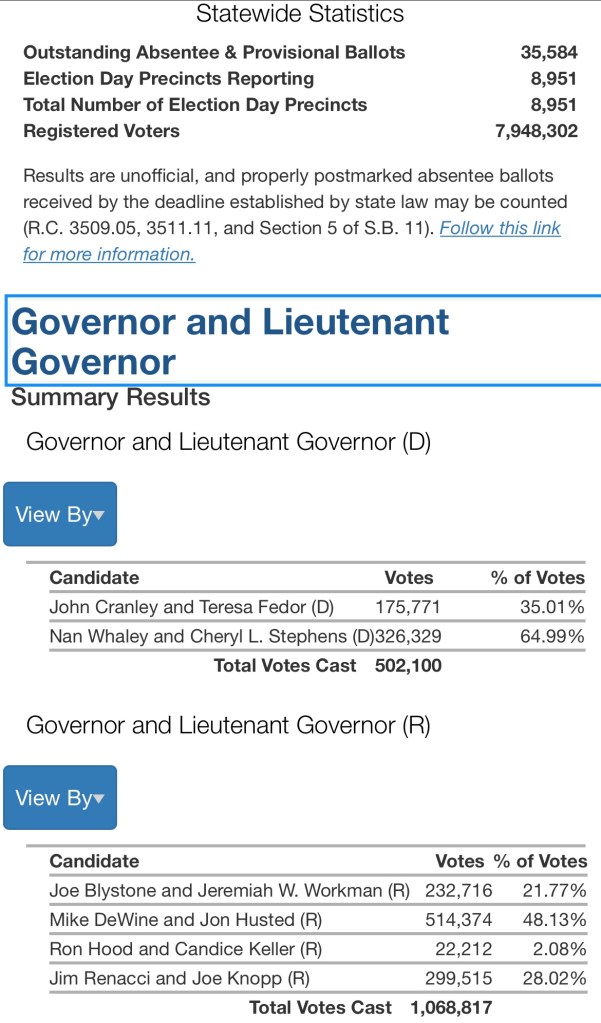
On Tuesday evening, Ohio conducted its primary election for Federal and Statewide offices. If you missed the memo about the election, you weren’t alone. There were a great many folks confused about just what’s happening in our primary due to the ongoing battle over legislative districts maps. But that’s a post for another day.

Now that the results are in, there are some key takeaways that we should all keep in mind as we move toward the November General Election. Since there weren’t many points of friction in the Democrat races, this post is I’ll focus on the Republican campaigns.

Trump Has Juice

Love him or hate him, it’s important to acknowledge the sizable impact President Trump’s endorsement of J.D. Vance had on the final outcome of the US Senate primary. With a large, split field of candidates still on the ballot, his endorsement took Vance from the back of the pack to the lead dog overnight. That’s a lot of sway in a year when electorate turnout will be difficult to predict.

His impact on this race shows a pattern in Ohio. Similar to the special elections in 2018 and 2020 for House races in the 12th and 15th districts, this strategy once again paid off in a big way. It also gives 45 a great deal of leverage as he continues to build his reputation as long maker.

Democrats would be well served to set aside scoffing at 45 for the time being. Underestimating his ability to galvanize his base will give Vance a lot of steam. Dismissing his impact on the race, and once again underestimating him, will make an already tough election cycle all that much harder.

Mike DeWine Doesn’t Need Juice

There was a great deal of speculation over Mike DeWine’s support among Republicans heading into Tuesday. While polls never showed him as seriously threatened by his two opponents, the Republican gubernatorial battle was called earlier than many expected. And while that is notable, this is the rest of the story:

If you look at total turnout between Republicans and Democrats, Republicans are showing a big lead in the enthusiasm game. There could be a lot of factors at play, but in the moment right now, Democrats will need their own galvanizing force to drive reliable voters to the polls in November. Whether the explosion of commentary around abortion – spurred by the recently leaked Supreme Court documents – will be enough of a force is yet to be determined.

With a lagging economy and a stalled agenda, I think it’d be a drastic mistake to turn the next 6 months into a one issue agenda. Base hits would go a long way in sustaining the grassroots activists Democrats will need to drive registration and get out the vote efforts in the fall.

Don’t Discount Authenticity

Ohioans still value known quantities. Tim Ryan is a fairly well known quantity – and he’s deeply authentic with real people. Even though his Presidential campaign never caught traction in 2020, his style will continue to resonate with a lot of Buckeyes.

Much like Sherrod Brown, Tim Ryan knows how to relate to real people. Republicans have a tougher opponent than they’d like to admit. He’s a shoe-leather politician. He’ll work damn hard and come across as one hundred percent authentic in just about every setting.

If he can keep his campaign a multi-issue affair, he’s going to make it a helluva fight. Ultimately, that may still not be enough in this environment. But Vance had better come ready to work.

A Parting Thought

Advocates in Ohio have a tough few months ahead. As we try to read the tea leaves, we also must balance the reality that we STILL don’t know the legislative districts for our state’s General Assembly. There will be a ton of confusion among voters and volunteer advocates well into the fall.

If you are passionate about a given issue – really, any issue – it’s time to get connected to a sound advocacy organization. They will help you navigate the confusing seas ahead. They’ll also be able to help you stay on top of the need to vote in the August special primary election for state legislative races. All in all, now is a great time to join an advocacy organization.

Beware the “Easy Wins”

The next 6 months of American politics are somewhat…well…predictable. It’s silly season after all.

Midterm elections have already shaped the conversations in local communities across the country. State and federal legislators are back in their home districts, engaging in party primaries. With that comes the typical us versus them posturing as both run toward their respective bases.

Social issues dominate the conversation – those deeply personal issues that both galvanize and mobilize supporters. At the same time, the heightened attention to these issues will drive opposing stakeholders into the public debate in fractious ways. That visibility and friction historically means we just won’t see much real movement on big policy.

With few exceptions, there is just not likely to be real juice behind any sweeping changes. The appetite just usually isn’t there for big bites at the apple. If that’s the case in 2022, what can we expect to see between now and early November?

We won’t be “building back better”…kind of

Over the last two months, the Biden administration has had its hands full. The Russian invasion of Ukraine has driven the focus from domestic to foreign policy. Necessarily, that’s left congressional Democrats hungry for a swing of the pendulum back to domestic issues. In short, they want to deliver some of their national agenda while they can – and while voters are paying attention – to help soften the blow of what most are expecting to be a pretty devastating general election.

But even with that insistence from congressional leaders, they just don’t have the sure votes to pass sweeping reforms like the stalled Build Back Better Act. It’s just too damn big for them to garner the support they’ll need with the narrowest of margins in the Senate.

What we can expect, and advocates should prepare for, is a strategy that breaks key components of that legislation out in a series of small, maybe even a bit easier to swallow, wins in the House of Representatives that will set up a series of close votes in the US Senate.

One of these key issues to watch is in the realm of tax policy. There were a LOT of unpopular proposals tucked away within Build Back Better as a series of “pay-fors” that would allow Democrats to offset some of the overall cost of that massive bill. Regardless of what they could accomplish through appropriations, a significant portion of these tax measures would fundamentally alter the structure of our tax code and cause significant shifts in how businesses will have to plan for the future.

Because they won’t be wrapped into, or buried in, a larger package many of these proposals will be dead on arrival in the Senate. But they’ll be important moral causes for embattled Democrats to champion back home to get out the vote in suburban swing districts. But these aren’t the only “easy wins” we may see pursued.

The Shortsighted Attack on the Gas Tax

The fairest forms of taxation in America directly tie a point of taxation to a specific service provided through that revenue. The purest form of that, in my opinion, is the gas tax. As much as I bemoan taxes, this direct service tax correlates to one’s usage of a public good and is relatively fair. More importantly, it’s a valuable tool at the federal AND state levels to fund infrastructure in a fiscally responsible way.

And it’s under attack.

With the spike in gas prices over the last few months, we’ve seen Republicans return to familiar stomping grounds with calls to fully eliminate the gas tax in some states. I would caution my fellow Republicans to shut this effort down.

Now, more than ever, our friends and neighbors are feeling the pain of stretched supply lines. We know our infrastructure is struggling to keep pace with demand. Despite the administration’s success in rolling out a massive infrastructure bill last year, those dollars will take time to move through the system to the local communities that need them. Eliminating the gas tax, while popular to voters at the pump, cuts our ability to govern effectively at the knees.

I’m for small government, but I want that government to be effective in administering public goods. When we appeal to the “easy win” we often ignore the second and third order effects of those decisions. Eliminating the gas tax now, even temporarily, is a shortsighted idea. It’s also an unnecessary one when alternative answers exist.

Look to Late November

At some point, we have to acknowledge that the work of governance never stops – despite the theatrics of silly season. Both major parties are going to see their agendas stymied over the coming months. There will be some fireworks. There will be some controversy. But there will be very little in the way of big action.

Instead, both sides will find themselves pursuing base hits – the types of wins (symbolic though they may be) that help them run invigorated campaigns through November. But those base hits will leave a lot of innings to be played during the lame duck session of Congress in November and December.

Advocates – experienced and novice alike – need to be reading the tea leaves in the coming months to figure out just what could happen in that window of time. Lame duck can be just that, very lame. Or, it can be spun into an extreme level of frenetic activity – activity that could have some sweeping proposals launched, and passed, before we even finish catching our breath from the election cycle.

Why? Because if what everyone thinks will happen actually does, that will be the last window for a stampede of legislation that could carry the administration’s agenda forward into the 2024 Presidential cycle. And at that point, there will be nothing left for national Democrats to lose by forcing unpopular votes.

Small, easy wins right now will distract us. We have to be wary of them from both parties. They will invariably lead to a need for game winning grand slams in November and December. As we continue to engage with elected officials, it’s important to balance the need to help them deliver base hits AND think through which just aren’t the right fit in the long term.

Identify and Overcome Barriers to Advocacy

The unfortunate reality of politics in America is that most people just aren’t engaged. Whether it’s because they are intimidated by the friction or deterred by a sense of futility, the vast majority rarely engage in politics beyond casting their vote every 2 to 4 years. 

Let me ask you a question. When you’ve thought about jumping in and sharing your thoughts on issues, have you found yourself saying anything like the following?

“I just don’t know enough about it.”

“What I have to say won’t really matter.”

“I just don’t have the time right now.”

“I’ve never done it. I wouldn’t know what to say.”

Sound familiar? These are some of the most common responses when folks are asked to participate in advocacy campaigns. Successful advocacy organizations have quite a lift ahead of them to get prospective advocates over these barriers.

From my point of view, there are 4 key drivers behind these statements that prevent people from really leaning into issue advocacy. See if any of these ring true for you:

1. Time Commitment – How they perceive the burden of participation will impact their lives.

2. Self-Perception & Doubt – Questioning their own abilities to participate effectively.

3. Diminished understanding of their inherent value – Belief that their contributions won’t ultimately matter.

4. Perceived lack of knowledge – A belief they can’t or won’t be considered as an expert on an issue.

Everyone I know has some kind of issue they really, deeply believe in. For me, advocating for veterans is one of those really personal issues. It’s something that gets me out of bed and excited to go to battle. But I also recognize that it’s a little easier for me. 

I’ve been trained in effective ways to engage with political offices – and I’ve worked for those offices, often witnessing the really good (and the really bad) in action. 

Any good advocacy organization – a non-profit, a trade association, a community group – any that are worth their salt understand the need to help their advocates overcome these barriers. 

So how do they do it? 

First, we constantly adapt to new technologies so our volunteers can take action in increasingly easier ways. What used to take writing a personal, mailed letter now happens through text messages and online forms. It’s now easier than ever to participate in causes because good organizations are working to make it that way. 

Secondly, we as an industry have to find better ways to convey the importance of your personal story in effecting change. There is massive value behind the lived experiences of those facing the problems we’re trying to fix. 

Unfortunately a lot of groups still fall short of empowering the necessary storytelling that effective advocacy requires. Instead we tend to default toward data, facts and figures. That kind of focus does nothing but dissuade would-be advocates. 

If you’re serious about a cause, I want to challenge you to shop around to find organizations who don’t make this mistake. Find organizations that prioritize putting YOUR story front and center. 

Lastly, effective organizations lean into facilitating relationship building. More often than not, you aren’t going to deliver a “yes” for your cause the first time you meet with a decision maker. Instead, effective advocates focus on relationship building – adding value to their targets, and becoming a long term resource for them. 

That’s the tough work of advocacy – but I think it is immensely more palatable than challenging our volunteers to memorize talking points, facts & figures, or to push for an immediate “yes.” It’s just more realistic that we will keep you in the fight if we help you understand the value of positive movement toward impactful relationships. 

But what should you, as someone interested in politics and advocacy, do to prepare yourself to get over these barriers?

Start by asking yourself which barriers are in your way. Ask yourself, if this issue is so damn important to me, why can’t I get myself to send an email to my representative? Am I hiding behind an excuse like “I don’t know how to do it?” If you are, stick around, subscribe and keep an eye out for new content here that will help you crack the code.

Should You Call Your Congressman?

For almost 10 years I had a front row seat to watch just how much an elected official can do to help their constituents. I met with, and personally helped hundreds of veterans receive millions of dollars in disability benefits they were owed for disability claims previously denied. I walked countless constituents through headaches with the IRS, the Social Security Administration, and almost every other federal agency.

I also saw when those efforts to intervene came up short. I delivered the bad news – from time to time – that there was nothing more in our office’s authority that we could do to fix the problem.

These were all the experiences you gain when you work for the part of a Congressman’s team many forget to consider: the District Office.

When folks think “Congress” they usually think of two things: Washington, DC and campaigns. These come to mind first because e are often the most visible. But nearly every representative I’ve known takes the most pride in what their District team can do to help folks in need right back at home.

That’s an understandable pride too. Campaigns are a necessary grind. Legislating is too – with very few wins. In fact, the average piece of legislation will take around 7 years from inception to final passage – if it makes any headway at all! Considering the average tenure in Congress is now 6.5 years, that means there are individual representatives who may never see a single piece of their own legislation become law.

But almost all of them find other ways to help their constituents. Those other ways hinge on the practice of Congressional oversight.

Oversight 101

Because Congress holds the purse strings – this means they control the national budget – they retain the authority to oversee the execution of federal programs and policies. That oversight allows them to send inquiries on behalf of constituents who are facing problems with federal agencies. Those inquiries must be answered by the agencies in question. Certainly not always, but often, those inquiries allow managers within the agencies to get fresh eyes on a problem and find a meaningful solution.

When people think about members of Congress, they often assume the only answer they can provide is introducing a piece of legislation. That limited thinking often gets in the way of us seeking effective help from those elected representatives and their staffs.

Is that Oversight Authority Right for Your Situation?

For those involved in advocacy, we need to break the default setting that our “asks” always have to be around legislation. Rather, we should find ways to help our volunteer advocates navigate these other resources to find solutions to their problems.

But if you’re wondering whether this is a resource for you when you’re facing a problem, these three questions could help:

1. Is my problem with a federal, state or local agency?

If so, a Congressional District office can help with a direct inquiry, or get you connected to an appropriate office at the state and local level. Effectively identifying which agency is handling your issue will help you determine if a representative can help, and whether they are the right office for the job. But even if it’s not from their level of government, most elected officials will want to – at the very least – help you get connected to the right contact for help.

2. Is the problem with existing policy that needs to change, or do I need help demonstrating the agency made a mistake?

This gets to the issue of legislation versus oversight. If your problem is that a bureaucrat isn’t looking at the details of your problem, you’re likely able to go through the inquiry process. But if you need an agency rule re-written or a policy changed then you’re probably going to end up going down the path of asking for legislation.

But don’t fret – sometimes those discoveries allow elected officials a chance to address similar problems for constituents across their population. That’s a big win if they get it passed.

3. Am I willing to share the information on my situation with a non-attorney third party?

Members of Congress, and their staffs, are not legal representation. They cannot defend you in court or help you file a lawsuit. To have them engage in your situation has to fall in a narrower set of authorities – and it will also require your willingness to share the story of your troubles. This is thorny because often the situations that cause you to finally pick up the phone are often some of your hardest struggles. While they will abide by the Privacy Act, you need to understand that your work with them does not meet the threshold of attorney-client privilege.

Because of that lack of privilege, sometimes your elected representatives just aren’t the right fit. Unfortunately I had to share that reality with a handful of folks along the way because their issue absolutely had to head to the courts for resolution – not the administration.

The Bottom Line

If you’re facing a challenge with a government agency, there are systemic tools at your disposal. You have very little, if anything, to lose by calling a Congressional District Office to share that challenge.

They can help you navigate the bureaucracy. They can help identify if the issues are bigger and need a legislative fix. And even if it’s not in their direct purview, it’s more likely than not that they can get you connected to another level of government that can help you.

So, if you ever find yourself asking whether you should contact your Congressman, the short answer is yes, pick up the phone.

An Important Reminder to Move On

Transcript-ish below

Are your political hang ups holding you – and your cause – back? 

This week I was reminded of a very important lesson in politics and advocacy: the ability to leave the past in the past is a genuine superpower – one that helps us recognize the opportunities in front of us instead of dwelling on what we can no longer change. 

As advocates, our missions continue even when we fail. Our causes demand a continuous churn. Occasionally, that means WE must return to those who’ve voted against us in the past, and re-engage with them. 

If a decision maker hasn’t voted your way in the past, the most harmful thing you can do is to write them off for the future. 

Here’s what I mean. 

When I was a congressional staffer, before becoming a lobbyist here in Ohio, I met with a lot of people. Over nearly a decade in that work, it was inevitable. And a lot of those meetings were with people whose agenda didn’t necessarily align with my boss’s voting record. That’s also inevitable. 

But those groups could be split into two camps. In one, a dedicated advocacy team would evaluate results and strategize how to keep the conversation moving in the future. Often times, that required them to help their volunteer advocates understand the importance of moving on. These folks were the tireless professionals who understood the value of perpetuating relationships. 

The other camp goes a different direction. 

Sometimes our issues seem so consequential to us that a wrong action by an elected official almost seems like a personal affront. In those moments, it’s the easiest – and the laziest – thing in the world to write them off and say we’ll never engage with them again. 

That’s right. This type of thinking is lazy.

Worse yet, it only harms YOUR agenda by allowing those who do show up to crowd out your agenda.

I’ve met a lot of advocates like this. Folks who, because of a party affiliation or even a single issue, refuse to engage with those they’ve written off. It’s a terrible waste. 

As I do my own work, I know I have to check this tendency myself – and it’s not easy. But because it’s my profession, I’ve had to develop those skills. 

For volunteer advocates that personal nature of the cause could mean you’re too close to the issue and need to take a step back. But if we want to overcome this barrier for advocates in the long term, it has to be a part of the culture we push within the industry. 

If I’m being honest, I think it’s one of the first big steps we have to take if we are SERIOUS about making our public debate more civil. We have to own that challenge. No one else can, or will, do it for us. 

So, as you prepare to jump back in the ring for your cause I want you to think about the decision makers you’ve written off. Maybe it’s because they voted against you. Maybe it’s because the last meeting was contentious. Maybe it’s as simple as they’re registered in the other party. 

Start by recognizing their humanity, and that humans change, grow and learn. We constantly have opportunities to deal with each other differently. And if you can learn to leave the past where it belongs, you may just stumble on a new way to change the world. 

Ask Me Anything

If you’ve started following me on Instagram or TikTok, you’re likely seeing more video content. I’ve been sharing short 1-3 minute videos about the topics you often see on this blog – tips and tricks that can make it just a little bit easier to understand, and deal with, American politics and government.

I’m passionate about sharing these tools because I believe a really simple truth: if we truly want better, more civil representation, we have to begin by owning the responsibility to improve our own approach to politics.

Professional advocates have an advantage. We train. We practice our pitches. We build our work around the basics of relationship building. Because it’s our 9-5, we have a head start. But we’ve also invested the time in answering all those little questions folks tend to have about the “how” of governance.

But for the average person, it’s all still quite often mysterious. The process of governance is full of confusion – spurred by equal parts confounding bureaucracy and infuriating partisanship – that causes so many to simply throw their hands in the air and ignore it all. Sadly, that leaves you ill-prepared for the moment when you’ll need to engage in the process.

And yes. At some point, we’ll all butt our heads against the process. That’s what makes these tips, tricks and tools valuable.

But as much as I love writing these posts, I also recognize the need for other types of content if I’m going to share my message with the broadest audience possible. So it’s time to stretch myself. That’s why I’m posting this video on my social accounts…

If I’m being honest, I’m still a bit stunned by the reach this blog has gotten. I’m still small by so many standards, but the number of folks who come up and go out of their way to say they read the content regularly is humbling. That feedback comes from all corners. And now, it’s time to level up.

I really believe answering questions directly from you will help do just that.

And I may not always have the answer. But that will help me dive into my network to see if I can bring some other voices – and faces – into the conversation. Responding to you will help generate the “new types of content” I promised you at the beginning of the year.

So, in short, I do need YOU. I’d be really grateful if you’d take a moment and fill out the box below with whatever question pops into your mind first. Don’t over think it – because if you’re asking it, someone else will be too!

Social Media Advocacy: What Works, What Doesn’t, and How that Could Change

We live in an incredible time of connection. We have more access to everyone in our lives and that includes the public servants representing our communities. We can see much more of what they do on a daily basis. We can check in on their work like never before – and that change is driven by social media.

But while we can view more of what they do, there’s a common misconception about what they see US doing. There’s an unspoken assumption that they – or their team – will see when we tag them in a post, or when we send them a DM. But that’s not necessarily the case, and if we don’t dispel those notions, volunteer advocates will find themselves frustrated by a lack of progress from engaging with elected officials across platforms.

Bottom Line Up Front: you need to think about social media campaigns differently.

What leads to that lack of engagement? What’s not working for well-intentioned advocacy campaigns? What’s going to get in the way of advancing your cause?

Social media is great for crowdsourcing volume on a topic. Unfortunately, effective advocacy is almost invariably better because of its timing, not its volume. We’ve all seen social awareness campaigns that aim to make a hashtag go viral – and sometimes they do – but ignore the importance of activating advocates who have an established relationship with a decision maker.

Hashtags, tagging, and sharing posts are great for generating a sense of immediate action for those looking to dip their toes into an issue. But each of those systems approaches are passive in nature. Each of them sends a message into the ether of the internet, with the hope that it will reach the right people to influence a decision. But elected officials have limited resources just like the rest of us. (More on this here.)

An average congressional district is home to 750,000~ residents. For all of those would-be tweeters, there’s typically only ONE staff member who monitors social media traffic for a member of Congress. That person, like everyone on Capitol Hill, has about 15 other jobs to do at the same time. Your hashtag is little more than carrier pigeon trying to fly through a hurricane. It’s just not a great way to advance your agenda directly with the humans on the other end of that internet connection.

So what does work?

Again, social media is great for crowdsourcing volume. But if you want the message to make it to those who need to hear it, social media should be driving advocates to a more specific action. That’s why you’ll often see advocacy organizations share a link that drives viewers to a separate website – one dedicated to helping them send a message directly to the constituent relationship management platforms employed by elected officials.

These action centers are built to shepherd a personalized message right to the staff of a decision maker. Most importantly, it does so through the proper channels so your message will filter right to the staff who need to see it most.

I know it seems cumbersome and it interrupts your happy scrolling. But I have to tell you – if you really care about an issue, these systems are absolutely more effective. They remove the barriers of navigating to an individual congressman’s website, calling their team, writing a letter, etc. These platforms make your life easier, and your message more likely to catch the right eyes. They also often empower you to add your own personal narrative to a message – allowing you to share your personal experiences with an issue.

But technology will continue to evolve.

In the wake of COVID-19, elected officials at every level invested in technology and training that would allow them to maximize their remote constituent engagement. Those investments have changed the game for a lot of folks. In my own state, newer state representatives are prioritizing spending more time back home in their districts and less time in the capital city meeting voters at receptions and events. It’s a shift facilitated by greater technology.

But that means advocates have to find innovative approaches to build the meaningful relationships that will help their messaging get through the noise. They’ll need to invest more time in being back in the communities where they’ll find those decision makers, and perhaps less time in the Capitol. That’s going to look different for everyone, but it’s a strategic decision that should be considered now, well ahead of the next session of Congress or your state’s legislature.

But if you’re just starting out in volunteer advocacy, you don’t need to worry about that just yet. Instead, take a simple step forward. Don’t worry about crafting a perfect tweet or post about an issue. Instead do this:

  1. Click on, and complete a call to action if your trusted advocacy organization posts a link.
  2. Share that link with your own network and ask them to fill it out too simply to amplify the reach of the original post.
  3. Get comfortable typing in your own story, in your own words, on those digital forms. It will help your message stand out from the crowd.
  4. Get back to scrolling and enjoying your time making social media social again.

One Question to Help You Feel Less Scripted, More Natural in Any Meeting

Talking points. Briefing memos. Prep docs.

I hate them all.

Ok that may be a bit strong. These are the kinds of materials that so many look for when they’re preparing to advocate on an issue. They want complex issues distilled down to sound bytes, with supporting facts to hammer home the points they’ll try to make in the room.

For many, those kind of documents are great. If you’re willing to put in the time to digest the issues – really getting deep with them – briefing memos and talking points can be tremendously helpful in organizing your thoughts. But what about the volunteer advocate walking off the street to help with the cause?

If I’m being perfectly honest, that unscripted volunteer advocate is a must have for me.

Sure, we want the rockstars who know the issues and have done the homework. But on some level, they can actually be over-prepared. In those situations, they can come across as scripted and rigid. More often than not, that scripting doesn’t connect in the way you think it might.

Years ago, I had a volunteer team of advocates across the table from me on an issue they were trying to highlight for members of Congress in Ohio. They were extremely well rehearsed. It was almost as if they were reading from cue cards. And as a guy who’s spent his fair amount of time on stage in life I can appreciate the effort. But their message failed to connect in this meeting. Why?

Simply put, they were talking at their targets, not with them. Because they had spent so much effort tightening their talking points, they were reacting to cues from each other and failing to make the very necessary human connection that’s so important in advocacy.

To prevent that in my own advocacy work, I use a really simple trick to help my volunteers distill the meeting down to the most important sentiments they wish to convey. I ask them one simple question:

“If you leave this meeting and they can only remember one thing you say, what do you want it to be?”

This question is a great way to get folks to pull their heads out of the briefing documents and see the bigger opportunity in front of them. I ask the question – or some variation – ahead of the vast majority of the meetings I host (not just the political ones).

You should absolutely have a plan for how your advocacy team will progress through a meeting. You should absolutely spend time learning what you can about the details of your issue. You should absolutely do your homework on what opponents would say to counter your arguments. You should absolutely read the briefing documents.

But in the moments before the meeting, and after all that cramming, you should absolutely take a moment to shut it all out. Boil it all down to the one idea that you’d kick yourself for not delivering. That topic, that one idea, that’s the bread and butter to breaking yourself away from coming across as too scripted.

When we get to the core of our motivations, we are more likely to convey a story that connects with a listener. Advocacy is so deeply personal that it would be a missed opportunity to hide your passion behind a briefing memo. Find your core concept, and tell the story that matters.

We have to break the idea that a policy proposal has to be delivered flawlessly to be effective. It’s just unrealistic. You’re not going to have all of the answers in the room, but you can bring every ounce of your personality into the room. You and your story – at the end of the day – will be all the more effective if you put this one hack into practice.