Reluctant Warriors

I’m writing this piece after spending an hour catching up on the latest out of Ukraine, and some time before that reading a biography on Ulysses S. Grant. That particular cocktail can bring your attention to a staggering truth about war: those who prepare to fight them, rarely want to.

Our 18th President was no stranger to the traumas and tragedies of war. His particular brand of attrition, overlapping with the earliest days of the industrial revolution, made for a special kind of battlefield hellscape. One which would go relatively unrivaled until the trenches of World War I.

Yet despite the fierce reputation he earned while leading troops under fire, Grant seems to have seen himself as a reluctant warrior.

Photo Credit, Blood and Glory: The Civil War in Color, available on History.com

“Though I have been trained as a soldier, and participated in many battles, there never was a time when, in my opinion, some way could not be found to prevent the drawing of the sword.”

Ulysses S. Grant

I think Grant’s sentiment here would fit right in with the latest generation of general officers. War weary professionals, with twenty or more years of combat rotations under their belts would probably tell Grant to pull up a chair and speak among friends. And they’d probably have a few choice comments over how little the politics of war has changed.

After all, you’d be hard pressed to find a fellow American who wants to send their sons and daughters to fight on foreign shores. This is one of our most intriguing cultural traits. We profess isolationist tendencies – all while preparing to send our boys and girls into the thick of it as some of the best trained, most well-equipped and lethal forces in the history of mankind.

Right now, that national cognitive dissonance finds itself centered on Ukraine. The challenge of that dissonance, though, remains the fact that we don’t get to call all of the shots in the global system. There are others. Others who will overrun their neighbors. Others who will threaten our allies. Others who will gather their own citizens into ghettos and murder them in cold blood. Others who will trample on the little guy. Others who will act.

Because others act, we don’t have the luxury to sit on the sidelines.

I’ll take heat for this viewpoint. Libertarians and Progressives alike will decry me as a warmonger. But those detractors ignore the facts of history: when America recedes, others rush to fill the power vacuum. It’s only natural. And those who would stand for isolation and appeasement embrace failed philosophies – philosophies that will end in tragedy for Ukrainian civilians if and when a malevolent Putin penetrates the boundaries of a sovereign nation.

In the quote above, Grant admonishes us to pursue diplomacy. As we should. But Grant also acknowledged reality in his time: sometimes war must be waged as a means to peace, and the defense of our most precious values.

It’s that sense of realism where I think most Americans reside. We understand both the tragedy, and the necessity of action. We wrestle with these conflicting traits. Until the very last possible moment of decision. Then we act, decisively.

Grant’s legacy has been tarnished by some historians. The battlefield savior of the republic, under the stress of the Presidency, suffered the same failing of every President: he was human. He failed. He didn’t live up to the legend. We never do.

But I think he serves us right now as an important reminder of our own internal conflict. We know that both war and inaction hold their costs. We also know that at some point, the action of others will demand an American response. But I remain hopeful just because our nation keeps wrestling with these competing ideas. It’s my sign that we’re on the right side of history.

And as flawed as he was, Grant seems to be the type of American we continue to need. A pragmatist, a realist, and someone seeking something better. And once the decision is made, let’s just make sure we’ve got some Generals with his determination too.

Advocacy Meetings 109: Practice, Practice, Practice

There’s something we do in the military that I don’t see as often in civilian life – at least not in the advocacy world. It’s a powerful tool to help teams coalesce before an action and improvise during that mission. And when things inevitably go wrong in the field, this one tool helps everyone understand what their options are so they can react faster.

What’s the magic trick? We rehearse.

That word rehearse seems loaded. For most, that seems like practicing your lines before taking the stage for your role in the high school play. Well, that’s not quite what I mean.

In the Marines, these rehearsals are about placing yourself mentally in the terrain ahead of a mission and walking through the major challenges you could face along the way. You try to visualize weaknesses in your plan, and ask your team to do the same. You run through different scenarios so your team can help develop the responsive actions they’ll take when shit hits the fan. You’re practicing how to improvise, adapt, and overcome obstacles that you can’t see yet.

It’s less like memorizing a script, and more like learning how to play in a jazz ensemble.

These rehearsals, sometimes called Rock Walks or Chalk Talks, take different forms. At the small unit level, it could be a squad gathered around a map minutes before a patrol. Before major actions like the invasion of Iraq, massive sand tables were built in 3-D so unit commanders could literally walk the terrain (in miniature) and determine how their units would work together to effectively accomplish their missions.

Marines rehearsing ahead of a mission, using an improvised sand table in the field. Photo credit, National Archives and Records Administration

As silly as we sometimes felt walking through these types of practices, we knew they were an invaluable tool. They helped us as leaders to express the most important parts our plan. They helped us determine where we needed improvement. And they helped us predict the friction points where the enemy could pose challenges.

Unfortunately, there aren’t that many in the advocacy world who practice like this.

As I work with aspiring and experienced advocates alike, the need for our own version of these rehearsals becomes more and more apparent. They’re a sure fire way too help a team of volunteer advocates gel together, learn how to cue off one another, and how to help them recover if a meeting goes off the rails. And if done right, they can help a team understand the importance of practicing the different parts of their meeting agenda.

Little things go a long way in helping your advocacy team stand out. Things like managing the meeting clock, getting to your ask, and telling a meaningful story. Missing key elements like those undermines your goals. The best way to avoid that is to institute your own form of rock walks.

So, what does that take? Here are my key elements of a good advocacy practice session.

1. A meeting plan – some kind of framework that helps communicate the key tasks within a meeting, the order in which they should occur, and who’s doing them. (If you need something like this, let’s talk – drop me a note at luke@partofthepossible.com)

2. Talking points – very brief notes for the participants to bone up on an issue quickly. This can be trimmed significantly for experienced advocates or teams dealing with issues they’ve worked on before.

3. Challenging opponents – designated players to act as the targets your advocates are meeting. These folks should have time to study the person they’re portraying – and they should imagine the types of ways those targets could derail the meeting in real life. They’re there to cause friction so the team can practice recovering.

I’m confident with these three minimum tools, any team can begin holding meaningful practice sessions to improve their performance in the room with an elected official. With the right framework, that same team can implement a professional, well thought out meeting in just about any environment. I know because I’ve done it.

Since my time in uniform, I’ve consistently tried to weave my own version of rock walks into the work I do. As many times as not, folks have rolled their eyes before a rehearsal session. The funny thing is, after a good, challenging meeting session, they almost always say their eyes have been opened. They felt more prepared and empowered to manage the chaos in their advocacy events. And they invariably credit the practice session for that empowerment.

We absolutely undervalue the benefit of rehearsals. It’s time to check our egos at the door. We all need practice when working with a team – especially in volunteer advocacy. If you want to maximize the effectiveness of your own advocacy work, it’s time to try a good old fashioned rehearsal.

Keep Showing Up

“What’s the one thing you think I can do to make a difference?”

That was a question I got from an intern a few years back. I can’t recall all the details of that conversation, but I know my advice is still the same. It’s what I’d tell you over coffee if we met today: “You have to keep showing up.”

Nowadays, in training after training, I find myself driving this point home again and again to aspiring advocates. The one thing you MUST do to make a difference, is to keep showing up.

And that’s pretty damn difficult.

Sure, there are the reasons we always hear about why folks don’t choose to participate. It’s too daunting. They don’t feel informed. They don’t know what to say. They don’t want to contribute money. They don’t have the time. They don’t care for the partisanship – or worse yet they won’t engage with “the other side” because of that partisanship.

But now, at least in Ohio, there’s another reason folks will throw up their hands once more and say “to hell with it.” Right now, they can’t even know who the candidates will be, or in what districts they’ll be running. That’s because Ohio’s recently changed rules on re-districting have gone nuclear in their very first outing. (Here’s the latest via The Columbus Dispatch.)

If you’re someone interested in creating positive change in the Buckeye state, regardless of your party politics, it’s incredibly difficult to stay motivated in the midst of this debacle. But that’s why we can’t bank on motivation. You see, the really effective, world changing people in American public life were never just motivated. They were consistent. They found ways to show up even when they weren’t feeling motivated. And it’s been like that since the beginning.

There’s a quote I’ve referenced on this blog before. It’s been attributed to our third President, Thomas Jefferson. But there’s very little proof he ever said it. Even the folks at Monticello.org call it spurious. Nevertheless, it holds a kernel of truth for us:

“We in America do not have government by the majority. We have government by the majority who participate.”

Attributed to Thomas Jefferson

Said another way: “if you want to have a say, you have to show up.”

I hope Jefferson did say those words. Our system depends on citizen participation. Our elected representatives aren’t imbued with some special wisdom when sworn in. Nor are they anointed with some mystic ability to understand the needs of those they serve. Rather, the moment they take office, they are seeking out information from their friends, neighbors, and constituents to determine just what all those folks do give a damn about.

And if we aren’t talking to those elected representatives, we’re only letting ourselves down.

That’s because winning effectively in advocacy work is almost never about getting everything you want – especially not quickly. It’s about building consensus, coalitions and credibility. Each of those depends on one, non-negotiable, minimum action: showing up.

Right now, your advocacy agenda could still be gaining traction with important decision makers, and those who can influence them in the next session of our general assembly or Congress. You can build the credibility with those who will act as gatekeepers on staff. You can engage other stakeholder groups who oppose your issue. You can keep showing up.

And you have to.

You have to show up to bolster your champions. You have to show up to sway your opponents. You have to show up if you’re ever going to win others to your side of an issue. You have to show up, and fail, and learn, and show up again.

Even when you don’t know who your representative will be.

Advocacy Meetings 108: Ditch the Theatrics

I’ll never forget the times activists worked hard to disrupt my work in a congressional office. But I forget just about every one of their names.

They’d stage sit-ins, launch into long winded diatribes, and they’d bring props to drive home their points. But I can’t tell you a thing about their positions. And more importantly, I can’t recall a single one of their stories.

For folks trying to advance an agenda, they failed at every point that truly matters.

As much as we all want to garner attention to our issues, there are productive ways, and destructive ways to do so. The productive put us on a trajectory toward relationships. The destructive prevent our messages from getting to the target. If you want to be credible, learn from the mistakes of others and ditch the theatrics.

Actions DO Speak Louder than Words

In a perfect world, we’d never feel like we have to scream to be heard. But when your agenda is on the line, and your volunteers are running hot, you can feel that desperation set in. It seeps into our behavior. Our voices rise, our body temperatures tick higher and higher, and our rationality declines. In those moments, heckling and disruption feel good. But the end result is rarely – if ever – an actual good for our cause.

When we give into those outbursts, our actions will undoubtedly speak louder than our words. They’ll also drown out our name, our reputation, and the character we aim to show to the world.

But in a more tangible way, when activists turn to chants and demonstrations, they crowd out the opportunity for calmer dialogue. This manifests itself in pretty profound ways. I’ve seen groups spend 60 minutes trying to disrupt a daily workflow without ever sharing their names. There wasn’t room. The organizer had prepared a demonstration and disregarded an offer for dialogue. They willfully let their actions speak for the cause – and they ultimately got nowhere.

Fevers Break

But I also understand the pressure on those organizers. They feel crushed under the prospect of a blow to their agenda. They’ve taken ownership in trying to achieve success, and they’ll own a failure all the more personally. So, they ramp up the pressure – trying to exert maximum force at a moment when a decision on the issue has probably already been made.

In the short term, they’re destined for disappointment. But the long term consequence for their team is also real: their volunteer advocates lose steam. Their fevers break.

It’s impossible to keep people engaged, motivated and participating if you’re mobilizing them solely from a place of fear. We are hardwired as a species to avoid those things that cause us pain and distress. If you’re trying to motivate advocates from a place of fear, you’ll lose them faster.

Squandering Your Most Precious Resource

Losing that volunteer muscle is much more damaging than you may know. It’s not just about the mere numbers. Rather, the damaging loss is that your message becomes disconnected from the people living with the issue.

As I’ve written on this blog many times before, those personalized experiences are the mother’s milk of politics in a representative republic. For elected officials who are serving ever growing constituencies, it’s impossible to keep up with the lived experience of those they represent. When your theatrics diminish your ranks, you miss key opportunities to convey the stories that will change minds.

Set Smaller Goals, and Engage Intentionally

Successful advocacy begins with a goal of establishing meaningful relationships – not winning debates. Your team should set aside any tactic that detracts from that effort. That includes the theatrics.

Instead, start with smaller goals that move you toward opportunities for future engagement. Invite your target to come see your group in action where policy is meeting people in real life. Meet with their staffs at regular intervals so you’re top of mind when a new proposal comes into the public debate. In short – be intentional about building a partnership with your target.

You’ll find, as you accomplish these smaller goals, that everyone is served better. Your volunteers will have staying power. You’ll have greater access. And in the long run, you may just convert an adversary to a champion.

2 Ancient Phrases to Kickstart Your Life

Over the last few years, my life – and enjoyment of it – has changed drastically. It hasn’t been about making more money. It hasn’t been about shunning the world and ditching materialism. It hasn’t been manifesting, the law of attraction or any other self-help guru talk you may hear.

No – I’ve been thinking about death.

Not in a morbid way, but in a stoic way. The idea of being “stoic” has morphed in our own lexicon to mean something different in common usage. When we think “stoic” we picture the immovable, maybe even the curmudgeonly man who seems to never let the joy of life seep into the cracks of his stone mask.

But we couldn’t be further from the truth. Stoicism is built around a more full enjoyment of the one life we do have. It’s basic tenets call on us to embrace rationality because that rationality helps us become our most human selves. I’ve found that the deeper I dive into this quiet philosophy, the more joy, the more optimism I experience every single day. And it all started really, with two phrases.

And they both revolve around death.

Memento Mori

“Remember that you must die.”

How often to we hear ourselves reminded that we’ve only got one life to live? Yet, in the same token, how many days do we live on repeat and not strive for something more? We take this one life for granted when we set our rationality aside and pursue our base pleasures. Memento Mori is a call to act differently.

While we in the modern world focus on the “living” part of one life to live, stoics of the ancient world would call on you to meditate on death – the great equalizer of the human experience. They’d challenge you, as Epictetus did, to remind yourself that even your children could die tomorrow. Internalizing that reality forces us to act differently – it’s no longer about seeking out what’s most enjoyable, but what’s most valuable.

It’s manifested in a unique way for me. I’ve started employing memento mori and Epictetus’ teaching about my own children, and it’s even altered how I put my daughter to bed.

Instead of rushing a frenetic bedtime, these two words have prompted me to use a “check in” technique to make sure I’m tapping into my daughter’s well-being. Each night now, I’m asking her questions like “do you feel safe,” or “are you excited for a great day tomorrow?”

Thinking about my own death – and the fleeting opportunity ahead of me – I’ve found these check-in moments are some of my favorite throughout the week. And even though she’s only three, I can tell she feels special because of this intentional focus. So much so that she’s started asking the questions back to me in her own way. I’ve seen her value that personal connection.

Thinking about my death, and it’s inevitability, prompted a new action for both of us. One that I cherish and am eager to see evolve.

Dum Spiro Spero

“While I breathe, I hope.”

Eternal optimism. That’s a legacy I hope to leave for my kids. I want them to know the reason I fought so hard to work in politics and advocacy is that I believed a brighter future was both possible, and worth the struggle. And as long as there is breath in my lungs, I have the opportunity to strive for that.

What a wonderful reminder, right? A simple, poetic line that can re-frame our mindset for the everyday and the grandiose challenges alike.

Are you struggling to make ends meet? You have the breath of life within you. You can bend your brain and your braun to the task and earn more, and earn it better. You can problem solve, grow and prosper.

Are you frustrated by the state of the world or a particular public issue? You have a reason to hope because you can take on the opportunity to pursue work worth doing and change the world. While you breathe, the issue is never lost.

Your death is inevitable, but every moment you breathe, you can have hope for a brighter future. Better yet, you can work toward it.

But They Can’t Just Be Slogans

The challenge, as always, is putting these phrases to work in our own lives. They can’t remain simple slogans. Not if they are to bolster our faith, and prompt us to go forward. They call us to action. If we fail to take those actions, the lesson is of no use in our lives.

How can Memento Mori and Dum Spiro Spero change how you spend your days? How can they kickstart your life – and the enjoyment of it?

Are you willing to challenge yourself to soak in the value of every moment possible? To stop worrying about the future and instead work to create it? I hope so. We need more who will.

Advocacy Meetings 107: Win With Coalitions

It’s no secret that I’m a personal and professional development junkie. I enjoy digesting the thoughts of those who’ve come up with ways to maximize their effectiveness, and reach the top tiers of their fields. It’s why I can’t get enough of Simon Sinek, Adam Grant and so many more.

Just the other day, while holding my newborn son while he slept off a milk-induced coma, I dove back into the work of John C. Maxwell – author of so many well known tracts focused on developing leaders. As I was working through Leading in Tough Times, a particular quote struck a chord…

The Need For Meaningful Coalitions

There’s no secret behind the success of federal infrastructure legislation over the last several years. Despite a longer than desired process, comprehensive legislation addressing infrastructure spending made major progress under both the Trump and Biden Administrations, and in the midst of congressional gridlock. How’d it happen?

Infrastructure crosses boundaries – both physical and metaphorical.

The breadth of our economy means the physical infrastructure that brings it all together affects individuals and special interest groups from incredibly diverse backgrounds. Our inland waterway system alone services the needs of manufacturing, defense, and agriculture while creating union jobs, promoting international trade and carrying rockets to launch facilities. A little something for everyone!

All of those cross-industry connections mean that infrastructure can generate a massive coalition force.

Building Coalitions that Matter

But it’s not enough that lots of different types of folks care about the same issue. No, they have to build the metaphorical bridges that will allow them to work together when it matters. They have to create trust.

That’s because, notably, coalitions working toward a broad cause like infrastructure spending often times include special interest groups that frequently stand on opposite sides of other issues. So how do they do it?

It requires a recognition that members of the coalition can complement each other’s efforts. By acknowledging the value of their differing influences and relationships, these emerging partnerships begin by recognizing the best qualities of “the other side.” Concurrently, they willfully set aside other fractious issues. In short, they value each other by their best moments, and for a time, ignore the rest.

You Win With People

And that’s the real secret sauce of coalitions. By choosing to set aside the issues of frequent disagreement, aligning your shared interests, and telling your stories to a broader audience you multiply your opportunities for success. You win with, and because of, the people.

Doesn’t your agenda deserve the same level of commitment? If you think so, how are you actively working to bring others into your tent? Who are the traditional opposition leaders who need to be brought to your table?

I’d challenge you to think on these questions. Who can you list right now and know – despite your other disagreements – could work to address a shared concern? Check your biases, and begin by valuing them by their best moments. The good work can follow from there.

It’s About More Than Just Ukraine

Do you remember just a few months back, when the Russians recklessly shot down one of their own satellites? As politicians and international diplomats decried the anti-satellite mission for hazarding the global satellite network and the International Space Station, it was easy to ignore the even more dangerous activity of a resurgent Russia.

Activity such as their growing efforts to align themselves with other antagonists of the West – notably Iran and China. You may have missed that, just last week, those three nations began an expansive series of trilateral naval exercises. Those maneuvers happen to be the third such exercise they’ve coordinated since 2019.

Or, their increasing assertions over territorial rights in the North Sea – a strategic positioning to gain unilateral control over shipping lanes of growing importance. You see, those waterways are becoming more regularly available due to global climate change and a resulting extended shipping season where those waters become navigable.

By extending their territorial rights closer to the arctic circle, they’ll be laying claim to massive oil and natural gas stores. Concurrently, they’ll be able to turn vast tracts of underutilized land into cultivated crop land – land that can now be serviced by new sea ports in the north. Oh and by the way, they’re offering their citizenry subsidies to move to these new lands in Siberia because they know the labor need they’ll create.

Yes, you read that right, global climate change is tilting an advantage to Russia’s favor – and they’re taking action to not miss the advantage. No wonder they are so eager to grow European dependence on Russian natural gas. Gas that will be more readily supplied via pipelines though Ukraine.

Russia seems to be playing a game of relative power and positioning – while also signaling to the world that their brute force can blunt the technological advantages of the west.

Now is a Time for American Leadership, and International Partnership

And there’s been no better time for them to do so. Successive Presidents now have inclined our foreign policy toward isolationism. Sure, we had carried on the conflicts in both Iraq and Afghanistan, but in that same span, our allies in Europe and much of the rest of the world were left wondering when we’d start waking up to the existential threats posed by the likes of both Russia and China.

Whether we like it or not, American exceptionalism is built in large measure on our willingness to do what others can’t or won’t.

That means from time to time, we have to gather the nations of the West and stand firm against the aggressors of the world. It can’t only ever be economic sanctions. Sometimes, that’s too little too late – especially economies on the scale of Russia and China. As America continues to pull back – under Presidents of both parties – these two will continue to work toward expanding their spheres of influence.

I’d recommend three books to both challenge you and broaden your view on the playing field of international politics – one of which is referenced on the Bookshelf. Sam Huntington’s Clash of Civilizations as well as Henry Kissinger’s World Order and On China. Each of these has helped me look at our national approach to foreign policy differently over the years. Each is well worth a read if you want to stretch yourself.

But for now, my simple takeaway is this: Politics should end at the water’s edge – and our ideals should shine into every dark place around the globe. We simply cannot afford the isolationism that so many embrace. When we do, the consequences are clear and proven time and time again. The latest dust-up is about more than Ukraine – it’s about our willingness to live up to the greatness we claim.

Work Worth Doing

For three and a half years, I’ve been a proud girl dad – reveling in the bond between a first born daughter and a first time father. We’ve done everything together and cataloged quite a few special experiences just for us. In the next several months, I have to double down on those special moments.

That’s because there’s a new member in our crew. May I introduce Luca Jackson!

It’s fairly surreal to have him here. For expectant fathers, the waiting game tends to keep us from feeling the reality of a new baby until the moment they are born. Our mental preparations are different than the mothers.

But now that he’s here, it’s already like he’s always been with us. Even his big sister has taken right to the new reality. I know there will be regressions and bumps along the road, but it’s incredible to watch her jump right in and try to be a part of it all.

Work Worth Doing

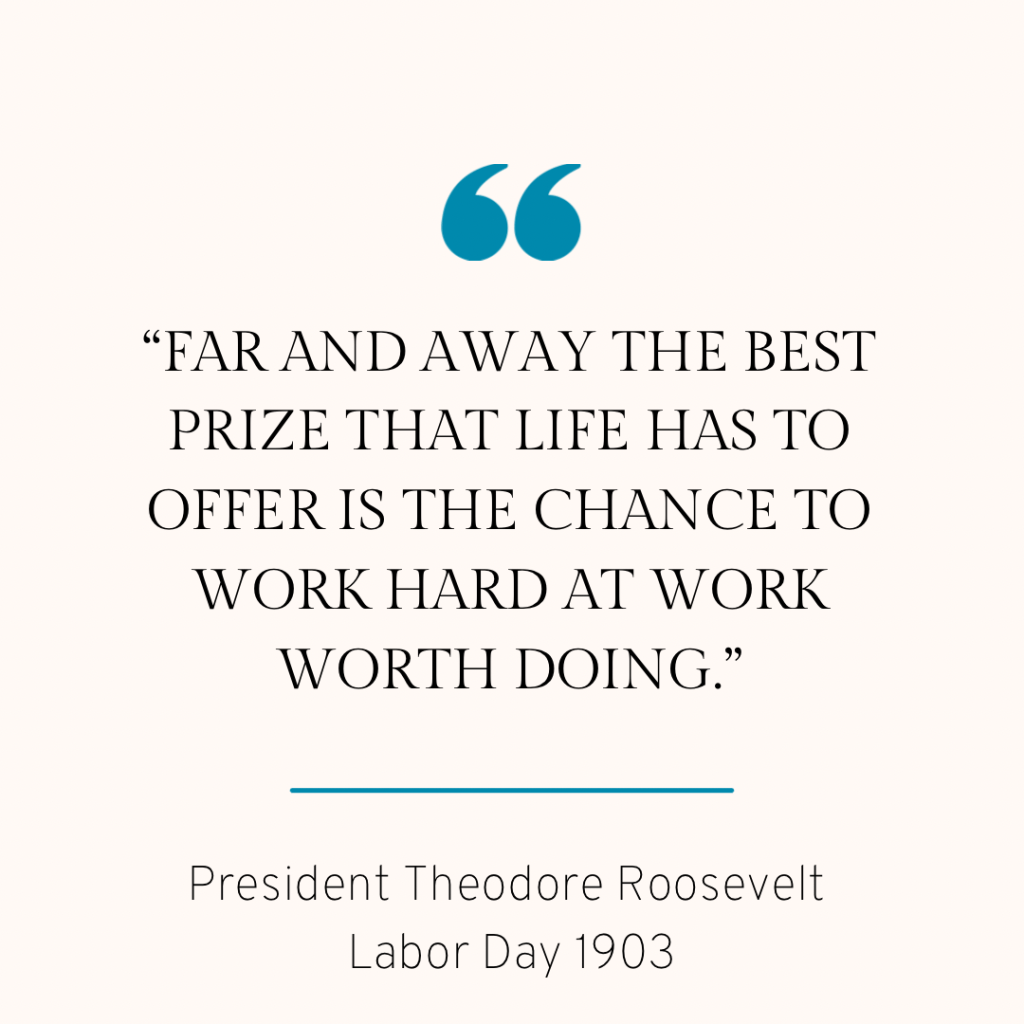
There’s been a Teddy Roosevelt quote running through my mind the last month as we prepared to bring Luca home.

TR wasn’t speaking directly about parenting during this Labor Day speech. But it has to apply to parenting just as much, if not more. The gift of life for parents is the opportunity to work incredibly hard at teaching another to navigate the challenges of life, stand on their own two feet, and look this life square in the eye. When our grown children don’t back down, and try to make the world even just a little bit better, well, that is work worth doing in my book.

My daughter, solidly in her toddler era, already shows a bit of that spirit. That’s probably why I’m most excited to see her in this new phase for all of us. I can’t wait to see her take on helping Luca stand firmly on his own two feet – both literally and figuratively. It promises to be a good show.

For now, he sleeps.

I’m not going to hide this from you though – our routines are still under construction. I’m typing this one-handed while rocking my son at 4 AM. A few quiet moments, intermittent at best, will be my creative space for some time now. So, I’ll be posting a bit less on here for this season. I hope to bring some new voices and perspectives to you in the coming weeks – but I may opt for other formats as well. More to come on that.

For now, getting him a few precious moments of deep sleep is priority number 1! After all, if he’s going to keep up with his big sister, and conquer his own life, he’ll need some proper rest. And the rest of us will try to get some too.

Advocacy Meetings 106: Meeting With the Other Side

Silly season is here again. We’re back to the campaign cycle – and it promises to be a doozy.

As associations, non-profits, and professional lobbyists alike try to rush agendas through before the end of this Congress in December, the push of politics is already bringing those efforts to a halt. At the federal and state levels alike, partisan gamesmanship is coming in its predictable primary and general election wave.

So what’s an advocate to do? How should you approach meeting with decision makers at a time when partisanship is on the upswing? Most importantly – how do you meet with someone from “the other side?”

First – What Not to Do

“I’d ask you what the Congresswoman thinks about this, but she’s a lousy democrat so I know you’ll just lie to me.”

I’m usually pretty stoic in legislative meetings, but this one made my jaw drop. I couldn’t believe my ears. I had just heard a volunteer advocate dismiss and insult the office staff of someone he hoped to win to his issue. Someone we absolutely needed to win to our cause. In case you’re wondering, that’s not a great way to move the needle on your issues.

This was years ago, but it’s neither the first, nor the last, time I experienced a faux pas like this. I’ve also been the target of such offhanded comments more than my fair share. For some reason, people still think insults help an argument. But political work, in any form, isn’t for the thin-skinned.

Knowing that it’s not an effective strategy, those who fall down the partisan trap in their advocacy efforts make a critical decision – to waste time. In my very first post in this series I wrote about the importance of managing the clock. Every bit of improvisational partisanship like this example wastes one of your most precious, measurable resource in a meeting: time.

Advocacy Can’t Be About Partisan Lines, It’s About Your Bottom Line

I get it. Politics is nothing if not deeply personal. It’s how we share some of our most closely held beliefs in the public square. And when we perceive someone else as the opposition, it’s difficult not to enter the fray already on the defense.

But advocacy can’t be about your partisan lines. Your policy proposals, if they are to be successful in any cycle, must bring together diverse groups of supporters if they are going to weather the storms of popular elections. You have to transition from that defensive posture before you let yourself walk through that office door.

Because every second of that meeting needs to be devoted to your bottom line. You accomplish that through thoughtful planning, and you guarantee it through meaningful rehearsals.

Breaking the Habit

You’ll struggle to set aside your partisanship early in your time as an advocate. Don’t worry. You’re not alone. It takes a great deal of practice.

But the more you immerse yourself in the public debate, and not in the social media comments section, you’ll come to realize a truth about our system. Despite the posturing, despite the campaign rhetoric, the vast majority of public servants (from both parties) are simply trying to do a job. Their own partisanship is a vehicle to re-election and a chance to keep doing work to support those in their districts.

This isn’t me being overly idealistic – I’ve been alongside too many of them to ignore this truth. They want to help people. And the more you work with them – in a professional manner – the more you’ll see the same.

This silly season, commit yourself to doing just that.

Become 5 Minutes Better

I’m an addict.

Sure, as addictions go, mine is fairly benign. I’m addicted to reading. Before you come at me, understand, I’m not dramatically stating “I love to read.” There is no hyperbole here, I am physically and mentally dependent on reading. If I was to miss a day of reading, there would be a noticeable change in my demeanor. There hasn’t been one of those changes in at least 741 days – at least not one induced by a lack of reading.

Like so many, I use my iPhone to track a lot of data about my life. My steps, my screen time, my audio levels…but by far the most important is my daily reading goal tracked through the Apple Books app. It’s a wonderful tool.

But now that e-reading has become such a prevalent part of my reading experience, I’m finding my level of tolerance is on the rise. Regrettably, my minimum daily reading goal (a paltry 30 minutes previously because I know how wild my schedule can be) just wasn’t cutting it – i needed a bigger fix. So, as part of the new year resolutions list, I’ve decided to become 5 minutes better at feeding my reading addiction.

What’s the Value of 5 Minutes?

I thought you’d never ask.

Is there something you spend 30 minutes on every single day? Anything – reading like me, cycling, walking, practicing an instrument – will do. Is there a hobby you especially enjoy, and in which you wish to improve your skills? If so, there’s incredible value in 5 minutes. Here’s my own personal math:

For the last two years, my minimum, non-work related, reading time each day was set for 30 minutes. Just enough to make sure I was meeting my addiction needs, but not so much that I was infringing unduly on other necessary work each day. 30 minutes. Nothing magical about it, but I like round numbers and a full hour seemed greedy (even though there are many days in the year when I exceed that).

Because I began tracking that time on an e-reader application, I found the total number of books I was consuming in a given year was growing – even though I could empirically say I wasn’t reading quantitatively more.

This year, I expect those numbers to go up because I’ve adjusted the goal to 35 minutes. If you add those 5 minutes of reading up throughout each week, it’s the equivalent of adding a full extra day of minimum reading per week. ADDICTS REJOICE!

Yeah. Thanks to the power of compound effort, at the end of next 2022, I plan to be 52 days worth of reading better than I was in 2021. That’s the value of just 5 minutes per day. It’s 14 percent year over year improvement. 14 percent!

Recognize the Quality of that Time

But as with most of those things we pursue for pleasure – it’s not just the quantity of time we spend that matters. It’s the quality. Ask any golfer and I’d bet you they’d tell you all about how they’re working to get better. They’ll spend an entire Saturday on the links working on incremental improvements. We can apply the same in every other hobby, project, or work venture in our lives.

For me, improving the quality of that time revolves around tracking my progress. Each day I can see the books I’m reading, the progress made, and the minutes consumed.

But more importantly, I know when I open that first book the timer starts. So I enter that time already prepared to dive in. I’m not ramping up. My 35 minutes doesn’t include getting into a comfortable seat, fetching my coffee, or any other prep. No – when the game clock starts, it’s time to play.

For me, adding in those 5 QUALITY minutes means I’m zoned in. I’m producing more. And boy is it a good high.

So, Take a Challenge

Did you commit yourself to doing “more” of something this year? It’s pretty common. New Years resolutions should have this balance, stop doing something negative, add in something positive. Right?

For your something more – are you tracking how much time you’re spending on it each day and week? If not, start there. Set a small, but limited goal like “30 minutes per day” and block it off in your schedule. Placing a number on that “more” will go a long way toward helping hold you accountable to that goal.

After about 1 month, do a check-in with yourself. Do you feel like you’re meeting your desired amount of time? Do you have room to grow? Will adding more time to that activity detract from some other vital task you’re performing?

I think as you check in with yourself over the course of a month, 3 months, 1 year and on, you’ll see there’s value in tracking. Then it’s time to add in your 5 minutes and gain your 14% year over year improvement.

I hope you give it a go. I’m honestly a little jealous of how good you’re going to get at that thing that brings you joy.