Success in Advocacy: Right-sizing your wins

Ten to fifteen years ago, I had a very different attitude toward politics. I was an all-or-nothing, winner-take-all partisan. I saw the political process as a zero sum game. That standard set me up for a lot of disappointment – because that’s just simply not the reality of our system.

But for so many, that mentality still guides how they interact with our public debates. It’s no wonder to me, then, why the tribalism of the last several years seems so much more palpable. If your tribe isn’t in power at a given level, you must be losing, right?

As I grew up in the politics of central Ohio, I found my own tribalism being challenged. As I experienced more of the art of governance versus the brawling nature of politics, I came to appreciate the difference of the two. I also came to realize from my own experience that maintaining your own peace in this work requires a shift in how we define success.

If you’re already suffering a bit of burnout over politics, and are dreading the prospect of the next Presidential election cycle, this shift could be especially important. Why? Because no matter what happens on the battlegrounds of politics, successful advocates have to bring their causes forward in the reality of governance.

Governance is ugly. It’s trench work. Governance is where the authority gained in elections is balanced by the challenge of managing complex systems. That’s a different type of conflict, and it can be harder to get people revved up to participate. Those who can keep showing up through the frustrations of that slog can chip away at their agenda.

But that starts by acknowledging the reality of the world around us and accepting that change comes in stages.

Very rarely is the slog and conflict of governance going to afford opportunities for sweeping changes. That’s not how our American system is designed. And that design has afforded us incredible stability in the face of partisan conflict.

But for advocates, that reality also challenges us to check our own expectations in the system. We can’t expect to get everything we want. We have to “right-size” our expectations to fit the reality around us. Not all of our ideas fit the current environment. Not all of our agenda will align with those in positions of influence. Because of that, we have to see “winning” in different lights.

Winning can’t always be getting a bill signed – we won’t always get a vote on our issues, let alone have the votes when we get the rare opportunity.

Winning can’t always be getting the exact appropriation we’re seeking in a budget – but are we showing incremental growth?

Hell, winning can’t always be having our issue top of mind for those in leadership positions – but it can be creating engagement opportunities to reconnect with those leaders.

This isn’t defeatism. Right-sizing your definition of winning in politics is how you commit to a longer fight. It’s how you stay above the petty frustrations of partisanship and keep moving forward on your agenda regardless of who’s in power. It’s accepting the fact you’re in a marathon not a sprint, and that you may need a little in the tank to get all the way across the finish line – a finish line that can move with every election.

If you’re serious about your causes, you have to right-size your wins and how you define success. Making that mental switch is a challenging and necessary prospect if you want to find your way to accomplishing meaningful change.

Success in Advocacy: Balancing the Three P’s

Policy. Process. Politics.

When I rattle off those three P’s of successful advocacy, how do you rate your ability to both understand and balance all three? From my view, most people can look to the list and say they’re confident about one of the three. Some people can balance two of the three. Only a handful are actively working to master both understanding and balancing the demands of all three.

It’s that last group who find themselves most consistently in moments of opportunity to advance their agendas – to move the needle on the issues important to them. But with so many of us coming up short on achieving that mastery and balance, the question must be: how do we get better? How do we, as volunteer advocates, grow and improve?

Well, first off, we have to acknowledge what we’re really talking about:

Policy

In all of our own lives, we see clear problems and straightforward solutions. But to be clear, what we mean when we say things like “common sense” solutions, we really mean “common sense solutions to people who think like me.” We all know the life and experience immediately in front of us. Shaped by our community, our environment, our career, we become highly confident in our own approaches to solving problems. But those solutions fit that highly localized experience. In the world of advocacy, we are forced into the friction points where our solutions meet other people’s experiences.

It’s bound to happen at every level of society. Even in small communities, spats arise between local elected officials, and their supporters, because of fundamental differences in how we think problems should be solved. Want proof? Go to a local zoning committee meeting – or better yet a local school board meeting.

Good mastery of policy development depends on our ability to evolve our policy solutions to the time and place of the broader debate. This means that, fundamentally, compromise cannot be a dirty word in our work. Principles and goals can guide us, but we have to be willing to accept incremental wins that move us closer to the goal line. Being strong in this P doesn’t require achieving perfection, it requires flexibility.

Process

If understanding our own solutions is where many feel confident, I’d say the process of public policy is where most folks feel the ground shifting beneath their feet. Let’s face it, we don’t do a good job getting the average person informed on how public policy happens beyond the Schoolhouse Rock song. Sadly, that song leaves out a great deal of the detail – and we all know the devil is in the details.

Better understanding the process of public policy is how we get better at timing. Understanding the process helps us keep our powder dry for the moments that really matter. It’s how we time calls to action to our networks that allow us to maximize the impact of the public voice. It’s how we avoid wasting our volunteers’ time and causing them to burnout on the churn of public issues.

But individuals aren’t in a position to track and ultimately master the process. We have our own lives to tend to after all. We have our own businesses, our own families, our own challenges. That’s where the power of advocacy communities comes in to play. When we align ourselves with others committed to the same policy solution goals, we fill a critical competency gap for ourselves. Those organizations – trade associations, non-profits, etc. – become force multipliers for advancing the causes that really matter to us. They help us navigate the details – details like the committee process that so often gums up the works. They help us engage with decision makers at the right moment. And they help us maintain our endurance to stay in the fight.

Politics

What if I told you that it wasn’t just about conservative vs. liberal, or Democrat vs. Republican?

Politics is the debate or conflict among individuals or parties jockeying to achieve power. That distinction is important. Often times, the process by which we achieve authority sharing within public institutions depends a lot less on our preferred political party, and a great deal more on the relationships between individuals within those institutions.

Within leadership teams in legislatures (both state and federal), within committees, within caucuses these personal relationship dynamics drive aspects of the process. Those with the gavel can both accelerate or stymie the process. Those out of power can create points of contention on major issues that force tangential debates and derail progress. Politics within public advocacy is really the dynamic of people within public advocacy.

We as individual advocates are pressed to understand these interpersonal dynamics. We’re challenged to learn the who’s who and the who hates who of it all. Again, this is where surrounding ourselves with an advocacy team makes all the difference.

How do we get it right?

I hope this short piece reminded you of the intricacies of advocating for our causes. Each one of the three P’s – while easy to understand on the surface – reveals layers of complexity. We get our work in advocacy right by embracing that complexity as what it really is: an art, not a science. We can’t easily measure our impact, our progress, or our output. It’s more than just “passed a bill.” That metric can leave you in the lurch for a long while. We get it right by sussing out the necessary evolutions of our policy proposals, navigating the shifting sands of the process, and keeping our finger on the pulse of interpersonal relationships.

Getting advocacy right looks a lot more like flowing between each of these three pillars and finding where we are lacking in a given moment. It looks a lot more like surrounding ourselves with people who think differently than we do. And it looks a lot more like adjusting our strategies in real time as we continually receive feedback from the process. The best way to do all of those is simple: don’t go it alone. Find the individuals and organizations working to navigate it all together, and you’ll find yourself getting better along the way.

Let me tell you about Sue

Much of what it takes to be a successful advocate is learning just how to reassess and move to the next mission when your efforts come to a halt. That’s probably also the most frustrating lesson to learn. And I have to talk about it a lot.

In fact, I have a case study in advocacy greatness I share when I train prospective advocates. I have a slide in my presentation deck that just says: “Let me tell you about Sue.”

Sue was an 80-something Navy widow who I met within my first few weeks as a brand new congressional casework staffer. I was fresh off active duty and acclimating myself to an entirely different world. It was a crash course in professional development and administrative law. And in the middle of drinking from the fire hose, this Irish spitfire of a woman called the office to tell me a joke.

It wasn’t just any joke. It was a dirty joke. Needless to say, this wasn’t what I was expecting.

I’m not going to tell you all of Sue’s story here. But I’ll say this: she’d been in battle over her late husband’s military record for decades. Understandably, she was more than her fair share of frustrated by the time we met.

So why did she take the time to tell me a dirty joke?

Those of us from the Naval services have a special affinity for each other. Sure, we have our points of friction – but our shared traditions give us common ground. And we learn very quickly to set aside all the other identities that define us and see each other as “soldiers of the sea.” For better or worse, part of that identity is a touch of dark humor.

Sue knew that because she’d been living the Navy life for more than 50 years. Even after her husband’s all-too-early passing, she stayed close to “the family,” finding ways to support the next generations of Sailors and Marines in her community. So she knew that leveraging her wit would be a pretty sure fire way to make an inroad with the new guy handling her case.

Too many would see that as a waste of time. But in that moment, Sue was teaching me one of the most important lessons I’ll have ever learned in advocacy: without winning the people, you can never count on winning the fight.

Sue was showing me through her actions just how important it was to keep the people ahead of the process. After all, by the time I’d come along she’d dealt with more than a dozen different congressional staffers over more than a quarter century. Despite their efforts, we as a “team” weren’t any closer to cracking the code and resolving her issue.

After hearing her Irish brogue (music to my Celtic ears) rattle off that inappropriate quip I knew one thing: I wasn’t going to let her down.

I worked with Sue for a few years thereafter. We were ultimately successful and found the evidence necessary to reopen her case and win. Six months after we won that case her granddaughter came by to see me. She was there to tell me that Sue had just passed – finally able to rest after her long fight.

When I think back to all that I worked on during my time as a Congressional staffer, Sue’s case is still near the top of the list. She doesn’t rank there just because of the win (though that feather in my cap doesn’t hurt).

No, Sue sits high on my list because of the lesson I’ll never forget: politics can be an ugly business – but investing in relationships can bolster you, carry you, and ultimately deliver you to a win. It’s not easy. But it’s right. And after all, nothing worth having in this life comes easy.

Why You ALWAYS Need an “Ask”

The stories I could tell you.

Over 8.5 years working for members of Congress, there were a LOT of constituent meetings. These were opportunities for concerned citizens to engage directly with their elected representative – or that representative’s staff – to share a slice of what was happening back in the district.

Sometimes they were big sweeping issues. Other times they were narrow, localized challenges. But too many times I left a meeting, scratching my head and wondering “what on earth do they want us to do?

And if you’re wondering – that’s one of the worst reactions you can accomplish in an advocacy meeting.


Fast forward to last year when I was training a group of prospective advocates. We’d finally arrived to the point where they were ready to start working in teams and preparing themselves for meeting with elected officials. And as it always does, they asked me an important question: “so what do we talk about?”

If you’ve read some of my previous posts, you know I’m keen on storytelling. That’s the communication method that can most effectively deliver the gravity of a problem. But a story is almost useless without a hero to face that problem. A great advocacy meeting sets the decision maker up to step into that heroic role. But how do we make sure we get there?

Always, Always, Always Have an Ask

Each member of Congress represents roughly 750,000 people. Let’s assume they want to give every one of those people an equal amount of time to discuss issues in a year. If that member never ate, slept, or went to the restroom, each of us hypothetical constituents would receive about 45 seconds of equal time in a year.

The reality is that most folks simply have no driving need or inclination to engage in advocacy. So the groups that do show up to engage in the process can get a much more substantial opportunity. But the truth remains: time is a precious, non-renewable commodity. We should never, ever, leave a meeting where the decision maker doesn’t have a clear ask. If we do, we’ve wasted their time and squandered our own chance to win a champion to our cause.

Over time I’ve simplified this in my own work. If there’s not a clear, measurable ask for a specific decision maker, the default answer is that we shouldn’t pursue a meeting with them. And I abide by that with very few exceptions.

But when we do break that threshold, how do we craft a good ask? What gets us over that hurdle and into a proactive mindset to pursue a meeting with a key target? Here are my best practices:

#1 – Simple

An ask shouldn’t take any more than 2 sentences to convey. Constraining ourselves in this way forces us to boil the ask down to its core aims. Here’s an example…

“Representative, we are here to ask you to co-sponsor HR 1234, the Good Governance Act.”

There are some key elements here. First, a simple action: co-sponsor a bill. Secondly, the bill number for them to reference later. And lastly, the bill name that they’ll hear their colleagues and staff use in conversation. These key elements keep your ask short, and to the point, with no ambiguity on the expectation.

#2 – Relevant

Sometimes we don’t know just who should be tackling an issue – especially in the early days of discovering just what the problem really is. But when we crack that code, we should be targeting our engagement to those who can actually do something about it.

For instance, in the example above, we wouldn’t be talking to a county commissioner about a piece of legislation in the US House of Representatives. That’s simply not their job. They may have opinions about it. They may even be able to get you connected to someone to discuss the issue further, but the ask above just wouldn’t make sense for them. They can’t take that kind of action.

Our asks should always be relevant to the target’s position or sphere of influence. Failure to align the ask to the target is a great way to feel like you’re spinning your wheels. You’ll make a lot of noise and go precisely nowhere.

#3 – Measurable

This is the biggie. 

Now there are plenty of ways we can claim “success” in advocacy. If we’re engaging with a target for the first time, simply getting in the room and walking away with a positive connection made can be a big win (especially in the current political climate).

But the ultimate judge of success is whether you can tie one of their actions to the request that you made. That’s why we advocate for the causes that are important to us. We want to move the needle.

In the example above, the ask (co-sponsor a bill) is plainly measurable. It’s a yes-no action. There’s no gray area. And though it can’t always be so cut and dry, we should endeavor to maximize the opportunities for our asks to be measurable.

The alternative is unsustainable. Here’s what I mean.

In nearly every training I’ve offered, the first chance a team has to craft their ask they make it far too vague. The most common approach is that they ask the target to “get educated” on the issue. Well, two things: 1) you just insulted them; and 2) why do you think you’re there in the first place? The entirety of your meeting may be the only chance they have of grasping your issue. YOU are the educator.

If you’re just starting in advocacy, all of this can seem a bit overwhelming. But aligning yourself with an association, a charity, or other civic group can help. Those teams can help equip you to avoid the pitfalls and always show up with a right-sized ask. Find the right one and you’re going to find yourself better prepared to jump into the fray, and deliver an ask that might just get your issue moving.

Failing to recognize either of those shortcomings puts you in a bad spot. That’s why simplicity, relevancy and measurability matter. They’ll keep you from a social faux pas AND keep you on task.

“Do You Really Believe this Sh!t?”

Over the last couple of weeks, I’ve had a hell of a run on social media. One video I posted has had more than 600k views across my various platforms. And while far from “viral,” it’s still been stunning.

Imagine having the opportunity to share your thoughts with a crowd that could fill The Shoe, the famed football stadium at my alma mater – The Ohio State University – 6 times over. It’s a fairly short list of individuals who get invited to speak at a venue like that – but social media puts it at our fingertips every day. And that’s miraculous.

But what’s been most humbling throughout the experience has been navigating the mixed bag of reactions to that video. The spectrum is wide.

That’s not surprising. In the video I mention I’m a lobbyist, and I talk about a strategy to improve problem solving in group settings. Well, right off the bat – any time I tell people I’m a lobbyist, I can expect a certain type of reaction.

We hate lobbyists in this country. At least we think we do. We love the folks who are advocating on behalf of our own causes and bemoan the same activity coming from our opposition. That’s nothing new.

But what struck me was just how quickly some people moved past that identity issue and started questioning if I really do believe the things I talk and write about.

I’m the first to admit that a sense of optimism in politics undoubtedly will be viewed as naive. That’s fine. If you want to write me, or my kind, off like that go ahead. But here’s where I’d challenge you:

The easiest people in the world to dismiss are those who don’t show up.

I’m deeply optimistic about the opportunities that we have in our public discourse. Sure, I get as frustrated as the next guy when I see partisanship get in the way of good policy and statesmanship. I hate when ego and power grabs drive the agenda. But we have to acknowledge that they do and still find a way to show up.

So how do I keep showing up? And more importantly, how can you?

We have to start by thoughtfully inspecting our own paradigms. If we tell ourselves that all politicians are corrupt; if we accept the lie at face value that the individuals in government are collectively in it for the wrong reasons; if we choose to believe that no one wants to find solutions – well, then, that’s going to drive our actions.

Unfortunately, that belief system will specifically drive us to inaction.

I try to avoid talking about politics – or politicians – in collective or normative terms. I try really hard not to think of individuals as groups. I also try to not spend too much time dwelling on what I think the world should look like.

These simple acknowledgments of what is, prevent me from bemoaning what isn’t.

Ultimately, that may just be the real super power that keeps people in the fight for causes they deeply care about. It may be the X factor that keeps lobbyists like me willing to show up for clients; and for those clients to keep showing up for their causes.

When people question whether I really “believe the shit” I say on social media, it’s easy for me to say yes. I really do.

I’ve been on both sides of the table in politics – working for elected officials and advocating issues before them. I’ve seen what works. I’ve known many of the good – and bad – actors who are involved in the process, and I treat them as the individuals they are. Boils and all.

I’ll never convince you that they’re all good – and I don’t want to. I want to expose the selfish, and promote the statesmen. What I hope to convince you of is this: showing up matters more than you think.

Your story, your experience, your thoughts and expertise matter. A lot. By accepting a negative paradigm, you’re only hurting yourself, your causes, and our dialogue. Professional advocates like me can help you move past that. We can help you frame a different paradigm.

Use us – if only for our ability to stay in the long game. If you don’t, you may just be the easiest person in the world to ignore.

Addendum:

It occurs to me that when I say things like “acknowledge what is,” readers may interpret that as “accept what is.” Far from it.

We can expend a great deal of energy wishing for a different world. That’s wasted energy. We aren’t called to wish for it, we’re called to work for it.

Acknowledging the state of play in current politics is a mental management technique to keep us sane. That affords is the time for finding the motivation to work toward change. It’s what helps us fight like hell for something better.

Don’t Go It Alone

Have you ever heard this African proverb?

The concept is pretty straightforward. We can accomplish a lot of great things through persistence and quick action. But we can overcome entirely different barriers when we opt into partnering with others. It’s how we’ve developed as a social species.

Yet when it comes to engaging with politics – at least here in America – it seems many of us are perfectly willing to ignore the wisdom in this proverb. Why is that? Why, even when we are perturbed by the status quo, are we so unlikely to join a team trying to change that status quo?

Our politics are immensely personal. Even more so at a time when partisan rancor drives wedges between family members, friends and colleagues alike. It’s not unreasonable to expect that as the vitriol increases, the vast majority are willing to shy away from publicly engaging in a dialogue when they stand to lose so much.

But the reality of our political system is that it was designed to move slowly, thoughtfully, and incrementally. That grinding, halting mechanism means we simply can’t go fast. So what does that leave us?

Well, if we truly want to accomplish anything in advocacy, that leaves us only one option: we must go together.

One of the most common questions I receive in advocacy trainings, after speeches, and on social media is: where do we start if we want to get involved?

It’s an understandable question. The process, the politics, and the people involved in the public debate on the issues of our day are invariably intimidating and confusing. We’re dealing with complex issues through complex systems managed by complicated people. And it’s hard to figure out just where to begin.

My simple answer is this: find the group of people who will help you to continue showing up, and they will take you further. They will boost your endurance. They will help you land in cumulative and iterative touch points with those in power, helping you build credibility and remain in the infinite game that is advocacy.

What does that look like? Here are my top 3 recommendations on next steps:

1. Join a trade association – an organization representing the interests of those who do the same work that you do. Every industry has them, and they always need committed volunteers.

2. Identify and support a non-profit with an advocacy focus. Many charities do great work in delivering services directly to those in need. Not all charities work to change the systems that stand in the way of eliminating the need for those services. Find the ones that have a thoughtful political action strategy and your assistance could leave a greater, longer lived impact.

3. Join a civic organization. Sometimes you won’t have a cause driving your engagement. Not all issues are our issues. But even in those times, organizations like your local Rotary club can help keep you informed of what’s going on in your own backyard. At a time when we are all a bit more insular, these groups play an important role in opening our minds to the broader world around us. Further, they can expand our network and help us find those trade associations and non-profits that so need our help.

Trust me, I get it. Politics is off-putting on its best days. It’s downright toxic just about every other day. But the designed friction of our system means we can’t go fast. That only leaves us one option if we truly want to seek change: we have to go together.


P.s. Did you notice what didn’t make the list? You don’t have to chose the political party route. You can be incredibly successful as an advocate without adding to that partisan rancor. Ask me about it some day.

No One Will Give A Damn If You’re Not Genuine

What do you say to a Member of Congress – or their staff – when you finally have a chance to meet with them?

Yesterday I had an opportunity to speak with a local Rotary club. I love these civic organizations that bring diverse individuals together. They are miniature demonstrations of our ability to work together toward common goals. And ever since the first time I attended a Rotary meeting as a young congressional staffer, I’ve always had a special place in my heart for Rotarians.

This group asked me to come and speak about advocacy and why they’re engagement as individuals is just so important. This wasn’t a formal training, but a quick reminder on why they matter. But there’s one item from my remarks I just wish I’d had more time to explore:

The importance of authenticity.

You see, we talked about a lot of what you’ve seen written on this site: the value of storytelling and relationship building, the necessity of showing up, and some of what you can do to really stand out.

But even if you do all those things right and are brilliant in the basics, your efforts can fall apart if you fail to show up as your most authentic self. No one will give a damn about you – or your cause – if you’re not genuine.

What do I mean by that?

Congressional staff spend a lot of time meeting with constituent groups. A lot of time. And in all of that time one skill becomes acutely honed: they can tell pretty well when folks are just going through the motions.

Talking points are a dime a dozen. Every advocacy organization arms their volunteer advocates with those basics. What stands out is when an advocate takes the concept of those talking points and can weave them into their own life story. When we connect the dots for staff in this way, it helps humanize our issues and add just the right touch of authenticity to help you stand out.

We place so much pressure on ourselves to be flawless when we’re fighting for our causes. That’s both understandable and incredibly burdensome. If you are showing up as your authentic self, you stand a good chance of capturing their fleeting attention and being remembered. Balance that with a respectful approach to relationship building, and you’re well on your way to making big strides for your cause.

Authenticity – being genuine – affords space for targeted decision makers to see you in the light of your many identities. Yes, I’m a Marine and may be talking to them about veterans issues. But I can connect with them better as a parent, an employee, a business owner or even a Star Wars fan. Gaining that space in conversation will feed your ability to have the next meeting, and the next, and the one after that.

All of a sudden, you may just find yourself in the sweet spot: cumulative and iterative conversations leading to them pushing their team to take an action. That’s the ballgame.

With All Due Respect, That’s Chicken Sh*t

There are a lot of great stories about former Speaker of the House, John Boehner. And as a fellow Ohioan, I’m contractually obligated to share great stories about Ohioans. With recent events in the Buckeye state, I felt there was no better time than the present to share.

A number of years ago, I was working for a member of Ohio’s congressional delegation – one who happened to be very close to then Speaker Boehner. They’d worked through a lot together, including the minefield that is House GOP caucus politics.

You see, whichever major American party is in the majority actually has a much harder time of it than most of us realize. It’s a great deal easier to be in the minority – excepting the fact that fewer of your bills are likely to make it out of committee. What I mean when I say easer is this: you don’t have to lead, and you get to spend your time lobbing political grenades at the majority. Those are lower stakes.

But when you’re in the majority, you have to spar with that opposition and maintain the ranks of your own coalition to maintain any hope of actually governing. At the time of this story, Speaker Boehner was doing just that. He was managing the mainstream wing of the GOP, sparring with Congressional Democrats and battling dissension in his own ranks represented – at the time – by those known as the Freedom Caucus.

You see, that particular group of about 40 members really wanted to pull the rest of the party into their lane. They’d use crisis and friction points the same as the minority party as leverage to advance their own agenda. They had just enough votes to be a real force within the caucus.

Speaker Boehner knew how to pick and choose his battles, though. He knew when to hold ‘em and when to fold ‘em. And during one of those moments of friction, he demonstrated his own personal – and colorful – brand of leadership.

There was a big vote coming the next day. It was a must pass measure in the heat of a really ugly dogfight in Congress. And the Freedom Caucus – at least publicly – wasn’t going to vote the way the Speaker needed them to in order to win the vote. And that was a problem.

But a bigger problem was their justification.

You see, one of those Freedom Caucus members stood up to speak during the GOP caucus deliberations in order to address their concerns on that vote. What did they say? According to those in the room it was something like this:

Mr. Speaker, don’t get me wrong – I want this bill to pass. But we compromised with the Democrats just a little too much. I can’t vote for this thing then go back to my constituents and sell it to them. They aren’t going to like it. It’s a good bill, but they aren’t going to like it. I’ll vote “present” but I can’t vote for that bill.

After a moment, Speaker Boehner took the floor to respond. He looked his colleague in the eye, and said:

“That’s chicken shit.”


Why am I sharing this?

I started posting on this site around two years ago. And the catalyst is easy to identify. That summer we spent reckoning the tragic death of George Floyd, and I was pissed.

We were at a junction moment when liberals and conservatives alike could – if handled the right way – push for meaningful criminal justice reforms. But almost as soon as it began, I expressed to those in my own life that I felt the moment was going to slip by us, again.

I had a gut feeling that the activists in the crowd would drown out those who could guide effective advocacy. Because of that, I thought the movement would lose steam before that cumulative and iterative work of advocacy could be accomplished. Sadly it did. Not much really changed.

Just this past weekend, Ohio had to wrestle with the breaking news of a young man shot 60 times by police in Akron. I refuse to jump to conclusions in any situation like this. Invariably the story evolves as details emerge. But even a default to respecting due process leaves room for the big questions like why? And more importantly, what the hell do I do now?

2020 was my saturation point. I realized I had to do something, no matter how small, if I was going to come to terms with the weight of those questions. That’s why I started sharing my thoughts on advocacy here. Because I genuinely believe we can empower average Americans to engage better with their government, their representatives, and the political machine.

Doing so won’t prevent a death, but it puts us in a posture to help pull, and ultimately bend, the arc of history toward justice.

That’s the rub though. Taking action means taking ownership. And if you haven’t reached your saturation point, you may not be there quite yet. But in the long run, sitting back and ignoring the issues driving you mad simply isn’t good enough any more.

With all due respect, it’s chicken shit.

You’re pissed about a court decision? Hold legislators accountable for failing to own the process and pass meaningful laws. You’re pissed your viewpoint isn’t being considered? Lean in and show up – join an association and get to work. You’re mad that your taxes are too high for too little delivered in return? Me too. Let’s learn how to dig into the process and fix it.

All of those things are achievable. They are all possible. And all you have to do is choose to be a part of it. When you choose to get trained as an advocate, you start that process of taking ownership. You also learn ways to stay in the fight when the passion of a moment has cooled.

But at some point you do have to choose. You have to choose to show up and do the work. You have to stop being chicken shit. That’s the lesson Speaker Boehner was trying to teach his colleague. And it’s why I keep showing up here.

I may not be quite as colorful as John Boehner, but I can help you show up in the right ways. And I’ll keep doing it – even if I disagree with you. Why?

Because I ain’t chicken shit – and you aren’t either.

Not Ashamed: Why I’m Proud to be a Lobbyist

It never fails. When I’m out and about with other lobbyists, I see it happen – just as soon as the very first stranger asks “so, what do you do?” In that moment, almost everybody dodges the question.

Unlike so many other industries, we seem to feel compelled to hide our work. We use fun euphemisms. We call ourselves “government affairs professionals” or “political consultants.” We talk about what we do in the vaguest of terms, shying away from our more common label. Why is that?

I don’t think it’s much of a stretch to understand the motivation. In modern politics, short of elected officials themselves, no one is more universally demeaned than lobbyists. No matter the issues for which we advocate, we are seen as the guns for hire, the influence peddlers and the inhabitants of smoke filled rooms.

But I think if you spent a day shadowing me through the work I do, you’d walk away with a remarkably different mental picture the next time you’d think about “lobbyists.”

Homework

First and foremost, you’d see that most days aren’t spent in front of legislators or other elected officials. Yes, we have times when we navigate quite a few of those meetings over a given time. But we aren’t just walking in the door. That’s only the 10% of the iceberg that you see above water.

This is a field that requires a massive amount of homework. We study our issue. We study how our opposition sees the issue. We study those we’re representing to better understand and convey their challenges. We study the process. We study the elected officials involved, their role in the process, and how they’ve dealt with the issue previously. And then we do it all over again to try and figure out how to make our position that much stronger.

All of that studying is a fantastic opportunity. In the last few years I’ve learned an immense amount of information about an industry I just plainly didn’t understand – and in such a broad way that every day presents new opportunities to look at new problems. For the intellectually curious, this is dream work.

Helping Others Help Themselves

But as you followed along through all of that homework, you’d probably notice another theme: it’s not about us.

Those of us in the government affairs profession (see, I even did it there) are almost invariably helping others. We’re helping them understand the people, the process, and the politics standing in their way. We’re helping them craft compelling stories that can humanize problems of immense complexity. We’re helping them craft cumulative and iterative approaches to relationship building.

But to what end? Is it just about winning a political fight?

Our political process is complex. It’s why so many get frustrated that “nothing ever gets done.” Let’s set aside the falsehood of that sentiment, and just focus on the feeling behind it.

The vast majority of Americans will never engage proactively in the political debate. We’ve got other things to do. My favorite President, Calvin Coolidge, captured this reality beautifully in a 1925 speech to the Society of American Newspaper Editors:

“After all, the chief business of the American people is business. They are profoundly concerned with producing, buying, selling, investing and prospering in the world. I am strongly of the opinion that the great majority of people will always find these the moving impulses of our life.”

President Calvin Coolidge, January 17, 1925

The beauty of our representative republic is that this form of government affords us the freedom to let go of the day to day concerns of politics. By design, our system allows us to disengage…to a degree.

But the second order effect of that disengagement shows itself in just how intimidating the average person can feel when faced with a need to advocate on an issue important to them. Plainly put, the conflict and complexity of our political processes is enough to keep most from taking an active role.

When push comes to shove, though, how do they arm themselves to jump into the fray? When the need arises to redress grievances, what does that mean and what should they do?

That’s where my industry comes in. We are there to serve as the guides you may need some day when an issue you care deeply about is stalled in the process. We are there to help you dissect the problem and come up with strategies to get your work on that issue back on track. We’re there to serve those causes, and the real people behind the issues.

But lobbyists don’t have special powers of persuasion. We can’t simply buy votes – that’s illegal. And we face the same evolving political environment as everyone else. So what’s the advantage?

We Show Up More Often

I’ve been saying this a lot lately: advocacy must be viewed as both a cumulative and iterative process. It is unreasonable, even nonsensical, to think the first time you meet or speak with a decision maker that you’re going to compel them to take action on an issue. It’s even more so when you use the wrong tactics like public intimidation. Winning in advocacy requires us to show up, again and again, constantly refining the ways we present our solutions.

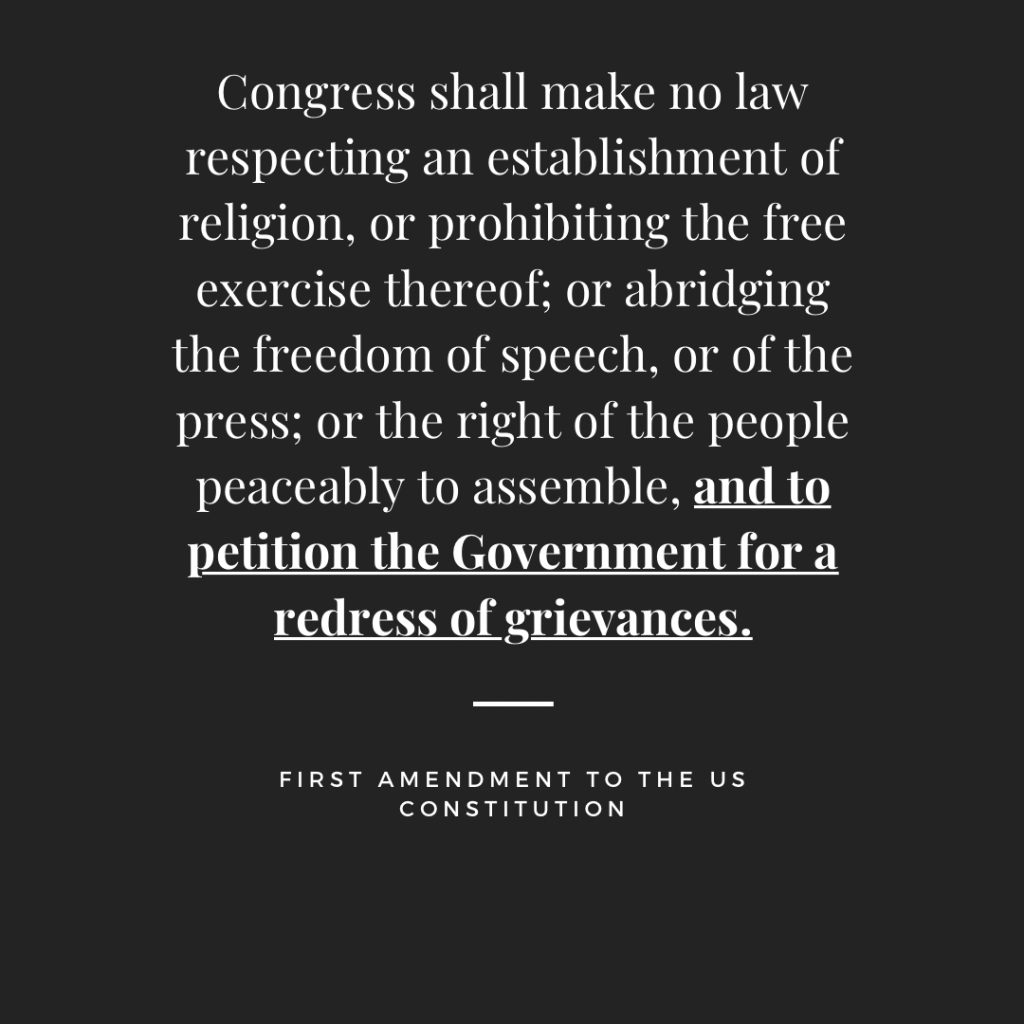
What actually works in advocacy isn’t as sexy as marching in protests. It’s the long, often frustrating path of building relationships that wind from issue to issue when advocates choose their battles, and celebrate their champions. That long game is where a lobbyist can add value to you. We’re there to help you exercise your first amendment right to “redress grievances.” And we’re there to help you do it in a sustainable way that will keep you empowered over the long haul.

To me, that’s nothing to be ashamed of – rather it’s something in which we should take a larger measure of pride.

Every day I get to pull the curtain back on government and politics and help others see the world just a little bit differently…maybe even a bit more positively. Along the way I get to learn some incredible things, in service to issues that may just help lots of people. That’s pretty cool – even if the masses don’t agree that it’s also commendable.

Worried about food shortages? Watch these factors…

For months now, news around the world has been dominated by talk of food shortages. Logistics issues propelled by COVID have compounded with inflationary pressures in a way that’s caused real concern for real people. Predictably, the political pile-on has ensued and it seems to all be spinning out of control.

If – like me – you’re concerned about the future of food security, I think you should take interest in a few key issue areas: loan rates; agricultural inputs; renewable fuels; and infrastructure resources like America’s inland waterways.

But first, watch this video, of an Ohio farmer – Josh Yoder- talking about some of the challenges he is facing right now.

For the past 3 years, I’ve had the distinct pleasure to work alongside folks like Josh Yoder. In fact, I’ve worked with him personally and have been to his farm. He and his family have an incredible, multi-generation story full of innovation, stewardship, and sound business practices. It’s a similar story to what you can find all over the Buckeye state where about 95% of the operational farms are family owned small businesses.

When you hear Josh, and other growers, talk about what they’re doing, you can see the passion that runs through the agricultural community. You can also tell they are business savvy, and care deeply about bringing a quality good to the market. Even during a difficult confluence of events like we’re seeing right now.

That’s why I think you should give a damn about the four issues I listed above. Here’s a short set of reasons why.

Access to Capital

My family sold the farm in the 80s, before I came along. So I never knew firsthand some of the struggles modern growers face. I didn’t understand just how capital intensive the industry was. When you deal with the purchase, maintenance and operational cost of tractors and harvesters, fuel, seed, fertilizers, crop protection tools, wages, insurance, office equipment – and all the other expenses so familiar to small businesses in other industries – access to capital becomes a critical friction point.

For many years now, low federal reserve interest rates have kept that capital flowing, allowing growers to invest in their operations and gain a measure of security through times of relatively low commodity prices. As the Federal Reserve raises rates, all types of capital will be impacted, including agricultural lending. Producers use this working capital to get them through the growing season, all in the hopes of getting a good crop in the ground. America’s crop producers need secure, affordable operational lending to see them through.

Measures like those recently passed in Ohio are helping to a degree. Here, we’ve expanded a program called AgLink that will help ease the pressure of rising interest rates on those operating loans – making it just a little easier for those family owned small businesses to stay in operation. Ohio’s Treasurer, Robert Sprague (R) deserves a lot of credit on this.

Farm Inputs

Even as those programs could help, it’s important for the 99% of us who don’t live or work on farms to understand that’s not a one size fits all solution. In part because growers are facing an acquisition issue brought on by anti-competitive practices and frivolous regulatory actions that have restricted supply of critical crop management tools like fertilizers and pest management tools. Even if they can afford these products, finding them is becoming more and more difficult.

If you’ve never learned about N P & K as a consumer, you’re not alone. Those letters stand for Nitrogen, Phosphorus and Potassium, and those are the macro nutrients crops like corn, soybeans and wheat need to grow. It’s plant food. And decades of advances have helped growers leverage these ingredients to grow more grain on less land. In fact, since 1980, the land required to grow a bushel of corn has fallen by 41%!

But these inputs are in short supply right now because a handful of companies have been able to leverage trade law to prevent competition in the American market. When competition is stymied, prices rise. American growers now face input costs that have risen 300% or more in the past year. And that increase started long before Russia invaded Ukraine.

The issue was so startling to US Representative Tim Ryan (D – Ohio), that he began raising concern over the issue months before it became a major news story. He and dozens of colleagues – Republican and Democrat alike – have since weighed in on the issue and tried to pressure the administration to take action.

Infrastructure and Getting to Market

Thankfully, that bipartisanship has shown up in other areas too. Like the Water Resources Development Act (WRDA).

WRDA is a fixture in Washington, DC. It’s a regularly considered package of legislative priorities that garners very little attention in the media. But it deals with some critical bits of infrastructure funding, like real dollars to modernize America’s locks and dams. Those water transportation assets allow efficient, bulk transportation of all kinds of goods – including agricultural commodities like grain.

Over the last few years, large bipartisan majorities have funded WRDA in big meaningful ways. And they’re looking toward this year’s bill now. This year, WRDA takes on a much bigger role as those bipartisan lawmakers face the reality that ‘Made in America’ is more than a marketing ploy now. It’s become a national security issue.

Diverse Markets Make Secure Markets

But if you think about growers like Josh, you might want to ask them what they really want when it comes to staying afloat as businesses. I think you’d be surprised.

There’s no denying that business tools like crop insurance are helpful – even critical. But for the growers I’ve come to know, they often tell me they’re most concerned about one thing: markets. Diverse markets give them options. They stabilize prices. They help foster long term profitability. Diverse markets breed security at the farm gate, and that improves food security for the rest of us.

What does that look like?

Most Americans simply don’t know the modern story of products like ethanol and soy-based biodiesel. Both of these biofuels are blended into our fuel supply. In the case of ethanol, it serves as a source of octane that simultaneously reduces tailpipe emissions and lowers the cost of higher octanes (it also replaced harmful carcinogenic products like MTBE that used to provide octane). While oil prices have soared, ethanol has remained relatively stable, helping save consumers who opt for products like Unleaded 88 (aka E-15) available in more than 2000 fueling stations nationwide.

And while that consumer savings is great (I saved 30 cents per gallon this morning choosing E-15), the real social benefit is that it fosters diversification for American grain markets. That diversity gives farmers an opportunity to remain profitable and economically sustainable. If you’re serious about food security, you should take note of these other markets and the critical role they play in keeping American farmers working.

That’s why a bi-partisan coalition of legislators is working to advance bills like the Next Generation Fuels Act that will pave the way for more renewable fuels in the market in the future. These lawmakers understand that modernizing the fuel supply and optimizing those engines for advanced biofuels can accomplish a wide range of goals: reducing cost at the pump, de-carbonizing the liquid fuel market, maintaining consumer choice for the vehicles they want to drive, and protecting farm profitability. That’s a pretty sound set of goals.

It’s Never Just One Thing

I don’t normally write about these issues on my blog. These are a sampling of what I work on each and every day in my current role. But right now, Americans need to understand the complexity of the challenges WE face. It’s not just these farmers feeling the pressure. We all are and will.

But we have to dispel the notion that there’s any one lever we can pull to fix the problem. There is immense complexity in every other industry as well. And that complexity is demanding our attention. We can’t sit idly by, we have to give a damn.

I haven’t even scratched the surface in this piece. Whole books could be written just on the role that crop protection tools (like pesticides) and biotechnology like GMOs play in helping us grow more food sustainably (on less land, with fewer natural resources, while reducing greenhouse gas emissions). But most of us don’t have the time, or the willingness to dig into those types of books.

So I’m going to make a plea: leave the city limits and go meet a farmer like Josh.

Too many of us are disconnected from the real people working so hard every day to feed, fuel and clothe the world. You’d be surprised what you could learn. I know I have been. Working with people like Josh has certainly taught me to give a damn – to care more about issues I’ve never known of before. I think, if you’re up to that challenge, you’ll discover the same.

I also think you’ll feel a little more certain about what’s really going on in food markets. It may not take away all of your anxiety, but it may just help you weather the challenges ahead. And we could all use a little bit of that education.

One Last Point

If you go back and read through the post again, you’ll find I call out bi-partisanship a lot.

When it comes to feeding and fueling Americans, that’s how it should be. Thankfully, there are champions on both sides of the aisle working to make big solutions happen.

I worry about a lot of things in politics. But if we can keep coming together over issues like these, we have a lot of reason to hope for better days ahead.